
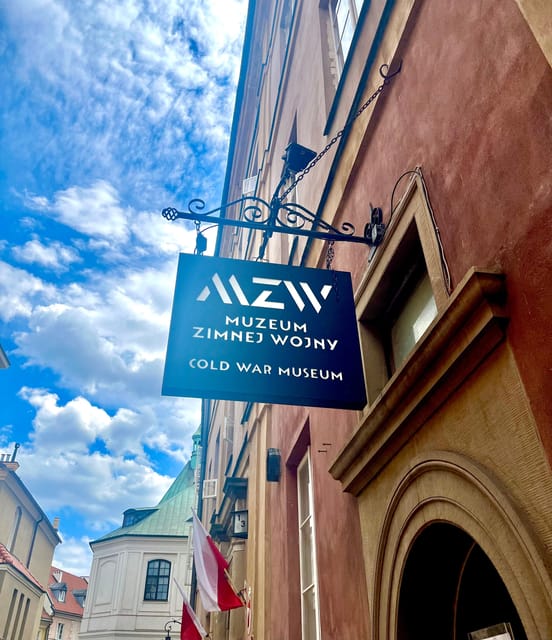
Reviewed · COMMUNIST-ERA WARSAW
Warsaw: Guided tour of the Cold War Museum
This Warsaw guided tour of the Cold War Museum is interesting because it mixes real Cold War artifacts with modern interactive tech, all told through a Polish perspective. It is not just a slideshow of dates, you get to interact with the story.
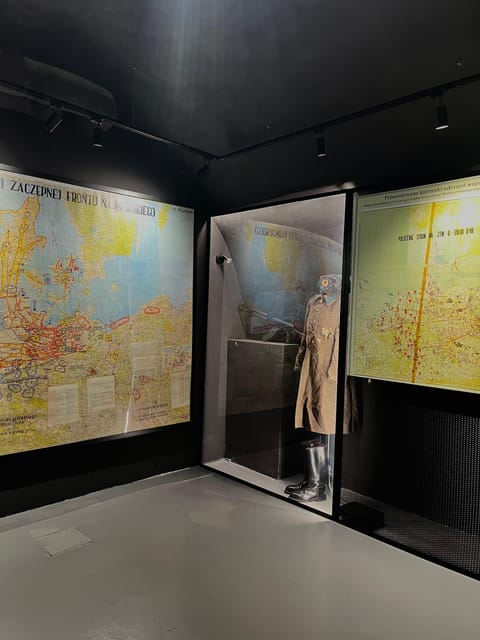
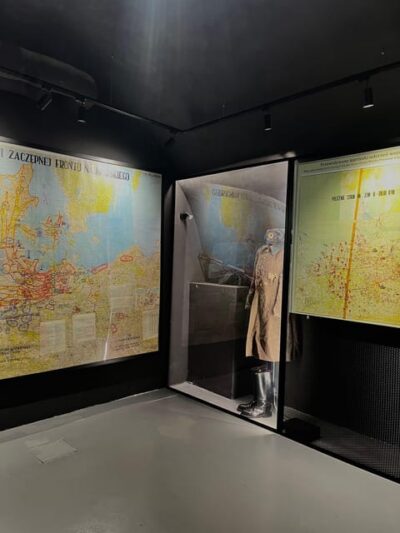
I like two things a lot. First, you see original devices, maps, and uniforms used during the Cold War. Second, the tour uses a multimedia quiz plus three VR games, so the facts stick in your head instead of floating by.
One heads-up. The tour is not suitable for wheelchair users, so plan accordingly if mobility is a factor for your group.
Key highlights worth your time
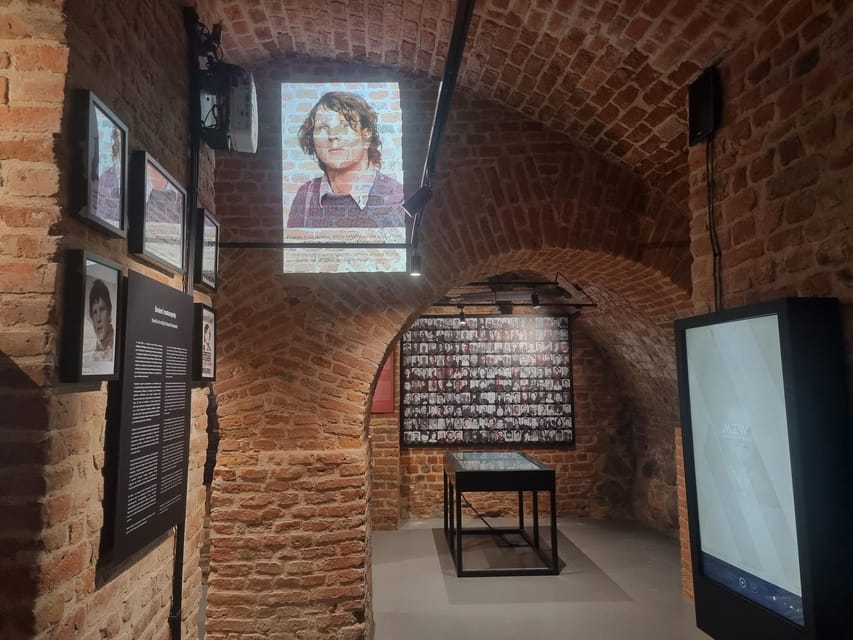
- Original uniforms, maps, and devices make the Cold War feel physical, not theoretical
- Multimedia quiz helps you measure what you picked up on the spot
- Space flight history plus a hologram of a space station ties politics to technology
- Three VR games make you feel like an active participant in the era
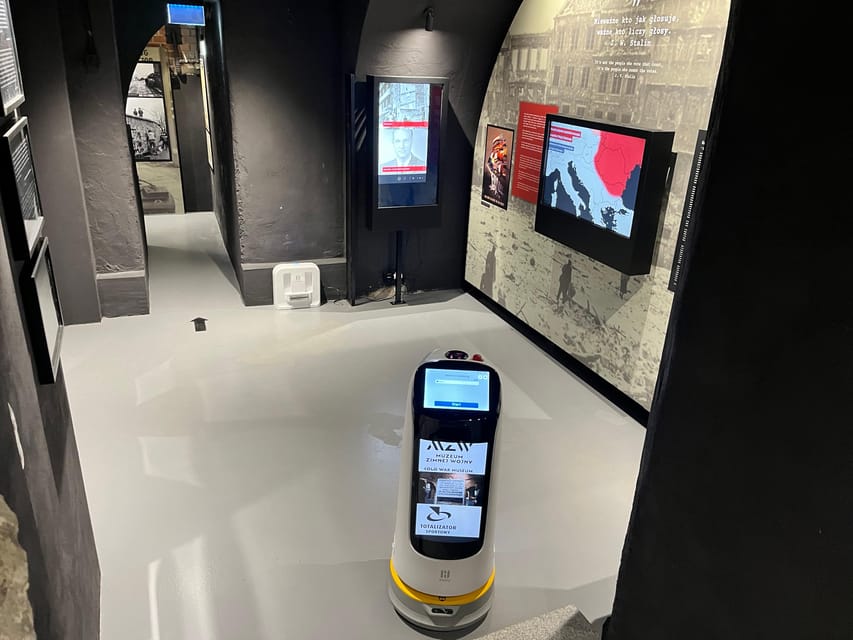
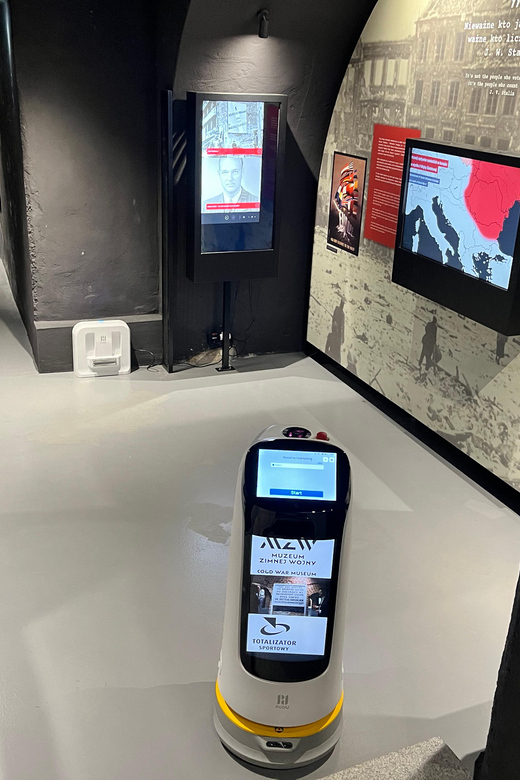
- A museum robot serves as an autonomous guide, adding a modern layer to the visit
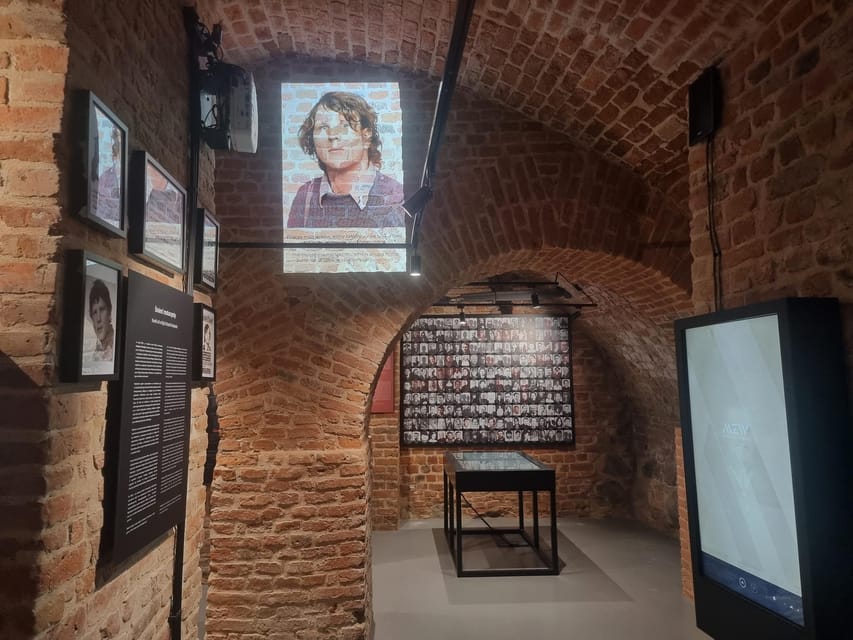
- Serious real-world context includes the museum location’s past connected to martial law victim Grzegorz Przemyk
Why this Warsaw Cold War Museum visit feels different than a typical exhibit
The Cold War can sound like distant, classroom history. This museum tries to fix that problem right away. It is built to show how the rivalry between two blocs shaped lives, not just governments. You also get the story from a Polish angle, including the Polish contribution to the victory of the free world over Soviet communism.
There is another layer that makes the place hit harder. The museum is located at an address that, during the era of the Polish People’s Republic, housed a communist militia station. That matters because it ties the themes of control, repression, and resistance to a real location, not an abstract narrative. One well-known victim connected with martial law, Grzegorz Przemyk, was beaten to death there. You should expect the museum to treat victims and consequences as real, not background noise.
At the same time, the museum is designed for a wide range of visitors. It is open to Polish and foreign guests of all ages, with plenty of activities geared to children. Even four-legged visitors are welcome, which is a nice touch if you travel with a dog and want a day that does not require special planning.
More communist-era Warsaw tours:
- Private Tour: Warsaw’s Communist History by Retro Fiat
★ 5.0 · 115 reviews - Warsaw: Communism Tour in an Original Socialist Van
★ 4.9 · 75 reviews - Warsaw: Cold War Museum Entry Ticket
★ 4.6 · 55 reviews
What you do during the guided tour, beyond just looking at rooms
This is a guided experience that leans hard into interaction. You start with a tour that brings you through the exhibition, then you move into the museum’s tech stations. Since the museum uses more than 50 multimedia elements, the visit has a rhythm: read, watch, try, then test your understanding.
A few specific parts you should look forward to:
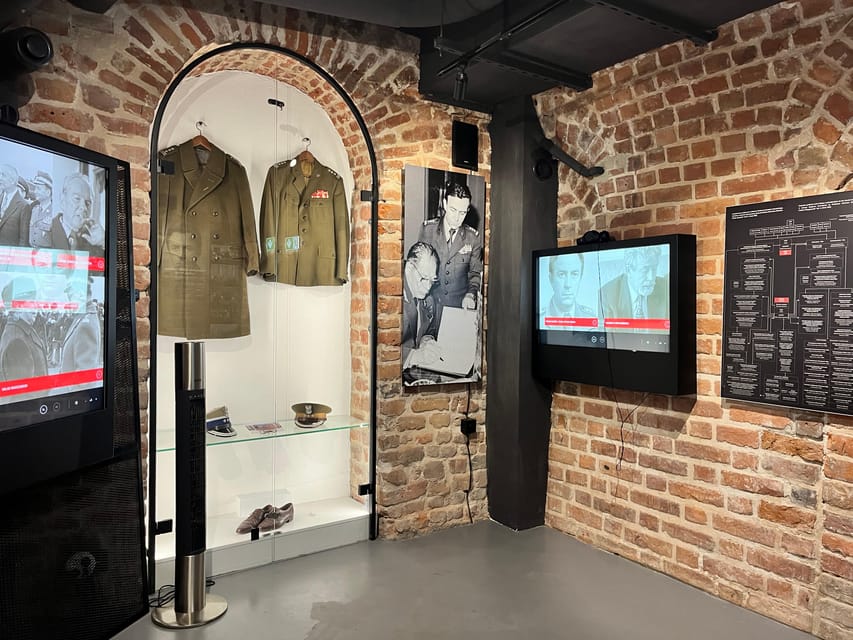
- You will see original Cold War-era objects, including devices, maps, and uniforms. This is the kind of detail that changes the mood of the whole visit. It signals that the Cold War was not only about speeches.
- You take part in a multimedia knowledge quiz about the Cold War. This is a smart approach if you want to leave with more than a vague sense of timelines.
- You will encounter a hologram of a space station along with the history of space flights. That link between politics and technology is one of the clearest ways to understand why people cared so much.
- You get to play three VR games that aim to give you the sensation of being involved in the Cold War, not just watching it from the sidelines.
The museum’s tech is not there to show off. It is there to help you keep track of a complex conflict that spans many countries and years. And for a totally different kind of interaction, the museum also has an autonomous guide robot. If you like gadgety museum moments, this is one to pay attention to because it is presented as the first and only museum in Poland to have a robot that serves as an autonomous guide.
The big picture story: how the Cold War is framed from a Polish point of view
A lot of Cold War displays focus on the U.S. and the U.S.S.R., then call it a day. This one explicitly tries to cover the whole arc of the Cold War period, including the countries involved in the fight against the Soviet bloc.
What you get is a narrative that covers:
- the beginnings of the Cold War
- how it played out over time
- who was involved across Europe and beyond
You are also told up front that the exhibition includes strong emphasis on the messages, commitment, and actions of three key figures from the last decades of the Cold War: President Ronald Reagan, Pope John Paul II, and General Ryszard Kukliński.
That focus can be a good thing, as long as you keep your expectations realistic. It means the museum will guide your attention toward how ideas and individuals helped shift the direction of the era, not only military moves and secret documents. For me, that structure makes the Cold War feel less like an endless stack of facts. You can follow the thread.
And since this museum depicts the rivalry between the two blocs from a Polish perspective, you will also notice a different tone than many Western-only displays. If you are curious how smaller countries lived inside the big-power struggle, this is exactly the kind of contrast that helps your understanding click.
The 90 minutes to 2 hours: how the visit usually moves
Your total time is typically 90 minutes to 2 hours, which is perfect for fitting into a busy Warsaw day. The pacing matters here because the museum is multimedia-heavy. You want enough time to actually try the VR and engage with the interactive parts, not speed-run them.
You meet at the Registry Office of the Capital City Warsaw, roughly 40 meters from Old Town Square. From there, you head into the museum and begin the guided portion. Expect the guide to give you context as you go, so the artifacts and media make sense as a connected story.
Even if you are not a museum regular, the flow is designed to keep you from getting lost. You move through exhibit sections that explain the era, then you hit the interactive zones. The order can vary with the guide and group timing, but the pattern is usually:
- Guided explanation and artifact viewing
- Multimedia learning moments like touch screens and multimedia tables
- The quiz, which checks your understanding
- VR games and other tech experiences, including the hologram segment
- A wrap-up that ties the timeline together again
Languages are Polish and English (with guided tour availability also described for Russian, German, and Spanish). If you get a guide who can explain in plain, direct language, you will feel the story landing faster. One example from recent visitor experiences is that guides like Cyprian and Filip have been praised for their engagement and solid English explanations.
More museums in Warsaw:
- Warsaw: POLIN Museum of the History of Polish Jews Ticket
★ 4.7 · 1,142 reviews - Warsaw: Polish Vodka Museum Tour with Tasting
★ 4.6 · 788 reviews - Warsaw: Ghetto, Jewish Cemetery & POLIN Museum Private Tour
★ 4.8 · 132 reviews - World of Illusion Museum Skip-the-Line Ticket
★ 4.0 · 55 reviews
Original Cold War artifacts: the moment this museum gets real
There is a specific kind of power in seeing original objects from an era. Photos can fake it. Text can blur it. Real items push back against your assumptions.
Here, you are able to see original devices, maps, and uniforms used during the Cold War. That matters because it brings three themes into sharp focus:
- the daily, practical side of the conflict
- how information and surveillance worked
- how state power tried to look official and normal
If you like history that has edges, this is your part. It is also where you get the strongest sense of authenticity, since the museum is not only about re-creating the past.
The quiz plus three VR games: learning that feels like a challenge
The multimedia quiz and the VR games are the heart of why many people get more out of this than a standard walkthrough. The museum does not just tell you what happened. It tests whether you are following.
The multimedia quiz helps in two ways. First, it gives your brain something to do while the story is fresh. Second, it can reveal what you thought you understood but actually missed. That sort of feedback is rare in museum settings.
Then you play three VR games that are designed to make you feel like a participant in the Cold War. The practical value of VR here is not realism for its own sake. It is pacing and perspective. It turns the Cold War into scenarios, and scenarios make it easier to remember who was acting, what the stakes were, and what information people had at the time.
If you get even a little tired of screens during a city trip, plan around it. This museum is screen-forward, but it is spread across multiple formats, including touch screens, multimedia tables, and cinema elements.
The space race hologram: politics you can visualize
The Cold War was fought with more than tanks and propaganda. Technology became a public scoreboard. That is why the museum’s history of space flights and the hologram of a space station is such a strong section.
This part matters because it connects two ideas:
- big political competition
- human curiosity and engineering pressure
The hologram element in particular is a great example of how the museum uses multimedia not just to entertain, but to help you visualize a subject that is otherwise hard to picture. If you grew up with space history as a list of missions, you might leave with a clearer sense of why the era treated space like a front line.
Who mattered: Reagan, John Paul II, and Kukliński at the center of the story
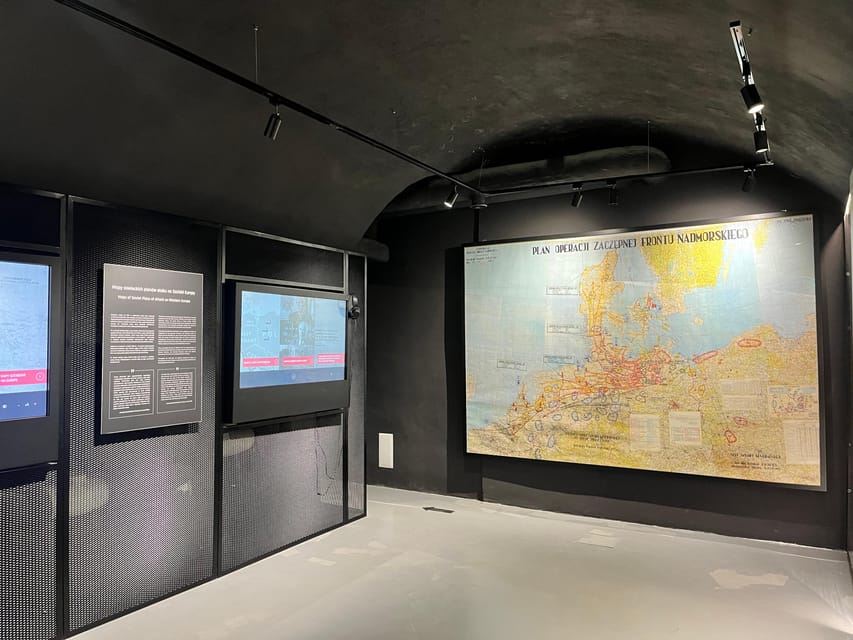
The museum places special emphasis on Ronald Reagan, Pope John Paul II, and General Ryszard Kukliński. That trio is not random. It reflects the museum’s focus on messages, commitment, and deeds in the final decades of the Cold War.
Reagan and John Paul II represent global political and moral pressure at a time when the Soviet bloc was under mounting stress. Kukliński represents a Polish story of inside knowledge and risk. If you know little about him, this tour can change that fast, because the museum frames his role as central to the eventual collapse of the Iron Curtain.
One practical way to get more out of this section is to pay attention to how these figures connect to specific themes as you move through the exhibition. Look for the museum’s repeated ideas about truth, commitment, and consequences. When those themes come back in different forms, the Cold War stops feeling like a straight line and starts feeling like a struggle with many moving parts.
Family-friendly details that actually work for kids
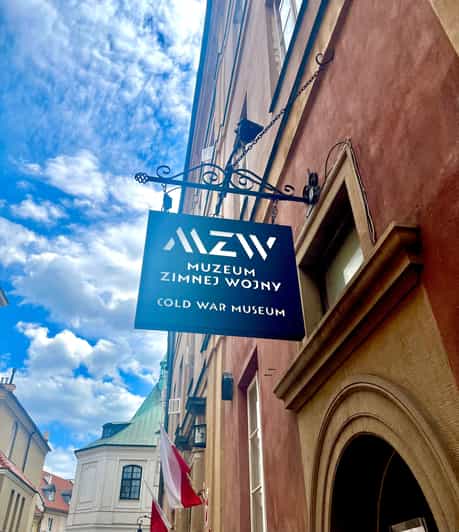
You should not assume a Cold War museum will be too heavy for kids. This one explicitly says it offers plenty of attractions for children. It also has interactive entertainment built into the exhibition, including VR experiences and youth-oriented interactive games.
In practice, the museum feels like it gives younger visitors entry points they can manage without getting bored. If your kids are curious about gadgets, screens, or simply want something hands-on while adults listen, this kind of structure can save the day.
That does not mean the topics are light. The museum clearly connects themes to real suffering, including that martial law era tragedy linked to the museum’s building. So if you are bringing children, it helps to be prepared for moments that are serious, even while other parts feel playful.
Value and fit: is this guided tour worth the $78 group price?
The price is listed as $78 per group up to 10 for a guided visit lasting 90 minutes to 2 hours. That group-based pricing is often the big win. If you can fill the group, your cost per person drops fast. If you travel as a small group and the tour still runs for you, you might pay more per person, but you still get a guided flow plus access to all attraction areas within the exhibition.
You are also getting multiple high-effort features included in the experience, not just a standard audio guide. Admission includes access to exhibitions and all the internal attractions, including the VR games and quiz. Since the museum is built around multimedia, a guided visit helps you understand what you are looking at instead of guessing.
This tour is a great fit if:
- you want a structured introduction to the Cold War in Warsaw
- you like interactive museums more than quiet ones
- you want a Polish-centered story of the era
- you are traveling with older kids or teens who can handle some serious context
It may be less ideal if:
- wheelchair access is required
- you prefer low-tech history experiences with minimal screen time
- your group wants something more relaxed and less emotionally serious
Also note that the museum has rules such as no smoking, no food and drinks, no vaping, and no alcohol or drugs inside. If you plan snacks for a family day, plan ahead.
Should you book the Cold War Museum guided tour in Warsaw?
Yes, I think you should book it if you want a Cold War visit that feels active. The mix of original artifacts, a multimedia quiz, three VR games, and a hologram is a strong combo for learning without boredom. Add in the fact that the guide experience can be in multiple languages and you are close to Old Town Square, and it becomes a very practical cultural stop.
If your group needs step-free routes or wheelchair-friendly access, then skip this exact option, since it is listed as not suitable for wheelchair users. Also, if your group gets uncomfortable with stories connected to repression and victimization, make sure you are mentally prepared for those sections of the exhibition.
FAQ
How long is the Warsaw Guided Tour of the Cold War Museum?
The guided tour lasts about 90 minutes to 2 hours.
Where do we meet for the guided tour?
You meet at the Registry Office of the Capital City Warsaw, about 40 meters from Old Town Square.
What does the ticket include?
It includes admission to the exhibitions, access to all attractions within the exhibition, and a guided tour.
What attractions are included inside the museum?
You can see original devices, maps, and uniforms, take part in a multimedia knowledge quiz, experience a hologram of a space station and space flight history content, and play three VR games. There is also mention of cinema and a museum robot autonomous guide.
What languages are available for the guided tour?
Guided tour languages are listed as Polish and English, with guided tour availability also described for Russian, German, and Spanish.
Is the experience wheelchair accessible?
No. It is not suitable for wheelchair users.
Are pets allowed?
Yes. The museum welcomes four-legged visitors.
What is not allowed inside the museum?
Smoking, food and drinks, vaping, and alcohol or drugs are not allowed.
Is there a free cancellation option or reserve now pay later?
Yes. Free cancellation is available up to 24 hours in advance for a full refund, and reserve now and pay later is offered.
Recently added in Warsaw
- Warsaw: Wolf’s Lair & Swieta Lipka Small-Group Tour + Lunch★ 5.0 · 3 reviews
- World War II Warsaw Old Town, Military Cemetery Walking Tour★ 4.7 · 3 reviews
- Warsaw Wolf’s Lair with St. Lipka and Mamerki Private Guided★ 4.2 · 3 reviews
- Warsaw Zoo Skip-the-Line Entry Ticket with Private Transport★ 4.8 · 3 reviews
- Warsaw: Vodka Tour★ 4.4 · 18 reviews
- Wilanów Palace: 2-Hour Guided Tour with Entrance Tickets★ 4.8 · 8 reviews
- Warsaw Uprising and WWII Old Town Walking Tour with Museum★ 4.7 · 15 reviews
- Warsaw: Private Vodka Tasting Night with Snacks and Pickup★ 5.0 · 7 reviews
Other Communist-Era Warsaw Tours
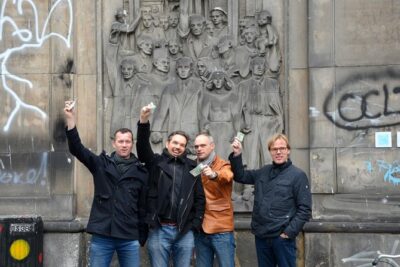
Private Tour: Warsaw’s Communist History by Retro Fiat
Read our review →
Life Behind the Iron Curtain Warsaw Walking Tour
Read our review →Life Behind the Iron Curtain Warsaw Walking Tour
Read our review →
Browse the lists this tour appears in