
Reviewed · COMMUNIST-ERA WARSAW
Warsaw: Cold War Museum Entry Ticket
The Warsaw Cold War Museum is interesting because it uses a full-spectrum multimedia exhibition to show how the Cold War shaped life, propaganda, technology, and courage, from a Polish perspective. It is also tied to a real address with dark history, so the setting is not just a backdrop.
I love the hands-on design, especially the VR games that turn big political ideas into something you can actually do. I also like how the museum leans on original-style artifacts and interactive media, so you are not just reading dates. One thing to consider is that the museum is not suitable for wheelchair users, so plan accordingly if mobility is an issue.
Key things I’d mark on your mental map
- Autonomous robot guide that actively helps you move through the museum
- Three VR games that let you play as a Cold War-era secret agent
- Multimedia knowledge quiz that checks what you are learning as you go
- Hologram of a space station plus the story of Cold War space flights
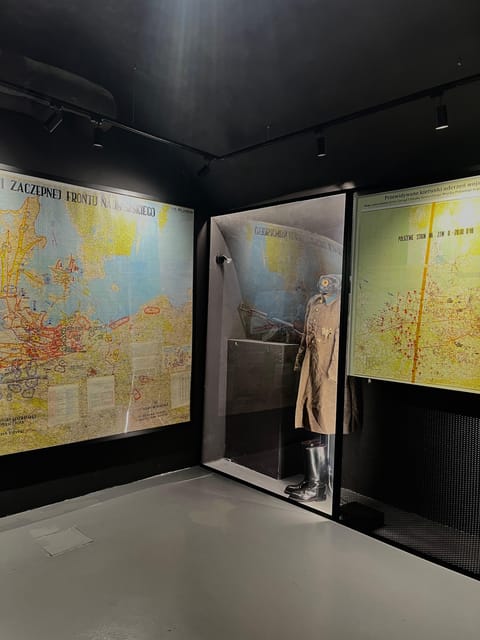
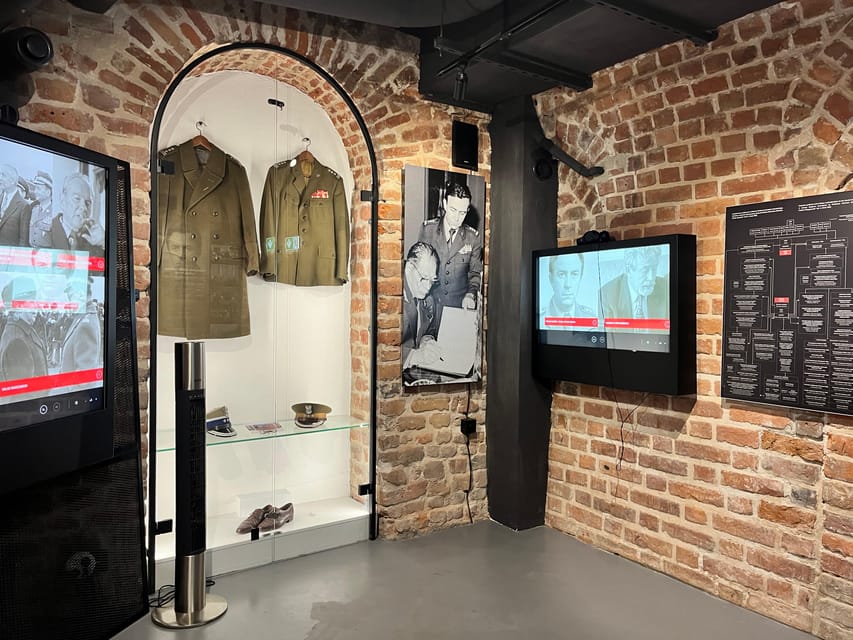
- Original devices, maps, and uniforms that make the era feel more concrete
- A museum building with layered history, including the tragic story of Grzegorz Przemyk
Where the Cold War Museum fits in Warsaw, and why location matters
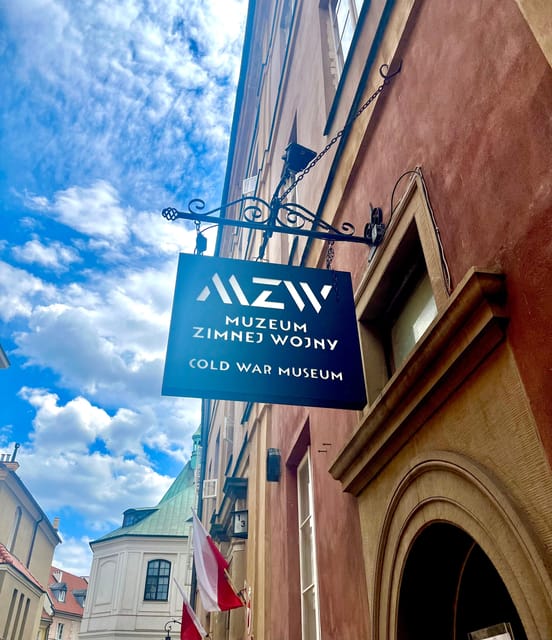
This museum is set up to be a quick walk from the Old Market Square area, about 40 meters from the square. That makes it a good fit for an afternoon when you want something more thoughtful than the usual sightseeing loop.
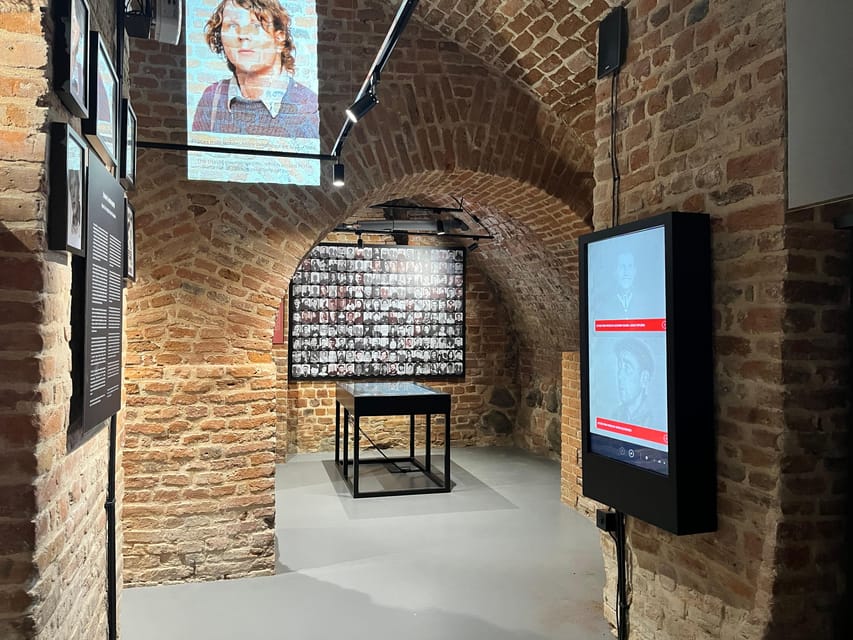
But the better reason to come here is the place itself. The museum narrative is tied to the history of its address during the Polish People’s Republic, when the site housed a communist militia station. That matters because the museum does not treat the Cold War as a distant, clean timeline. It presents consequences, victims, aggressors, and survivors in a way that feels tied to real people and real choices.
If you like museums that connect big themes to specific stories, you will get a lot from the building’s context. And if you prefer your history strictly chronological, you can still follow the full Cold War arc, since the exhibition covers the entire period.
More communist-era Warsaw tours:
- Private Tour: Warsaw’s Communist History by Retro Fiat
★ 5.0 · 115 reviews - Warsaw: Communism Tour in an Original Socialist Van
★ 4.9 · 75 reviews - Warsaw: Communist History Self-Driving Tour
★ 4.8 · 52 reviews
The main exhibition: 50+ multimedia stops plus originals and cinema
Your entry ticket is not just admission to a room or two. It gives you access to exhibitions and all attractions inside, supported by more than 50 pieces of multimedia. That is where this museum earns its keep for the price.
You can expect a mix of:
- touch screens and multimedia tables
- VR goggles for the interactive games
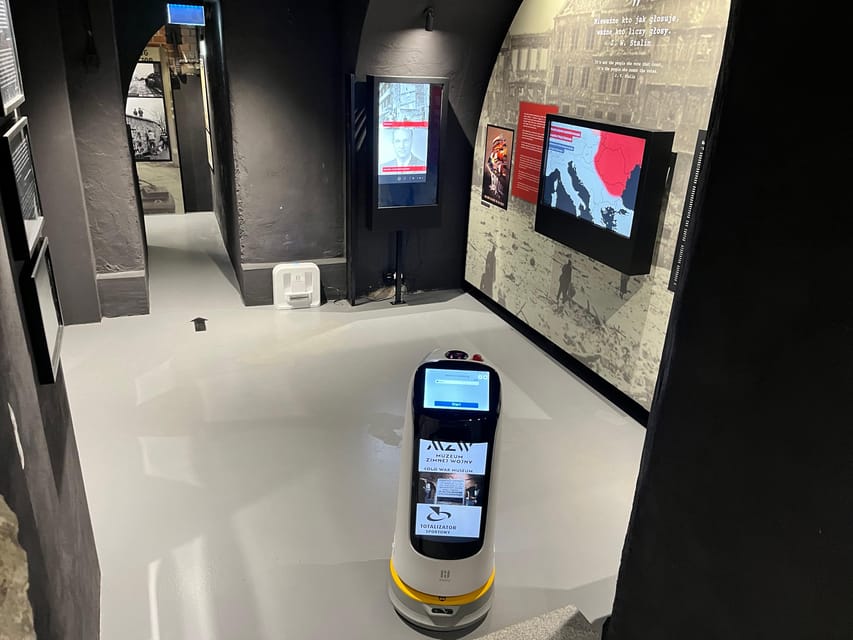
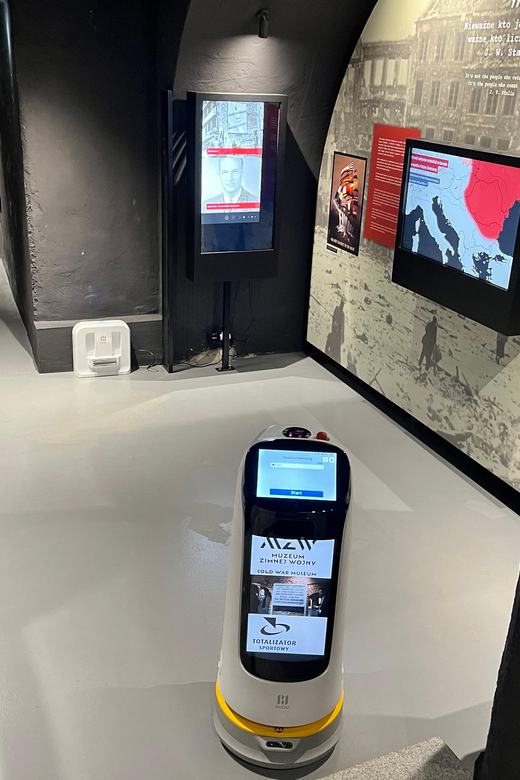
- an autonomous robot guide
- cinema elements built into the flow
On top of the digital stuff, there are also original devices, maps, and uniforms. That combination is smart. Pure multimedia can feel weightless if it never anchors to physical evidence. Here, you get both, so you can bounce between abstract themes and tangible artifacts.
The exhibition also frames the Cold War in a Polish way. It presents the Polish contribution to the victory of the capitalist world over Soviet communism, and it describes rivalry between the two blocs. It also explicitly covers the whole Cold War period and includes the countries involved in the struggle against the Soviet system, not just the headline players.
The Polish-perspective storyline and the people the museum centers
One reason people leave talking is the way the museum builds the story around key figures and messages. A significant part of the exhibition focuses on the last two decades of the Cold War through the influence and actions of three prominent names: President Ronald Reagan, Pope John Paul II, and General Ryszard Kukliński.
You do not have to agree with any single framing to appreciate what the museum is trying to do. It is using those figures as guideposts for how ideas and risk-taking played out in Poland and beyond. Reagan represents political pressure and messaging, John Paul II represents moral and spiritual momentum, and Kukliński represents the perilous human cost of information work.
The exhibition also keeps bringing the viewer back to a central question: what does a “system conflict” look like for everyday life, and how do people respond when truth is dangerous? The result is that the museum feels more like a guided argument with evidence than a neutral slideshow.
If you come expecting a balanced textbook, you may notice the framing is clearly Polish. If you come expecting a museum that takes a point of view, you will likely find it easier to follow and more memorable.
VR secret-agent games: how the museum turns politics into action
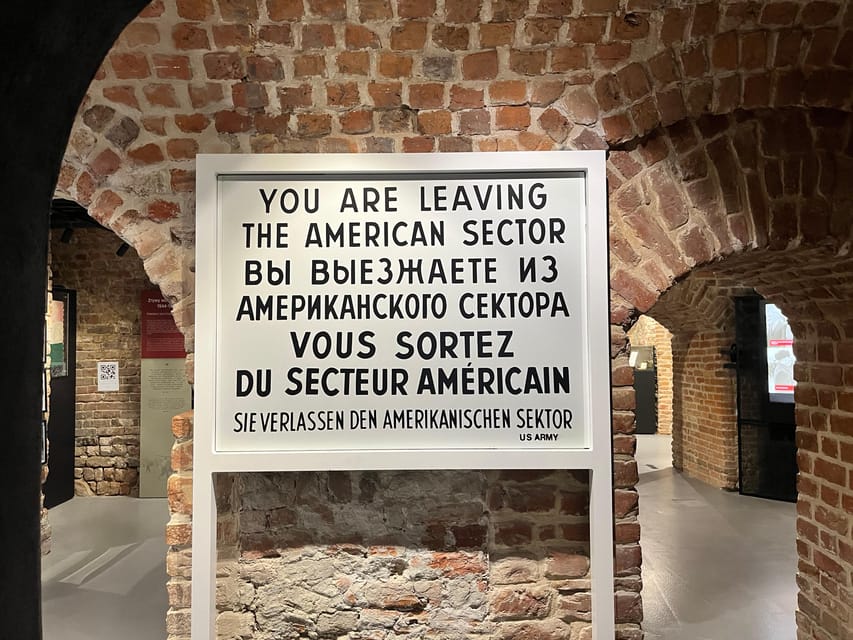
The museum includes three VR games where you get to feel like a Cold War-era secret agent and try to compromise Soviet invasion plans. This is the part of the visit that usually makes people sit up and pay attention.
Even if you are not a gamer, the value is not entertainment alone. VR changes how you process information. Instead of passively receiving facts, you experience the theme as missions, decisions, and pressure. That can help the rest of the exhibition land harder, especially the sections about intelligence work, propaganda, and strategic thinking.
Practical note: VR goggles are part of the museum experience, so the visit will involve waiting your turn at a station at some point, and you should plan to stay flexible. If you prefer to control your pace, you will want to do VR earlier in your visit, before you get tired from reading screens and absorbing story content.
More museums in Warsaw:
- Warsaw: POLIN Museum of the History of Polish Jews Ticket
★ 4.7 · 1,142 reviews - Warsaw: Polish Vodka Museum Tour with Tasting
★ 4.6 · 788 reviews - Warsaw: Ghetto, Jewish Cemetery & POLIN Museum Private Tour
★ 4.8 · 132 reviews - World of Illusion Museum Skip-the-Line Ticket
★ 4.0 · 55 reviews
The Cold War knowledge quiz, and why it is more than a gimmick
Along the way, there is a multimedia knowledge quiz built into the experience. This is not just a checkbox activity. It is a way to test whether the museum’s narrative is actually sticking in your head.
I like quiz-style media in museums when it is tied to the exhibition content. Here, the quiz reinforces the big themes you are seeing across the whole Cold War period, including how each side framed itself and what technologies and institutions were used to push narratives.
Also, the quiz helps you stay oriented. Cold War history can feel huge because it covers decades, many countries, and a constant background hum of propaganda and power games. A quiz gives your brain an organized lane, so you are not only drifting through information.
Space-flight history and the hologram space-station moment
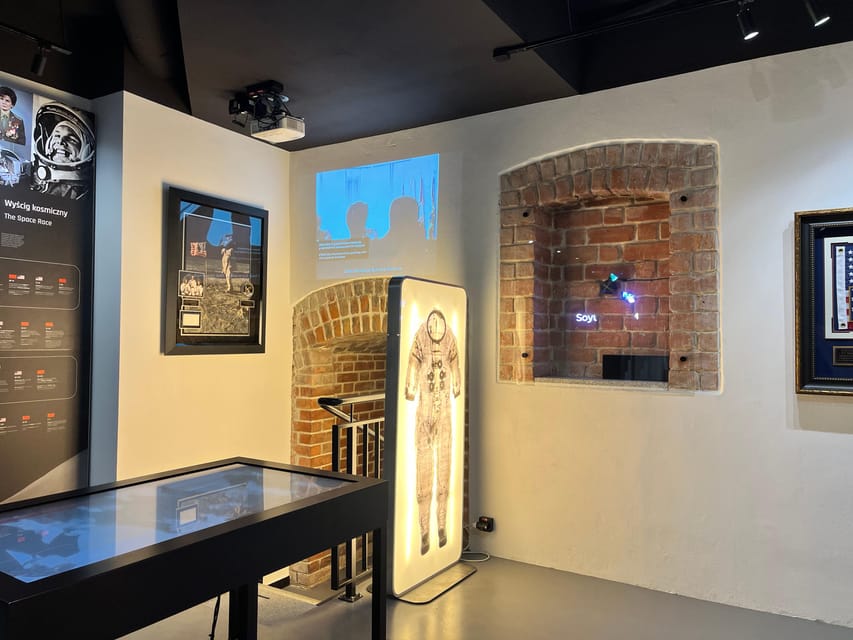
Another highlight is the section on the history of space flights, with a hologram of a space station. That sounds futuristic, but it makes sense in a Cold War museum. Space was never just science. It was also strategy, prestige, and proof of industrial and political capacity.
The museum uses the hologram as a visual anchor. When you see it, the idea of space-race rivalry stops being an abstract concept mentioned in textbooks and becomes an actual scene you can react to.
If you like tech history or you enjoy the intersection between politics and scientific ambition, this stop is a strong payoff. It also breaks up the darker political tone with something that feels like human creativity, even when driven by competition.
The autonomous robot guide: helpful, not just a novelty
This museum is the first and only museum in Poland with a robot that serves as an autonomous guide. That is a big promise, but what you will likely appreciate is how it changes your flow.
Instead of constantly searching for signs or relying on a human guide every time, you have a guide that can help keep you moving through the museum’s multimedia ecosystem. That matters in a building with touch screens, quiz tables, VR stations, and cinema elements. The less time you spend figuring out what comes next, the more time you spend on the content itself.
It is also listed as a host or greeter experience in English and Polish, so if you want help understanding the stations or you prefer a bit of live orientation, you have that option.
The museum building, Grzegorz Przemyk, and how the story keeps pulling you back
The museum ties its exhibition to the history of the location during the Polish People’s Republic. The site housed a communist militia station, and high school graduate Grzegorz Przemyk was beaten to death there in the context of martial law.
That is heavy material, and the museum’s narrative is built to make you feel its weight. You are not only learning that something happened. You are placed in the moral terrain where victims and survivors were shaped by the machinery of the state.
I appreciate that this context is not hidden behind a footnote. It is part of the architecture and story. So even when you are clicking through interactive media, there is a constant reminder that the Cold War was not only strategy and slogans, it was also fear, violence, and the cost of being targeted.
Price and value: what $12 buys you in the real world
At about $12 per person, this ticket can feel like a bargain once you count what is included. Your admission covers:
- exhibitions
- access to all attractions inside
- the autonomous robot guide
- the multimedia stations, VR games, knowledge quiz, cinema elements, and the space-hologram segment that come with the exhibition
If you have ever visited museums where you pay one price and then get hit with another fee for the “real” experience, you will like this setup. The attractions are part of the entry. That gives you more control over your budget.
One more practical value point: the ticket is valid for 3 months. That means you can match the visit to your actual schedule, not your plan from the first day you arrive.
Practical tips so your visit feels smooth, not exhausting
A museum packed with interactive tech needs a small strategy from you.
- Plan to respect the house rules. Smoking, vaping, alcohol, and drugs are not allowed. Food and drinks are also not allowed, so decide where you will eat before or after.
- Wear comfy shoes. Even if the museum does not require long outdoor walking, you will still move between multiple stations and VR setups.
- If you are coming with a dog, you are in luck. It is one of the few Warsaw museums where four-legged visitors are welcome.
- If you use a wheelchair, this one is not suitable. That is clearly listed, so do not assume you can adapt the visit on arrival.
Finally, give yourself permission to go at a human pace. With touch screens, multimedia tables, quiz content, VR games, and cinema elements, rushing can mean you skip the parts that actually make the story stick.
Who should book this ticket, and who might want to skip it
This works best for you if:
- you like Cold War history, especially if you want a Polish lens
- you enjoy interactive museums that mix real artifacts with digital media
- you are curious about how technology, intelligence, and propaganda fit together
- you want a visit that includes VR and a guided-feeling experience from an autonomous robot
It may be less ideal if:
- you need wheelchair accessibility
- you dislike VR-style experiences or you get motion-sensitive, since the museum includes three VR games and uses VR goggles
If you want a museum that is not only informative but also active, this is a strong bet.
Should you book the Warsaw Cold War Museum entry ticket?
Yes, I think you should book it if Cold War history appeals to you and you want more than static displays. The price feels fair for what you get: original-style artifacts, a multimedia-rich layout with 50+ interactive elements, a robot guide, a quiz, cinema, three VR games, and a hologram space-station moment.
If the wheelchair limitation affects your party or you prefer purely traditional museums, then look elsewhere. But for most visitors, this is the kind of place where the museum does the work of turning history into something you can actually experience.
FAQ
Where is the Cold War Museum entrance and how do I use my ticket?
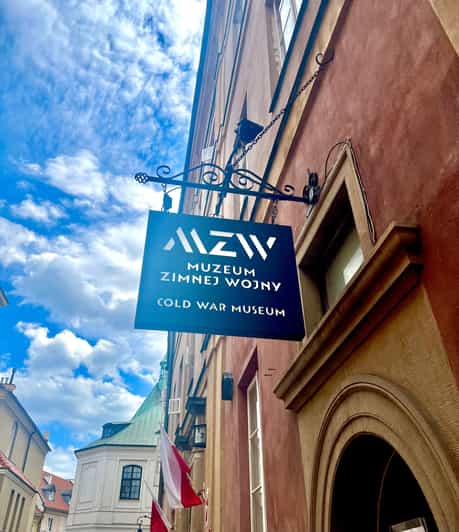
Show your ticket at the entrance of the Cold War Museum (Muzeum Zimnej Wojny). The museum is located about 40 meters from Old Market Square.
What is included with the Warsaw Cold War Museum entry ticket?
The ticket includes admission to the exhibitions, access to all attractions within the exhibition, and an autonomous robot guide.
What kinds of attractions are inside?
Inside you will find multimedia touch screens and tables, a multimedia knowledge quiz, cinema content, a hologram related to space flights, and three VR games with VR goggles.
Is this ticket priced per person?
Yes. The listed price is $12 per person.
How long is the ticket valid?
The ticket is valid for 3 months. Check available starting times to match your visit.
What languages are available for the host or greeter?
English and Polish.
Is the museum suitable for wheelchair users?
No. The museum is not suitable for wheelchair users.
Are dogs allowed?
Yes. This museum is one of the few in Warsaw where four-legged visitors are also welcome.
Recently added in Warsaw
- Warsaw: Wolf’s Lair & Swieta Lipka Small-Group Tour + Lunch★ 5.0 · 3 reviews
- World War II Warsaw Old Town, Military Cemetery Walking Tour★ 4.7 · 3 reviews
- Warsaw Wolf’s Lair with St. Lipka and Mamerki Private Guided★ 4.2 · 3 reviews
- Warsaw Zoo Skip-the-Line Entry Ticket with Private Transport★ 4.8 · 3 reviews
- Warsaw: Vodka Tour★ 4.4 · 18 reviews
- Wilanów Palace: 2-Hour Guided Tour with Entrance Tickets★ 4.8 · 8 reviews
- Warsaw Uprising and WWII Old Town Walking Tour with Museum★ 4.7 · 15 reviews
- Warsaw: Private Vodka Tasting Night with Snacks and Pickup★ 5.0 · 7 reviews
Other Communist-Era Warsaw Tours

Private Tour: Warsaw’s Communist History by Retro Fiat
Read our review →
Life Behind the Iron Curtain Warsaw Walking Tour
Read our review →Life Behind the Iron Curtain Warsaw Walking Tour
Read our review →
Self-Drive Tour: Communist Warsaw by Retro Fiat “Toddler”
Read our review →Browse the lists this tour appears in