
Reviewed · COMMUNIST-ERA WARSAW
Life Behind the Iron Curtain Warsaw Walking Tour
What makes this tour so interesting is how you can read the communist era in everyday Warsaw, street by street. I love the way the guide uses sharp, sometimes wry humor to explain a serious system. I also love seeing socialist realism up close, not as a textbook idea but as real buildings you stand beside.
One possible drawback: you do walk a fair amount for a city-center tour. This one is about 3 km, and it is not recommended if long walking is an issue.
The vibe stays human. The route mixes big state symbols with small, telling details about daily life, including censorship and espionage themes tied to the Free Speech Memorial. You start at Constitution Square, and you finish near Emilii Plater 54.
Key highlights to look for on this Warsaw tour
- Constitution Square as a “new center” concept that never really behaved like a normal city plan
- Marszałkowska Street as a parade runway, built for public performance and control
- Free Speech Memorial conversations about censorship and espionage
- Socialist realism examples that look polished, while the politics behind them are anything but
- The Communist Party HQ location called out in the urban layout
- A controversial Warsaw landmark that forces you to question what “progress” meant under communism
Why Warsaw under communism shows up in plain sight
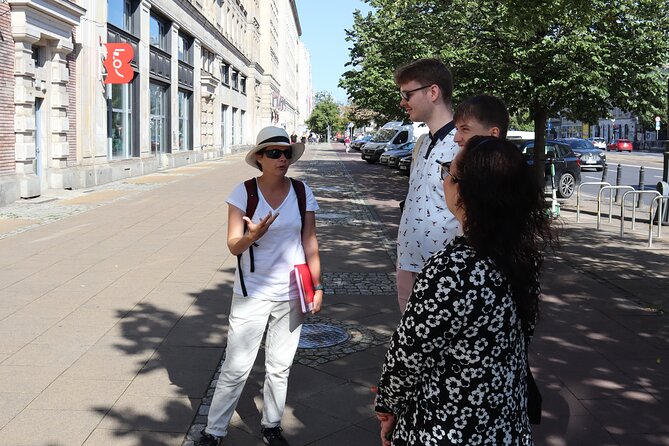
Cold War history can feel abstract. This tour makes it physical. You do not just learn dates. You see how power shaped the city, how propaganda shaped taste, and how ordinary people still found ways to function when the system was absurd.
You will hear the theme again and again: on the outside, communism was the hammer and sickle and the slogans. In real life, it was shortages, restrictions, and strange rules that made normal days feel broken. The guide’s approach matters. People like Olivia and Agnieszka come across as witty and warm, with a dry sense of humor that keeps the mood from turning into a lecture.
And because this is a walking tour focused on central Warsaw, you get the full effect. You can stand where parades and marches were staged. You can look at state-approved design and then talk about what Poles really thought of it. That mix, big and small, is what makes the experience stick.
More communist-era Warsaw tours:
- Private Tour: Warsaw’s Communist History by Retro Fiat
★ 5.0 · 115 reviews - Warsaw: Communism Tour in an Original Socialist Van
★ 4.9 · 75 reviews - Warsaw: Cold War Museum Entry Ticket
★ 4.6 · 55 reviews
Constitution Square: the “new center” idea in real architecture
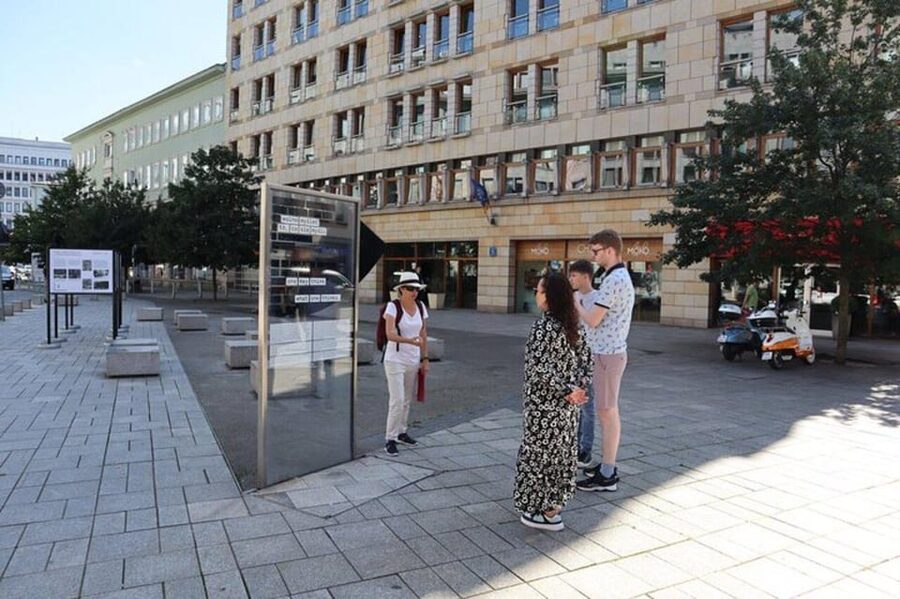
You kick things off at Constitution Square. This stop is short, but it sets the tone. The square was intended as part of a redesigned Warsaw center, a stage for a new political reality. Instead of treating it like a neutral plaza, the guide frames it as a planning fantasy, one that reflected how the state wanted the city to feel.
This is where you start seeing the tour’s main trick. Socialist-era Warsaw is full of grand forms, but the guide does not ask you to admire them like art for art’s sake. You look at the space and then talk about how that space was meant to guide behavior, from public gatherings to the feeling of being watched.
If you like context, you’ll enjoy this opening. It gives you a mental map for everything else. If you hate history that feels heavy, you might find the tone a bit intense right away, even though the guide keeps it lively.
Marszałkowska Street: parades, marches, and public theater
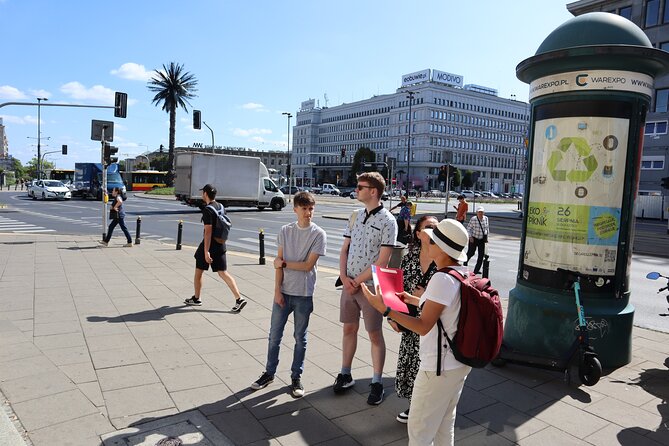
Next comes Marszałkowska Street, known for being wide enough to handle mass movements. Under the communist system, wide boulevards were not just convenient. They were useful for parades and marches, and that changes how you read the street when you stand in it.
You’ll get a sense of the choreography. A broad road turns people into a crowd, and a crowd into a message. Even if the specific event has changed over time, the street still “remembers” that purpose.
This stretch also helps you understand a key theme: the state wanted public space to communicate authority. That is why the tour pays attention to how buildings line up, how sightlines work, and how the city funnel behavior. You are not only learning politics. You are learning urban design as a tool.
The Free Speech Memorial: censorship and espionage, explained with care
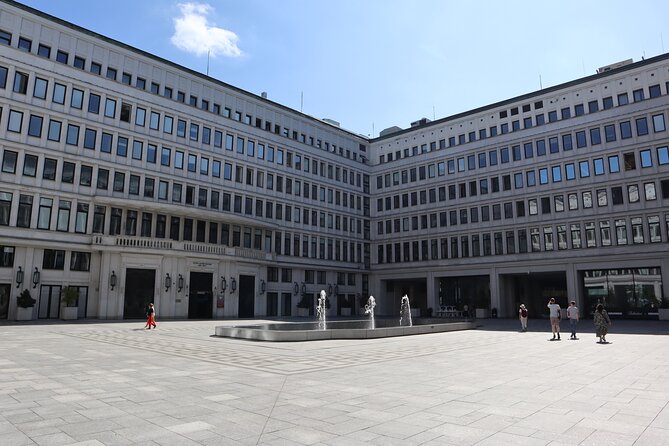
One of the most important stops is the Memoriał Wolnego Słowa, the Free Speech Memorial. Here the tour shifts from architecture to the human cost of control.
The guide connects the memorial to two linked realities: censorship and espionage. That pairing matters because it explains how speech was limited in more than one way. It was not just about what could be printed or broadcast. It was also about fear, surveillance, and the uncertainty of who might be watching.
If you want a tour that treats this topic respectfully, you should appreciate the way the guide talks. The overall tone from guides like Olivia is often informative but never cold. You come away understanding why free expression mattered so much, not as a slogan, but as safety and dignity.
This stop is also a good reality check. Socialist design can look neat at first glance. The memorial reminds you what it cost.
More walking tours in Warsaw:
- Warsaw: Old Town Highlights Walking Tour in English
★ 4.7 · 1,516 reviews - Warsaw: Old Town Guided Walking Tour
★ 4.9 · 599 reviews - Half-Day Polish Food Walking Tour with Guide and Dinner
★ 4.5 · 381 reviews - Warsaw: Warsaw Ghetto Private Walking Tour with Hotel Pickup
★ 4.9 · 369 reviews
Socialist realism stops you can actually picture later
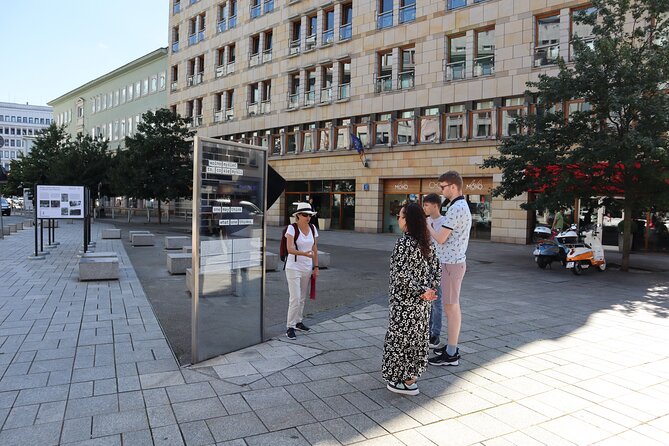
As you move through the central blocks, you’ll see perfect examples of socialist realism highlighted by the guide. The buildings can look almost decorative from a distance, and that is exactly why the tour works.
The guide pushes you to hold two ideas at once. Yes, some of the design is visually attractive. No, that does not mean the ideology behind it was harmless. The point is not to “rank” beauty. It is to see how the state used style to sell certainty.
You will also hear about how symbols were deployed at small and big scales. The tour description points to a very small icon of communism, almost cute in form, and the guide uses that contrast to explain how ideology can sneak into daily life. The big systems were intimidating, but the state still wrapped itself in details you could not easily escape.
If you love visual learning, this portion is where the tour really delivers. You’ll be able to point out forms and patterns later when you walk alone.
Centrum Bankowo Finansowe and the state’s bigger plan for control
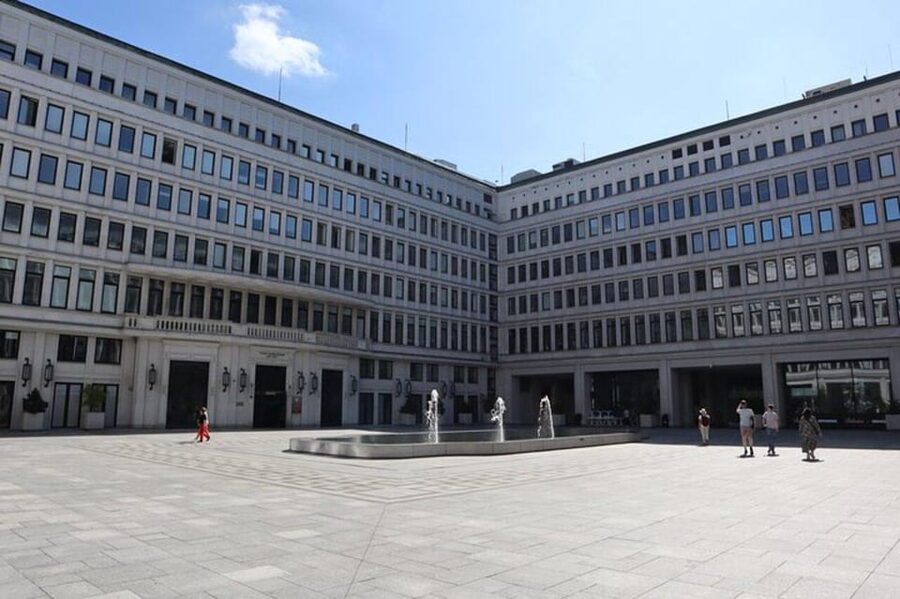
One of the route stops is Centrum Bankowo Finansowe. Even though it sounds like a financial-modern place name, the tour treats it as part of the broader story of central Warsaw and how institutions shaped life.
This is also where the guide’s big-picture framing becomes useful. Under communism, the city center was not just for shopping and offices. It was also where systems concentrated: administration, influence, and the machinery that enforced rules.
Importantly, the tour includes a clear reference to the Communist Party HQ location. You will be shown where that power base sat in the urban layout. For me, that is a key value of this tour. Once you know where power was anchored, Warsaw stops being just pretty streets. It becomes a map of decisions.
Central Department Store Cedet: shortages, empty shelves, and the jokes you had to make
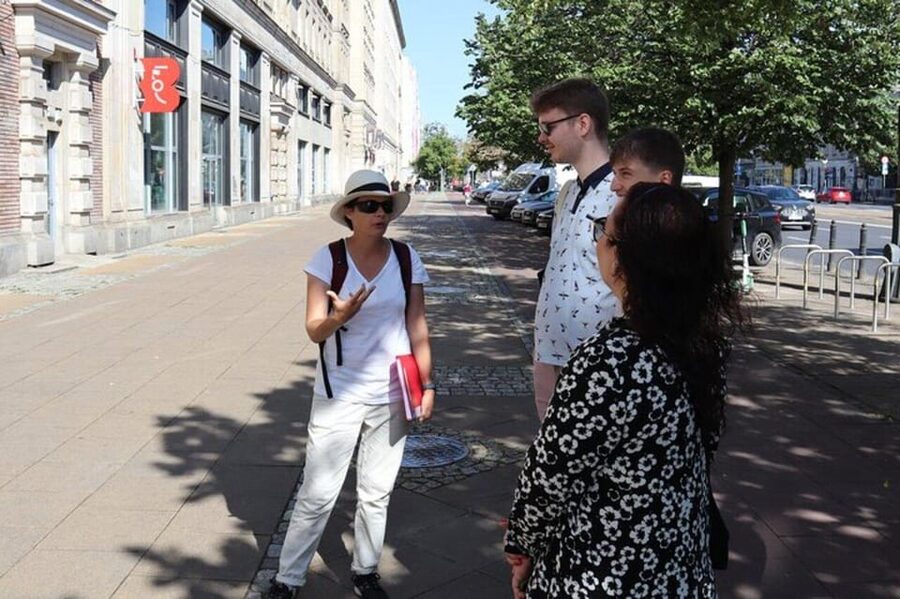
Next you’ll reach the Central Department Store Cedet. This is a memorable stop because it makes the absurdity of daily life feel real.
The tour talks about how people could be directed to buy items even when stores were empty. That contradiction is the kind of detail that explains how a system can keep functioning, despite being fundamentally irrational. If you have ever felt frustrated by bureaucracy, the vibe here will connect fast, even if the context is different.
The guide also brings in a classic kind of survival language from those years, the idea behind what can I get you? being a joke. It is not just humor. It’s a coping tool. When you cannot rely on supply, conversation becomes camouflage.
This stop is also a reminder that socialism was not only ideological. It was logistical. And when logistics fail, people improvise.
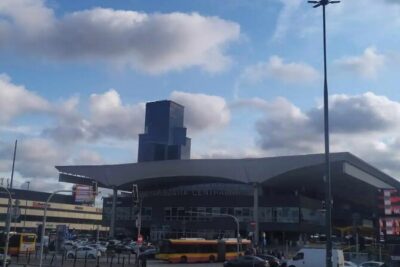
Dworzec Centralny Warszawa and how travel got controlled
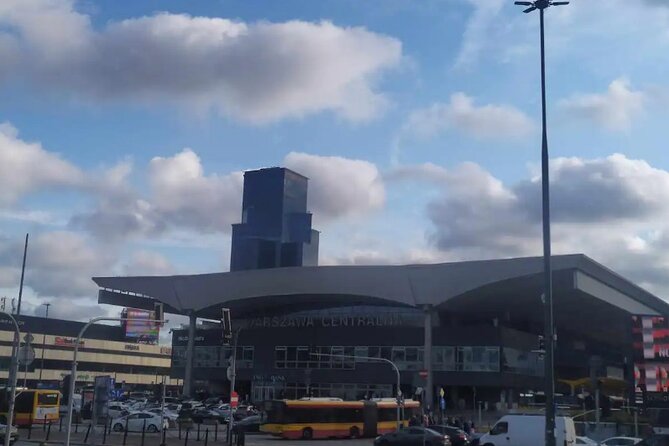
A quick, practical stop follows at Dworzec Centralny Warszawa, Central Station. Even with the station’s modern role today, the tour uses it to explain a darker theme: the state made sure Poles did not travel too far.
You don’t need a lecture on border policy to understand the point. Travel is freedom in physical form. When a regime restricts movement, it restricts opportunity, contact, and even imagination.
From a visitor’s perspective, this stop helps you connect the dots between public infrastructure and private limitation. The route does not treat the station like a generic waypoint. It treats it like part of the system.
Palace of Culture and Science: the controversial icon and why it still matters
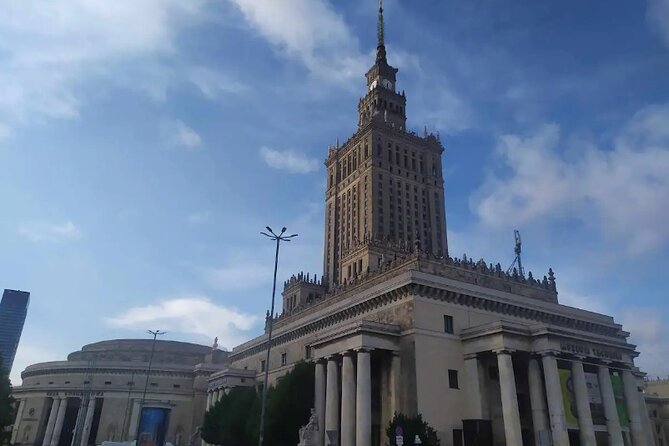
Then you reach Pałac Kultury i Nauki, the Palace of Culture and Science. The tour frames it as the most controversial building in Warsaw, and for more than one reason.
This is the kind of place where you can easily get surface-level. It is big. It is iconic. People take photos. The tour makes you slow down and ask better questions: who built it, who it was meant to impress, and how the symbol of authority shows up in daily perception.
You are also told about the viewing terrace. The tour includes the walk and information, but the entry fee to the terrace is not included. If the views are important to you, budget for that add-on.
If you like your history with atmosphere, this stop is a high point. You end the central loop with a building that the city still argues about, because symbols do not disappear just because governments change.
The finish near Emilii Plater 54, with smarter next steps
You wrap up near Emilii Plater 54. By the end, you should feel like you can navigate Warsaw with more meaning. The guide hands you an information pack too, with FAQ-style context and useful links. You also get recommendations for places to visit and places to eat and drink after the walk.
This is a small but real value-add. History tours can leave you with questions. This one tries to leave you with a plan, so the story keeps going after you stop walking.
Price, time, and who this 150-minute walk fits best
The price is $32 per person, and for a 150-minute guided walk through multiple major sites, it is solid value. You are paying for more than access. You are paying for interpretation, and here the interpretation is the point.
The route covers about 3 km at a pace that fits a guided discussion format. Each stop is usually around 10 to 15 minutes, with short breaks for questions. That keeps it energetic, but it still adds up.
This tour fits best if you:
- want Warsaw history explained through the city’s shapes and symbols
- like guides who use humor to make heavy topics understandable
- enjoy walking tours that end with practical suggestions
It is not ideal if you:
- have problems with walking long distances
- want history that stays surface-level and purely visual
Should you book Life Behind the Iron Curtain Warsaw Walking Tour?
Yes, if you want a Warsaw walking tour that explains communism through the places you can actually see. The strongest reason to book is the balance of big symbols and small, telling details, especially the focus on censorship, espionage, and the way propaganda and socialist realism shaped daily life.
Skip it only if your walking stamina is limited. Otherwise, for $32, you get a tight 2.5-hour experience that helps you understand why those years were so strange, and how Poles managed to live through them with stubborn humor and intelligence.
FAQ
How long is the Life Behind the Iron Curtain Warsaw Walking Tour?
The tour lasts about 150 minutes, roughly 2.5 hours.
Where does the tour start, and how do I find the guide?
You meet at Constitution Square. Look for the guide with a white and green umbrella.
About how far do we walk?
The distance is approximately 3 km.
Is the tour available in English?
Yes, the live tour guide speaks English.
What major places are included in the walk?
You’ll see Constitution Square, Marszałkowska Street, the Free Speech Memorial, socialist realism examples, the area tied to the Communist Party HQ, and the Palace of Culture and Science, among other central stops.
Is the Palace of Culture and Science viewing terrace included?
No. Entry fee to the viewing terrace is not included.
Is the tour wheelchair accessible?
Yes, the tour is wheelchair accessible.
Who should avoid this tour?
It is not recommended for travelers who have problems with walking long distances.
Recently added in Warsaw
- Warsaw: Wolf’s Lair & Swieta Lipka Small-Group Tour + Lunch★ 5.0 · 3 reviews
- World War II Warsaw Old Town, Military Cemetery Walking Tour★ 4.7 · 3 reviews
- Warsaw Wolf’s Lair with St. Lipka and Mamerki Private Guided★ 4.2 · 3 reviews
- Warsaw Zoo Skip-the-Line Entry Ticket with Private Transport★ 4.8 · 3 reviews
- Warsaw: Vodka Tour★ 4.4 · 18 reviews
- Wilanów Palace: 2-Hour Guided Tour with Entrance Tickets★ 4.8 · 8 reviews
- Warsaw Uprising and WWII Old Town Walking Tour with Museum★ 4.7 · 15 reviews
- Warsaw: Private Vodka Tasting Night with Snacks and Pickup★ 5.0 · 7 reviews
Other Communist-Era Warsaw Tours
Private Tour: Warsaw’s Communist History by Retro Fiat
Read our review →
Life Behind the Iron Curtain Warsaw Walking Tour
Read our review →
Self-Drive Tour: Communist Warsaw by Retro Fiat “Toddler”
Read our review →Browse the lists this tour appears in