
Reviewed · COMMUNIST-ERA WARSAW
Life Behind the Iron Curtain Warsaw Walking Tour
Warsaw has a way of showing you history without building a museum bubble around it. This Life Behind the Iron Curtain walking tour takes you through the places where the Polish People’s Republic ran its show, then slows down so you can actually picture daily life. You’ll start at Plac Konstytucji and end by the Palace of Culture and Science.
I really like two things here. First, the guide craft is very strong, with clear explanations and visual aids that make ideas like socialist realism, censorship, and the Party’s power feel concrete. Second, guides such as Olivia and Agnieszka bring real human context, including family accounts that connect the era to what people in Warsaw carry today. One drawback to plan for: it is a walking tour, and it is not recommended if long distances on foot are a problem for you.
Key highlights you should know before you go
- Small group pace: Maximum of 10 travelers, so questions stay easy and the story stays on track.
- Real decision points, not random stops: You’ll see the planned center, parade routes, Party control areas, and everyday-shopping challenges.
- Censorship and surveillance, explained on site: The Free Speech Memorial on Mysia Street gives you a focused way to understand what people faced.
- Socialist realism gets explained, not just labeled: The Ministry building stop is built for learning what the style was trying to do.
- Free admissions most of the way: All stops listed are free of charge, except the Palace terrace.
- Ends at a view option: You can add the Palace terrace if you want (28 PLN), otherwise you still finish with the big-picture talk.
Why this Iron Curtain walk makes Warsaw feel understandable fast
This tour is interesting because it treats Communist-era Warsaw like a lived-in place, not a distant concept. You do not just hear about politics. You walk past the settings where politics affected paperwork, shopping, travel, and public behavior.
The format helps a lot. It lasts about 2 hours 30 minutes, and it keeps moving with short, timed stops. That means you get structure without the feeling of being dragged from one far-away site to another. Plus, with a maximum group size of 10, you are not swallowed by the crowd.
Also, the tour is in English, and it comes with a full info pack about Warsaw before you go. You get FAQ style answers, useful links, and recommendations for what else to see and where to eat or drink nearby. If you want to get your bearings fast, this kind of prep pack is a smart start.
More communist-era Warsaw tours:
- Private Tour: Warsaw’s Communist History by Retro Fiat
★ 5.0 · 115 reviews - Warsaw: Communism Tour in an Original Socialist Van
★ 4.9 · 75 reviews - Warsaw: Cold War Museum Entry Ticket
★ 4.6 · 55 reviews
The route: how the story builds from city center to Party control
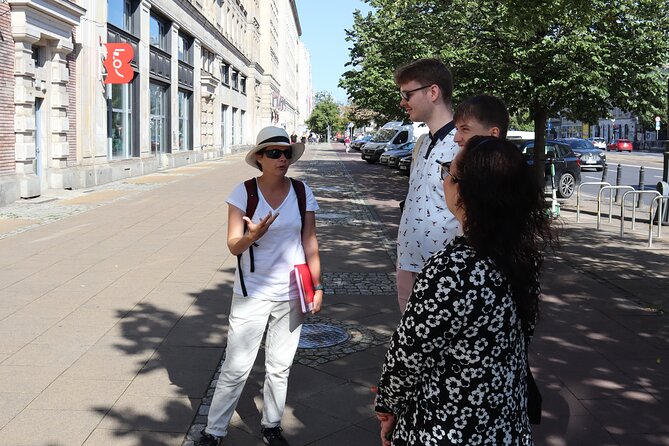
What I like about the itinerary is the way it builds a map in your head. You start where a new center was planned, you move through big state spaces, and you end at the most famous symbol people love to argue about. The walk feels like a guided “how the system worked” lesson, delivered through streets and buildings you can point at.
Here is how the stops work as a sequence, and what each one is doing for your understanding.
Stop 1, Plac Konstytucji: the planned center of the Polish People’s Republic
You meet at Constitution Square, Plac Konstytucji, at 00-647 Warszawa. The guide starts by walking you through the square that was meant to become the new city center of the Polish People’s Republic.
That sounds simple, but it is not. City planning under a total system is never neutral. A government that wants to shape people’s lives also wants to shape what people see every day. This first stop sets that tone: you begin with the idea that the built environment is part of the control.
The pacing is light here too, around 20 minutes. It is enough time to get oriented and learn what to look for on the rest of the route.
Practical tip: treat this stop like your visual anchor. If later you feel like you are learning names and buildings too quickly, come back in your mind to what the guide says this square was supposed to represent.
Stop 2, Marszałkowska Street: parades, marches, and a wide public stage
Next you head along Marszałkowska Street, known for being used for parades and marches. This is where the guide connects street design to political performance.
A wide avenue is not just a roadway. In a regime that loves mass rallies, it becomes a stage. You will see an iconic place from the Polish People’s Republic era on the way, and the explanation helps you understand why this kind of space matters.
This stop runs about 20 minutes, and it works well because it is still moving along a major street you can imagine from photos. If you like learning how architecture changes behavior, this is a good spot.
A small consideration: this is a street walk, so you will want to keep an eye on footing and where you stop so the group does not get squeezed by traffic.
More walking tours in Warsaw:
- Warsaw: Old Town Highlights Walking Tour in English
★ 4.7 · 1,516 reviews - Warsaw: Old Town Guided Walking Tour
★ 4.9 · 599 reviews - Half-Day Polish Food Walking Tour with Guide and Dinner
★ 4.5 · 381 reviews - Warsaw: Warsaw Ghetto Private Walking Tour with Hotel Pickup
★ 4.9 · 369 reviews
Stop 3, the Ministry building: socialist realism as a message in stone
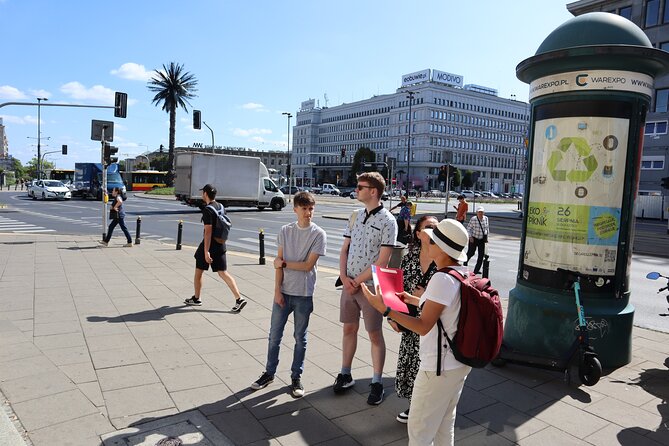
Then you reach the Ministry of Agriculture and Rural Development building. The tour frames it as a strong example of socialist realism, and it focuses on what characterizes that style and why these buildings were built this way.
I appreciate this approach. A lot of tours name styles like they are museum labels. Here, the guide is using style as a clue. You learn that the look of a building was meant to communicate something about the state, work, and order. You are not asked to memorize an art-history checklist. You are asked to notice how the message is built into the form.
This stop is shorter, around 15 minutes, so it stays practical. If you want more art detail than the tour provides, you can use the info pack recommendations to extend your reading afterward.
Stop 4, Mysia 3: the Free Speech Memorial and the reality of censorship
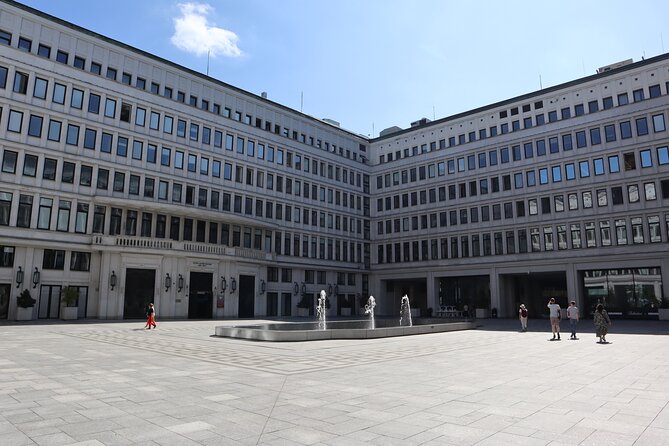
On Mysia Street, the tour goes to Mysia 3, where you will talk about the Free Speech Memorial. This is one of the places where the tour shifts from architecture into sharper human stakes, focusing on censorship and espionage.
The value here is how the guide links concepts to a physical marker. When you understand censorship as a system of fear and limits, you stop seeing it as an abstract idea. And when you connect espionage to everyday life, it makes sense why people watched what they said.
This stop runs about 20 minutes. It tends to be the kind of stop where you might want to pause and look around for details on your own after the guide finishes, because the topic is emotionally intense and your brain will want a second look.
Stop 5, Nowy Świat 6/12: where Communist Party power was managed
Next comes Nowy Świat 6/12, a building that today houses the Banking and Finance Center. The tour explains that during the Polish People’s Republic, this was where the country was managed, with the Communist Party HQ located there.
This is a big jump in scale, from street-level control to top-level administration. The building name and its current function matter, because it shows how regimes change use, not always the physical location. You get a chance to think about continuity: the same streets can hold different power structures over time.
This stop is about 15 minutes. It is timed well. You want enough time to understand the meaning, but not so much time that the tour loses momentum.
Small tip: if you are the kind of person who loves to orient yourself by maps, take a quick photo of where you are on this street. Later, you can trace your walk and see the bigger pattern.
Stop 6, Cedet (Central Department Store): why everyday shopping felt harder
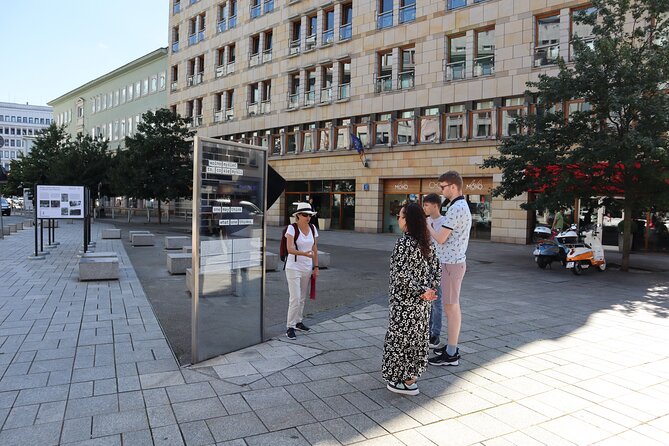
The tour then pauses in front of the Central Department Store Cedet. This stop focuses on one of the most challenging aspects of life during the Polish People’s Republic, buying everyday things.
That is a smart way to teach. Even if you know political events from headlines, food, clothing, and household basics are what made people feel the system every day. The guide uses the shop context to help you understand the practical side of scarcity and how ordinary errands could become stressful.
This stop lasts about 15 minutes, and it works best if you listen for the small behavioral changes the guide points out, not just the official story.
If you are curious, this is also a good moment to mentally connect the past with what you see today in Warsaw stores. The contrast gives the lesson teeth.
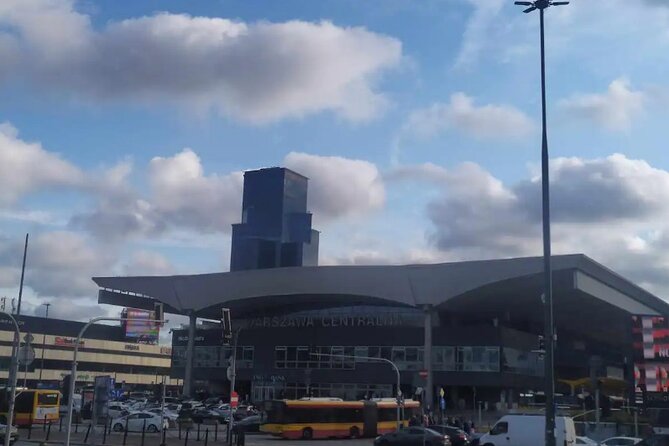
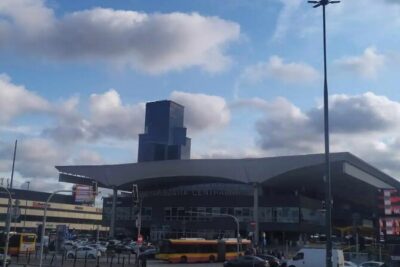
Stop 7, Warsaw Central Railway Station: movement, borders, and the travel story
Now you move to Warsaw Central Railway Station, with a look at both the Central Railway Station and the Downtown Railway Station. The guide then talks about local, regional, and international travel during the Polish People’s Republic.
This stop is more than sightseeing. Travel is a form of freedom and of control. Even without going into detailed routes, the tour uses the station setting to explain how movement shaped daily decisions and how the state cared about where people went.
The time here is about 15 minutes, and because it is a station, you get a real sense of scale. Trains have a way of making history feel practical: you can imagine schedules, announcements, and the tension of planning.
Practical note: stations can be loud and busy. If you prefer quieter tours, you might find this part more intense than the earlier square stops, but the guide keeps it moving.
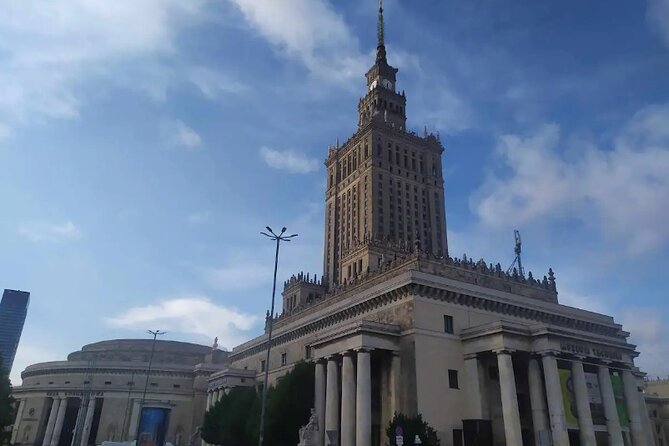
Stop 8, Palace of Culture and Science: the symbol people argue about
The tour finishes in front of the Palace of Culture and Science, which is presented as symbolic but also controversial. You will spend about 30 minutes there, with the guide explaining what you need to know to interpret the building.
This is a fitting finish. By now you have seen how the state planned the city, used major streets, promoted a visual style, controlled speech, centralized power, complicated shopping, and shaped movement. The palace works like the big concluding sentence.
The viewing terrace option is not included in the standard tour price. The entry fee is 28 PLN if you want that extra perspective.
If you choose to skip the terrace, you still get a solid end point with context. If you do go up, do it with the mindset of seeing the whole system as a city-scale design, not just chasing views.
Price and value: what 28.57 buys you
The price is $28.57 per person, for about 2 hours 30 minutes. For a walking tour with multiple stops, guided explanations at each site, and a prepared info pack, that is solid value, especially since the admissions for the listed stops are free.
The big exception is the Palace terrace. Plan for 28 PLN if you want that viewpoint. The good news is you are not forced into paying it to get the tour value.
Another value factor: the group size cap at 10 travelers. That matters more than it sounds. With fewer people, you get better pacing, easier conversation, and you are less likely to lose the thread of the story.
Also, the tour uses a mobile ticket. That keeps things simple. You do not need to chase paper tickets.
What it is like with the guides: stories that make the era human
This is the part that seems to really land. The tour guides Olivia and Agnieszka, as examples from past groups, are praised for being cheerful, clear, and story-driven. The standout trait is how they connect the political system to family experience, which helps the whole era feel less like a textbook.
I like this style because it avoids two extremes. It is not pure doom-and-gloom. And it is not just a list of buildings. The tone tends to be explanatory, with room for the emotional weight when the route reaches topics like censorship and espionage.
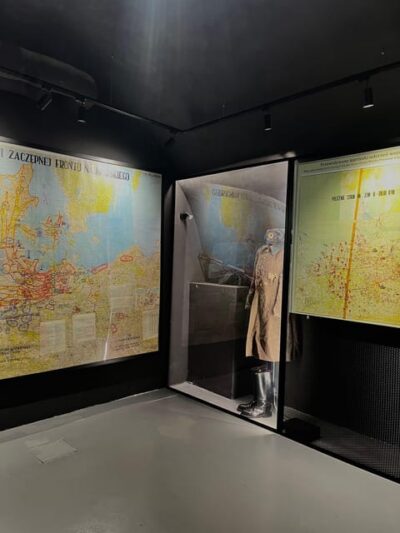
You also get visual aids. That helps when the tour is talking about style choices like socialist realism or ideas like what a regime wants from public squares. If you are the type who learns best by seeing and listening at the same time, this setup is a good match.
Who should book this tour, and who should think twice
This tour fits you best if you want a practical way to understand how the Polish People’s Republic worked on ordinary life. You like walking, you enjoy history that points at real places, and you want a guide to connect the dots instead of leaving you to guess.
It is also a good choice if you enjoy personal storytelling. The guide style here seems designed to make daily impact feel understandable, including how the legacy of that era still matters to people today.
It might not be ideal if long distances on foot are an issue. The tour notes that it is not recommended for travelers with problems walking long distances. Also, this is a city walk, so expect some time spent moving through busy areas.
Good news: service animals are allowed, and the tour is near public transportation. So if you plan your day well, you can combine it with other Warsaw sights without feeling trapped.
Getting the most from it: how to prepare and how to pace yourself
Since the tour includes a pre-tour info pack with recommendations, use it. Scan it ahead of time so you know what to look for next. That turns the walk into the start of your Warsaw plan, not a standalone activity.
Wear comfortable shoes. This is a 2.5 hour walking route with multiple stops. Even if each stop is short, your feet will do the math.
At the Palace of Culture and Science, decide early if the terrace fee is worth it for you. If you are tired, skip it. If you love skyline views, budget for the 28 PLN and plan your last photos.
Finally, take a simple approach to learning: pick one theme for the whole walk. Maybe it is control, daily life, or movement. The guide covers all of it across stops, but choosing one theme helps your brain keep the story straight.
Should you book Life Behind the Iron Curtain in Warsaw?
Book it if you want an efficient, well-paced way to understand Communist Poland through real Warsaw landmarks, with strong guiding and personal stories. The small group size, English-language format, and mostly free admissions make it a good value. Ending at the Palace also gives you a memorable capstone.
Skip it or adjust your expectations if you cannot handle long walks, or if you prefer ticket-heavy indoor attractions over street-level context. And if you are interested in views, remember the terrace is an extra 28 PLN.
FAQ
How long is the Warsaw Life Behind the Iron Curtain walking tour?
The tour lasts about 2 hours 30 minutes.
Is the tour offered in English?
Yes, the tour is offered in English.
What is included in the tour price?
The tour includes a full info pack about Warsaw prior to your tour, visual aids, and recommendations about more places to visit and where to eat or drink.
Is the Palace of Culture and Science terrace included?
No. Entry to the viewing terrace is not included, and the fee is 28 PLN.
Where does the tour start and end?
You start at Constitution Square, Plac Konstytucji (00-647 Warszawa). The tour ends near the Palace of Culture and Science, with the end point listed as Emilii Plater 54 (00-901 Warszawa).
How many people are in the group?
The tour has a maximum of 10 travelers.
Recently added in Warsaw
- Warsaw: Wolf’s Lair & Swieta Lipka Small-Group Tour + Lunch★ 5.0 · 3 reviews
- World War II Warsaw Old Town, Military Cemetery Walking Tour★ 4.7 · 3 reviews
- Warsaw Wolf’s Lair with St. Lipka and Mamerki Private Guided★ 4.2 · 3 reviews
- Warsaw Zoo Skip-the-Line Entry Ticket with Private Transport★ 4.8 · 3 reviews
- Warsaw: Vodka Tour★ 4.4 · 18 reviews
- Wilanów Palace: 2-Hour Guided Tour with Entrance Tickets★ 4.8 · 8 reviews
- Warsaw Uprising and WWII Old Town Walking Tour with Museum★ 4.7 · 15 reviews
- Warsaw: Private Vodka Tasting Night with Snacks and Pickup★ 5.0 · 7 reviews
Other Communist-Era Warsaw Tours
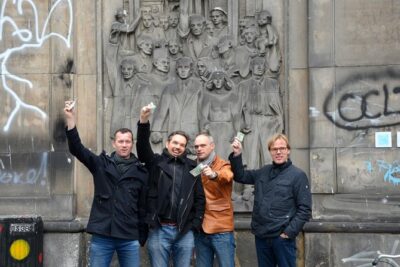
Private Tour: Warsaw’s Communist History by Retro Fiat
Read our review →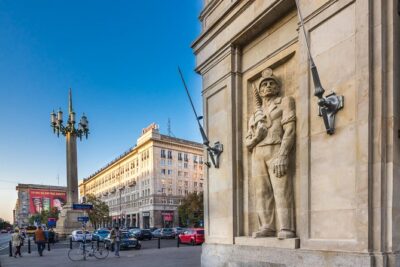
Life Behind the Iron Curtain Warsaw Walking Tour
Read our review →
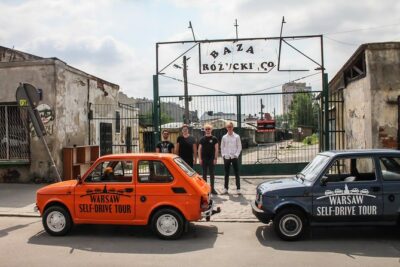
Self-Drive Tour: Communist Warsaw by Retro Fiat “Toddler”
Read our review →Browse the lists this tour appears in