
Reviewed · WARSAW UPRISING & WWII HISTORY
World War 2 in Warsaw walking tour in English
World War 2 in Warsaw is fascinating in a hard way. You walk through places where Nazi rule, civilian terror, and Polish resistance all left marks you can still recognize. It is not a textbook lecture. It is Warsaw, standing in for history.
I like the local guides part a lot, especially since the guides are Poles born and raised in Warsaw and they speak English clearly. I also love that the tour uses war photographs and personal family stories, so the events feel specific, not vague.
One thing to consider: it is a serious, outdoor walking tour, often in cold weather, and you will be on your feet for about 150 minutes.
Key things I’d note before you go

- Orange Umbrella meeting point makes it easy to find your guide near the tall column with the statue on top
- Small groups keep the pace humane for a story this heavy
- Former Nazi German District and Hitler Square show how the occupation shaped everyday space
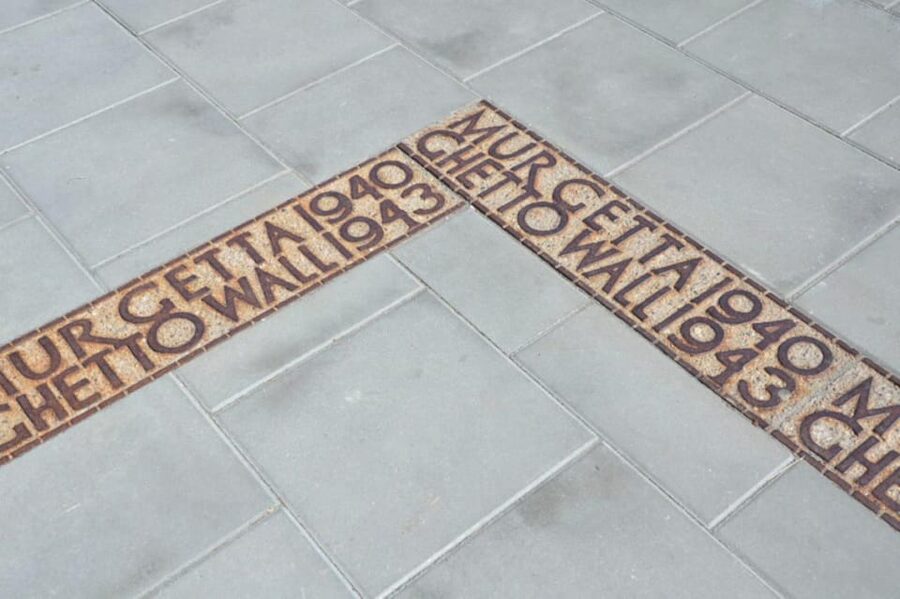
- The former Jewish Ghetto part of the walk connects people, places, and dates instead of just pointing
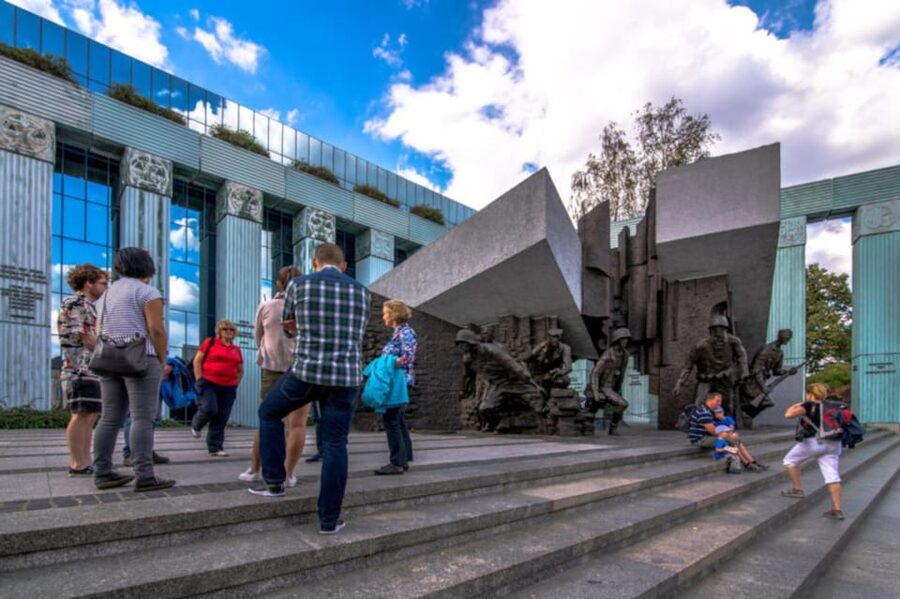
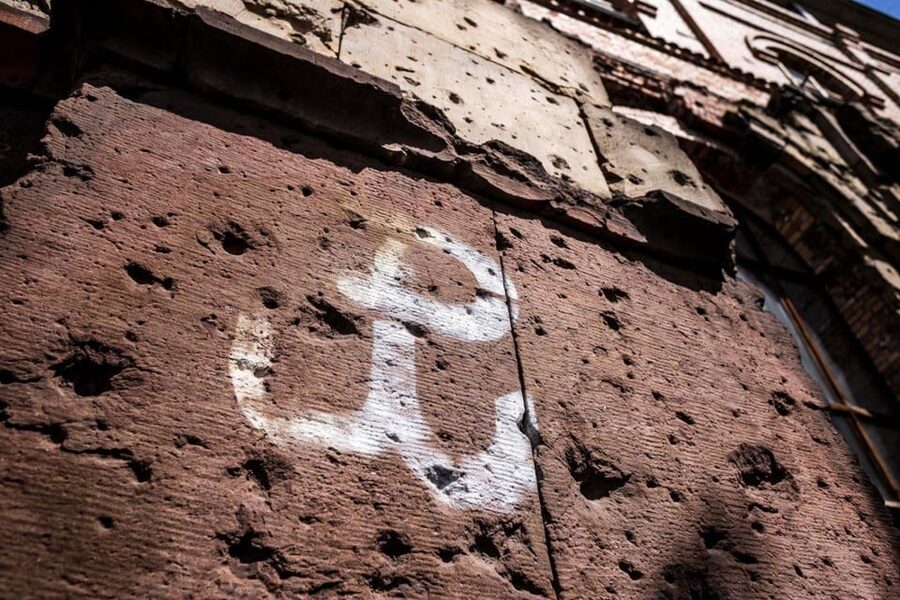
- 1944 Uprising strongholds and execution sites give you the resistance side, not only the violence done to civilians
- War photos and family stories help you picture what the city looked like before and during the worst moments
A World War 2 walking tour that uses Warsaw as the textbook
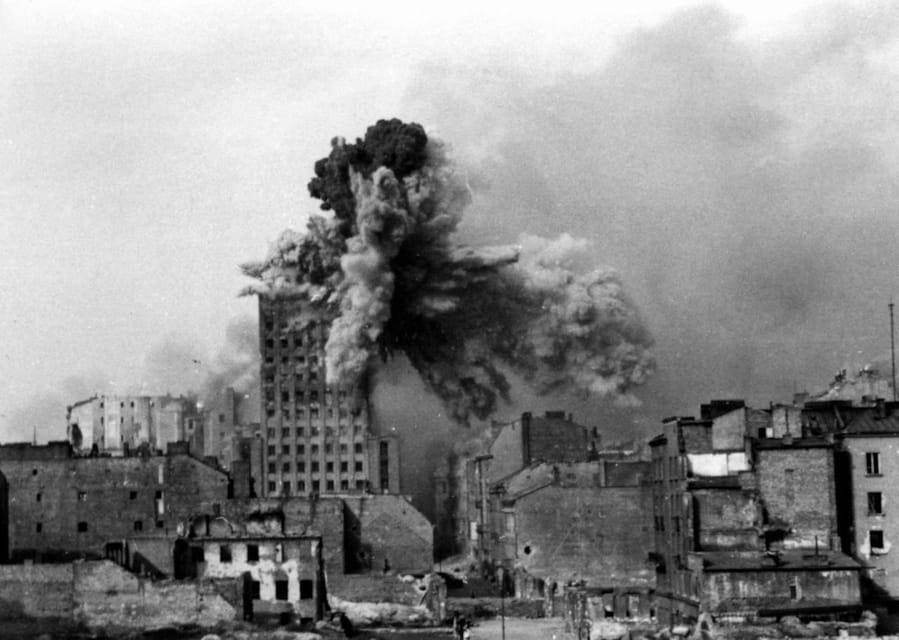
Warsaw took a direct hit during World War 2. Bombings, occupation, forced routines, and constant surveillance were part of daily life. On top of that, Warsaw saw two uprisings that changed everything, including the 1943 Jewish Ghetto Uprising and the 1944 Warsaw Uprising. This tour is built to help you understand that sequence, stop by stop, using the physical city as your guide.
Here is what I like about the approach. It does not only say what happened. It helps you see where it happened and why those locations mattered. That difference is huge. Standing near a real place turns numbers and dates into something you can feel, even when your brain really wants to stay distant.
More Warsaw Uprising and WWII history walks:
- Warsaw for WWII Buffs – private tour with hotel pickup
★ 5.0 · 166 reviews - Warsaw Uprising Museum (1944) : PRIVATE SERVICE /inc. Pick-up/
★ 4.5 · 18 reviews - Warsaw Uprising and WWII Old Town Walking Tour with Museum
★ 4.7 · 15 reviews
Finding your guide: the orange umbrella and the tall column
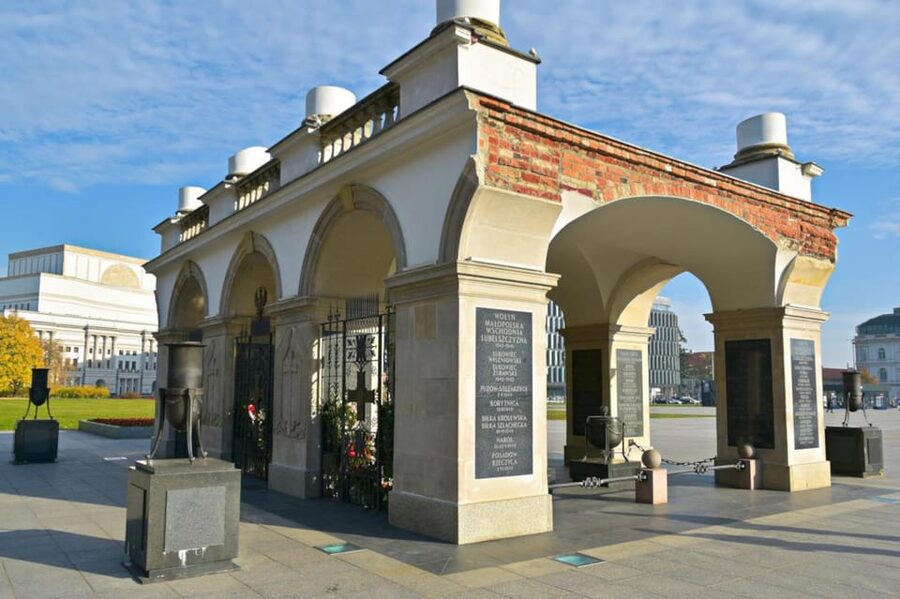
Your meeting point is easy to spot if you arrive a few minutes early. Look for a guide holding an Orange Umbrella close to the 20-meter-high column with a statue on top. That kind of landmark matters in Warsaw, because streets can be busy and the sidewalks can look similar if you are rushing.
Once you locate the umbrella, you are basically done with the hard part. From there, the tour style is straightforward: walk, stop, listen, move on. The pace is built around a serious subject without turning it into a sprint.
The story starts with occupation: the Nazi district and the shape of control
A big reason this tour works is that it explains occupation as something spatial. You do not just learn that the Nazis controlled Warsaw. You learn how they used certain areas, buildings, and public spaces to enforce power.
You will see the former Nazi German District, which helps you grasp that the occupation was not a random “bad time.” It was planned and administered. Then the route takes you to the area known as Adolf Hitler Square. That name alone is chilling, but the value here is in what your guide connects to it, how the city’s layout and symbols fed propaganda and control.
If you want a tour that helps you connect dots fast, this is where it starts. You leave the first part of the walk with a clearer sense of why certain neighborhoods mattered to the occupiers and how civilians navigated those pressures.
The former Jewish Ghetto stop: moving from place to people
The most emotionally demanding parts of this tour are also the most important ones, and the visit to the former Jewish Ghetto is central. You are not just hearing about tragedy in general terms. You are looking at a specific geography, and the guide ties together the people, the timeline, and the reality that the ghetto was part of the machinery of persecution.
This is where the tour’s structure pays off. Since Warsaw suffered so much, it is easy to feel overwhelmed. Here, the stops give you a way to organize what you are learning. The result is that you understand the 1943 Jewish Ghetto Uprising as a real response inside an actual place, not as a detached chapter.
Guides also lean on war photographs and personal family stories to bridge the distance between then and now. In the past, I have found that kind of storytelling either gets sloppy or gets powerful. On this tour, it is clearly the powerful version, including details that help you picture daily life and not only the headline events.
More walking tours in Warsaw:
- Warsaw: Old Town Highlights Walking Tour in English
★ 4.7 · 1,516 reviews - Warsaw: Old Town Guided Walking Tour
★ 4.9 · 599 reviews - Half-Day Polish Food Walking Tour with Guide and Dinner
★ 4.5 · 381 reviews - Warsaw: Warsaw Ghetto Private Walking Tour with Hotel Pickup
★ 4.9 · 369 reviews
Where the Resistance fought back: 1944 strongholds and execution sites
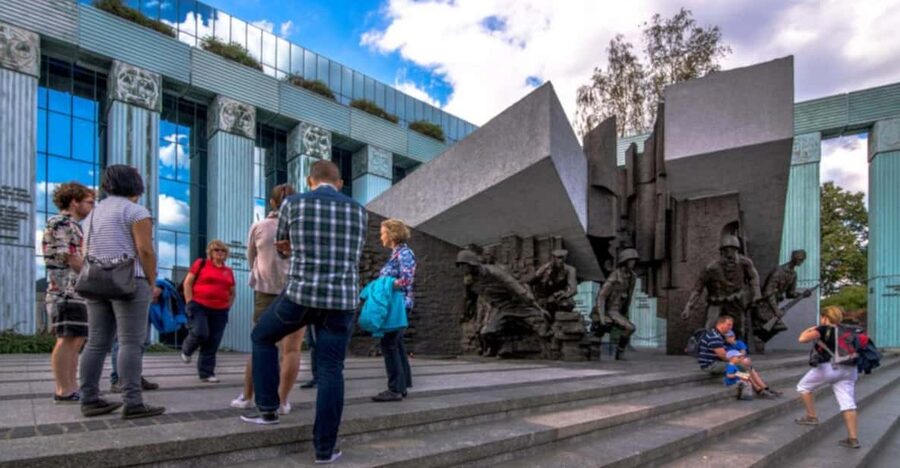
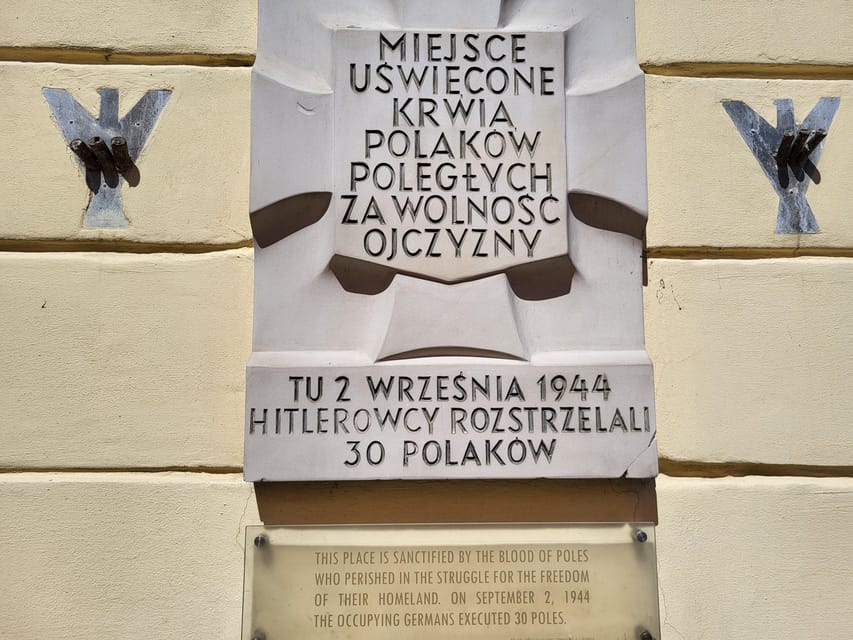
The walk does not stop at victimhood. It moves into resistance, including what the Polish Resistance was doing in the 1944 Warsaw Uprising. You will visit execution sites and strongholds tied to the uprising.
That combo is deliberate. Execution sites are the cost of resistance. Strongholds are the effort and organization behind it. Together, they help you understand the “why” behind the risk, not only the “what” of destruction.
One practical note for your mindset: this portion can feel heavier than you expect, because it forces you to hold multiple truths at once. Civilians were under brutal pressure, and resistance still organized, fought, and tried to change the outcome. Your guide keeps the thread clear so you are not just absorbing horror with no structure.
What makes the guide experience feel authentic (and why names matter)
The experience is guided by experienced local guides who are Poles born and raised in Warsaw. You also get a style that is personal, not generic. Many guides on this route are praised for being able to answer hard questions, explain complex events in plain English, and keep the group moving at a respectful pace.
From the guide names that show up repeatedly, I’d expect you might be guided by people like Magda, Goska (Gosia), Piotr, Iga, Andrew, Eliza, Arek, or Albert. The common thread in the feedback is not just that they know the topic. It is that they connect their narration to the places you are standing in, and they share family-linked stories that make Warsaw feel human rather than abstract.
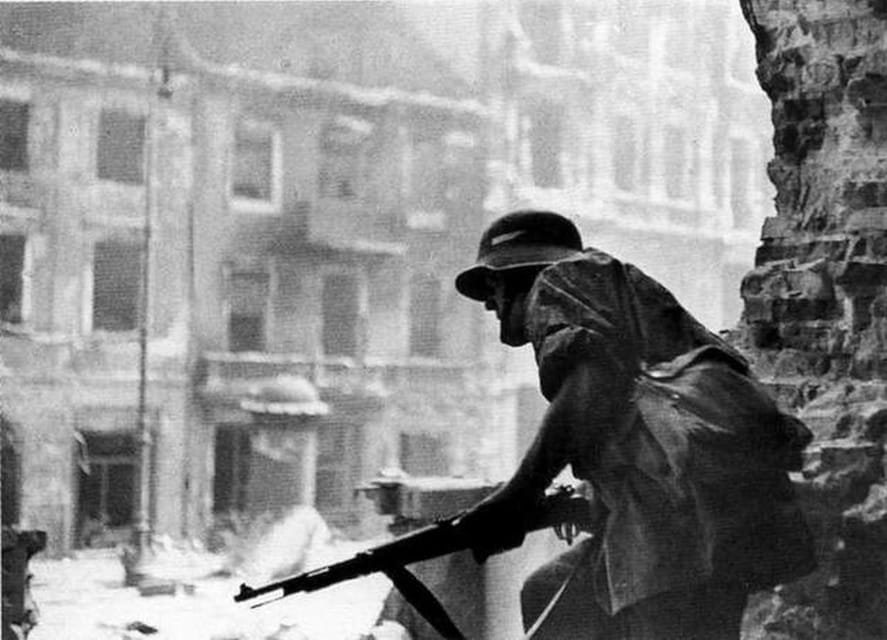
Also, watch for how your guide uses visuals. The tour is enriched with war photographs, and some guides also bring in old photos and maps to help you compare then versus now. That is a smart technique because Warsaw has changed a lot since the war, and your eyes need help translating what you see today.
How long is enough: 150 minutes of stops, not a rapid-fire lecture
The tour lasts about 150 minutes. That timing is long enough to build context, but not so long that you completely lose your ability to absorb. Most importantly, it is structured for walking.
Still, be honest with yourself about your energy. It is an outdoor route, and the weather can be brutal. One tour day can turn into a “bundle up for real” situation. Several guides are praised for caring for the group even when the cold is intense, which is a good sign. On your end, dress like you are staying outside longer than you think you will, because pauses and emotions both slow the clock.
Pace also depends on the group. Since it is a small group, it usually stays manageable. But you are joining a group of other tourists, so questions and timing will be shared.
Price and value: $20 for a full, place-based WWII story
At $20 per person for 150 minutes, this is not a premium-feeling price. It also does not promise a private show. What you are paying for is access to an experienced local guide plus the story framework that turns a set of locations into a coherent World War 2 narrative.
In practical value terms, think about this: Warsaw is huge. If you try to do the same route yourself without guidance, you will likely hit two problems. You might miss why a place matters. Or you might get the general history but not the specific connections that explain what you are seeing.
This tour aims directly at those problems. You get a guide who can keep the timeline straight and who can point out what to notice at each stop, including how the war shaped daily life. That makes the $20 feel more like “buying clarity” than “buying entertainment.”
Who this walk is best for, and who should consider a different option
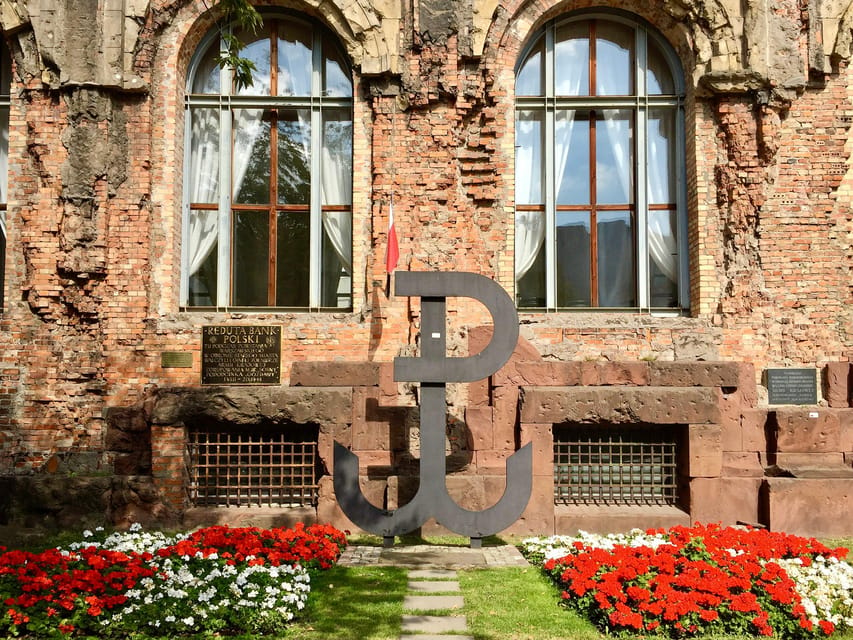
This tour is ideal if you want WWII in Warsaw with a clear storyline and a strong emphasis on Polish experiences, including resistance. It is also a good choice if you like history but do not want to spend your whole day in museums.
It is also a strong pick for families, though you will want to use your judgment. The subject matter is heavy, and some families do fine with that, especially when the guide keeps the pacing steady and the tone respectful.
If you are very sensitive to emotional topics, you might find this difficult. If your mobility is limited, note that the tour is wheelchair accessible, which is a big plus. If the cold is your enemy, plan your clothing accordingly. And if you hate walking in general, this is still a walking tour, so it may be better to choose a more stop-and-sit style experience.
Practical tips that make a difference in winter Warsaw
This tour is serious, but you can still set yourself up for comfort. I recommend:
- Dress for real cold, not for the fantasy version of cold you feel indoors.
- Bring gloves and something warm for your ears. You will thank yourself during pauses.
- Wear shoes with grip. You want stable footing when you are processing difficult material.
- If you like taking notes, consider bringing a small notebook. The stops pack in names, dates, and connections.
One more small suggestion. If you enjoy having a visual reference while you walk, it can help to have a map or phone notes ready. Some guides use photos and maps, but having your own quick orientation can make the route feel less abstract.
FAQ
FAQ
Where do we meet the guide?
Meet your guide near the 20-meter-high column with a statue on top. Look for a guide holding an Orange Umbrella close to that column.
Is the tour in English?
Yes. The tour is offered in English with a live tour guide.
How long is the walking tour?
The duration is 150 minutes.
How much does it cost?
The price is $20 per person.
What WWII sites will the tour cover?
The walk includes the former Nazi German District, the former Adolf Hitler Square, the former Jewish Ghetto, and sites connected to execution and strongholds of Polish Resistance during the 1944 Warsaw Uprising.
Are there small groups or will I be alone?
It is a group tour. You join other tourists, and it is described as small groups.
Is the tour wheelchair accessible?
Yes, the tour is wheelchair accessible.
Is there free cancellation and a reserve and pay later option?
You can cancel up to 24 hours in advance for a full refund. You can also reserve now and pay later, meaning you can book your spot and pay nothing today.
Should I tip the guide?
If you feel you only enjoyed the tour yourself, you are encouraged to tip the guide. The note explains that broker’s commission, agency commission, and taxes can consume 60% of the payment.
Should you book this English World War 2 in Warsaw walking tour?
If you want WWII history that is anchored in real streets, this is a solid choice. The combination of local Warsaw guides, war photographs, and family stories makes it easier to understand what you are seeing, not just memorize facts. The route covers the big anchors people come to Warsaw for, including the Nazi occupation areas, the Jewish Ghetto, and the 1944 uprising sites tied to resistance and executions.
Book it if you are ready for a serious walk, plan for cold weather, and enjoy guided context in plain English. Skip it if you want something lighthearted, dislike walking for 150 minutes, or would rather start with a museum on your first day so you can set the emotional tone first.
Recently added in Warsaw
- Warsaw: Wolf’s Lair & Swieta Lipka Small-Group Tour + Lunch★ 5.0 · 3 reviews
- World War II Warsaw Old Town, Military Cemetery Walking Tour★ 4.7 · 3 reviews
- Warsaw Wolf’s Lair with St. Lipka and Mamerki Private Guided★ 4.2 · 3 reviews
- Warsaw Zoo Skip-the-Line Entry Ticket with Private Transport★ 4.8 · 3 reviews
- Warsaw: Vodka Tour★ 4.4 · 18 reviews
- Wilanów Palace: 2-Hour Guided Tour with Entrance Tickets★ 4.8 · 8 reviews
- Warsaw Uprising and WWII Old Town Walking Tour with Museum★ 4.7 · 15 reviews
- Warsaw: Private Vodka Tasting Night with Snacks and Pickup★ 5.0 · 7 reviews
Other Warsaw Uprising & WWII History Tours

Warsaw for WWII Buffs – private tour with hotel pickup
Read our review →
Warsaw Uprising Museum (1944) : PRIVATE SERVICE /inc. Pick-up/
Read our review →
Warsaw Uprising and WWII Old Town Walking Tour with Museum
Read our review →
Warsaw Uprising Museum (1944) + POLIN Museum : SMALL GROUP /inc. Pick-up/
Read our review →
WWII Private Tour by Retro Minibus with Hotel Pickup
Read our review →
Warsaw Uprising Museum (1944) + POLIN Museum: PRIVATE TOUR /inc. Pick-up/
Read our review →
Majdanek – German camp from II World War – Private Tour – 1 DAY TRIP FROM WARSAW
Read our review →Browse the lists this tour appears in