
Reviewed · WARSAW UPRISING & WWII HISTORY
Warsaw for WWII Buffs – private tour with hotel pickup
Warsaw for WWII Buffs is interesting because you’re not just reading plaques, you’re moving through the actual city layout where 1939, the ghetto, and the Warsaw Uprising played out. The retro Żuk minibus adds a time-capsule feel, and the route is planned so you can handle a lot of heavy history in about 3 hours.
What I like most is the clear historical narrative that connects the political chaos before the war to daily life under occupation, then to resistance and the aftermath. The second big plus is the way the tour can be customized, and you’ll see that in how guides like Konrad, Tom, and Karol are described as flexible, conversational, and ready to answer follow-up questions.
One consideration: this is a vintage vehicle experience. Some minibuses can be bumpy, and there are notes about seat comfort and getting in and out, plus no air conditioning, so it matters what time of year you go and what your mobility needs are.
Key Highlights That Matter
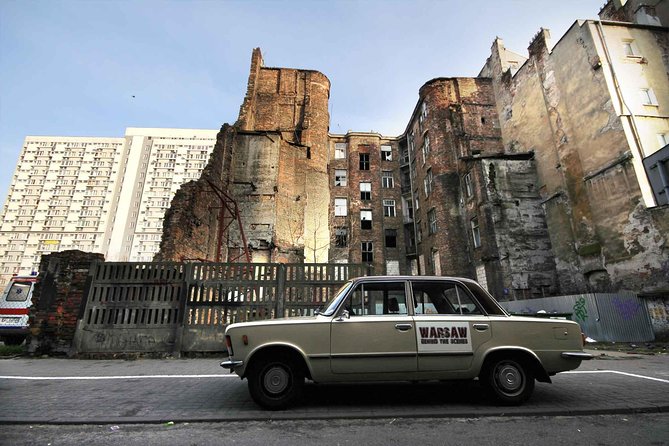
- A tight 3-hour route that hits the ghetto wall fragments, major ghetto-era divide points, and WWII and Soviet-era memorials.
- Central hotel pickup within 3 km saves time, but the transfer time counts inside the tour length.
- English-speaking local guides include historians, and names like Konrad, Tom, and Lucas come up for strong teaching and clear communication.
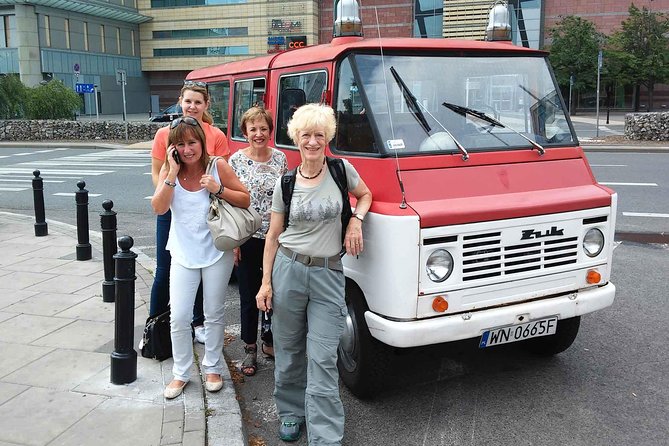
- Vintage Żuk minibus rides are fun and atmospheric, with heating in winter but often no air conditioning.
- Walking segments at each stop mean you get close to the landmarks, not just photo stops.
- All stops are listed as admission ticket free, which keeps planning simple for a first-time visit.
Why This Retro Żuk Ride Fits a Busy Warsaw Day
This tour works because it respects your time. Three hours is short enough to slot into a day plan, but long enough to go beyond the usual “drive-by” style sightseeing. You start in central Warsaw, then move through several meaningful areas, with short walking breaks so you can actually see what the guide is describing.
The best part is the pacing. Instead of one long lecture, you get repeated “arrive, look, understand, move on” moments. That format matters in a subject like WWII, because the facts hit harder when you’re standing where the city tells the story.
And yes, riding in a vintage communist-era minibus is part of the charm. It’s practical too: the vehicle handles transfers comfortably, while your legs handle the close-up parts. Think of it as a guided walk with wheels in between, rather than a bus tour where you barely step outside.
More Warsaw Uprising and WWII history walks:
- World War 2 in Warsaw walking tour in English
★ 4.7 · 237 reviews - Warsaw Uprising Museum (1944) : PRIVATE SERVICE /inc. Pick-up/
★ 4.5 · 18 reviews - Warsaw Uprising and WWII Old Town Walking Tour with Museum
★ 4.7 · 15 reviews
Hotel Pickup Within 3 km, and Why Timing Matters
The tour offers pickup and drop-off within a 3 km radius of the city center. In plain terms, that’s a big help if you’re staying near the core sights. It’s also a time saver, since the guide meets you at your hotel or apartment instead of forcing you to figure out another meeting point after you arrive tired.
But here’s the catch that’s worth planning for: transfer time counts in the total tour time. If your lodging is near the edge of that 3 km area, it may eat more of your three hours than you expect. The operator notes that if pickup is farther or inaccessible by car, they may suggest a closer meeting spot. My advice is simple: if you want the full history time, pick a meeting point closer to where the route starts.
In real life, that means if you can meet in the center rather than waiting for a longer car ride, you’ll feel less rushed when the tour turns emotional.
Stop by Stop: From Pre-War Politics to the Warsaw Ghetto
You begin in central Warsaw and start with the city as evidence. The guide frames WWII as something that happened inside a living place, not just dates in a book. You’ll hear about the late 1930s political climate, then the German invasion of Poland in 1939. The story continues with the simultaneous Soviet occupation of eastern Poland, which helps explain why Poland’s situation changed so abruptly and painfully.
From there, the route shifts from broad events to the geography of persecution. One of the standout segments focuses on the tragedy of Warsaw’s Jewish population under Nazi rule. The Nazis established the Warsaw Ghetto in 1940, confining nearly half a million people within its walls. What you’re seeing today is not a whole preserved complex, but fragments of the ghetto wall tucked between buildings and aligned with pre-war property lines.
At stops on Waliców street, you get a chance to understand how the ghetto boundary divided space that once felt ordinary. That detail hits because the walls are not staged. They’re embedded in the city, and the guide helps you read those edges, the “before” and “after” of where people lived and where movement was controlled.
This is also where the tone of the tour becomes grounded. The guide’s job is to make sense of what you’re seeing, not to sensationalize it. Expect the conversation to feel serious and respectful, because the history is.
Chłodna Street’s Bridge and the City Split in Two
Then comes a very specific, very Warsaw detail: Chłodna street and the way it functioned as a division line in 1941. Here you’re learning that the ghetto was not one simple perimeter you could describe from a map. It was cut and segmented, and daily movement was affected by that structure.
The guide points you toward a wooden bridge built near the intersection of Chłodna and Żelazna streets. It linked two parts and reached up near the third floor of buildings. That height mattered because it allowed certain traffic to pass beneath, including what people often call “Aryan” trams and German military transports and cars.
Why is this useful? Because it gives you a mental picture that you can carry through the rest of Warsaw. You start seeing the city as a system of routes and obstacles, not just streets and landmarks. You begin to understand how occupation reshaped ordinary infrastructure, down to who could cross, where, and how.
This is also a good stop for photos, but don’t treat it like a quick snapshot moment. The guide’s explanation makes the scene more intelligible and more haunting in the right way.
Other Warsaw tours to compare
- Private Tour: Warsaw City Sightseeing by Retro Fiat
★ 5.0 · 562 reviews - Warsaw: Warsaw Ghetto Private Walking Tour with Hotel Pickup
★ 4.9 · 369 reviews - Private Tour: Warsaw’s Jewish Heritage by Retro Fiat
★ 5.0 · 208 reviews - Private Historical Tour of Warsaw by a Retro Fiat with Pickup
★ 5.0 · 190 reviews
Muranów, the Ghetto Heroes Monument, and the POLIN Area
Next is Muranów. On first look, it can seem like a typical neighborhood: squared blocks of flats, streets that look familiar, and a modern city rhythm. That’s exactly why the guide’s role matters. You’re guided to see what’s underneath the everyday surface.
The tour then includes the area around the Monument to the Ghetto Heroes and the POLIN Museum of the History of Polish Jews. The connection here is the ground where the first armed clashes of the 1943 Ghetto Uprising occurred. You’re not just learning about resistance as an abstract concept. You’re being guided toward the symbolic places that mark that turning point.
One of the reasons this stop feels powerful is that it’s framed as remembrance and also as a space for dialogue between communities. It’s not only about the past. The guide helps you understand why the area represents decades of memory, and how public history can keep uncomfortable truths visible.
If you’re a WWII buff, this section likely feels like the “anchor” of the entire route. It’s where the tour ties together confinement, resistance, and Poland’s ongoing relationship with that history.
WWII’s Wider Scars: Soviet Occupation and the 1944 Uprising
The tour doesn’t stop with Nazi persecution. It moves into the early Soviet period and then toward the Warsaw Uprising of 1944.
At the Monument to the Fallen and Murdered in the East, the focus is on what happened to Poles after September 17, 1939, when the Soviet Union attacked Poland about two weeks after WWII began in Europe. The guide explains that Poland’s eastern part was lost forever. After the fall of the USSR, this monument was erected to honor Poles deported to Gulags in Siberia, killed in executions, and victims of the Katyń massacres.
This stop is brief on the clock, but it changes how you interpret the whole WWII narrative. It adds the second half of the tragedy, so you don’t leave with a single-story version of the war.
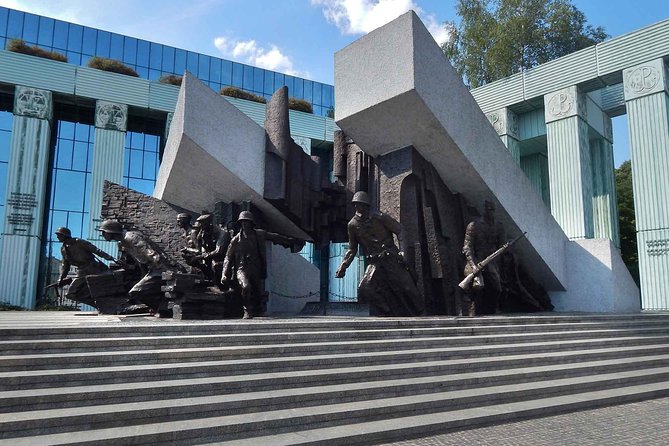
Finally, the tour ends at the Warsaw Uprising Monument. You learn that the uprising was the city’s last major attempt to regain independence before the arrival of the Red Army. After defeat, Nazi forces systematically destroyed most of Warsaw. Then the Soviet army entered the ruins in January 1945, beginning a new era of communist rule.
Expect this ending to land emotionally. It often feels like the tour is closing a loop: the occupation you started with becomes the destruction you end with, and then the post-war reshaping of life.
The Guides: English Delivery, Flexibility, and Real Answers
A huge portion of the value here comes from the guide. The tour is led by a professional English-speaking local guide, and the teaching style matters because this topic can turn dry fast if you get the wrong narrator.
Across the guides associated with this route, there’s a pattern of strengths. Konrad and Tom are noted for brilliant, fluent English and the ability to bring WWII in Warsaw to life. Karol is mentioned as interactive, able to keep teenage sons engaged, and willing to tailor the walk to the group. Lucas is described as so loaded with information that 3 hours can feel short, which is a compliment and a warning at the same time.
The customization is also practical. If you already know a lot and want more specificity, the guide can steer the emphasis. If you’re newer and want the storyline cleaned up, that works too. The tour format supports that, since you’re repeatedly stopping and asking questions instead of sitting for long stretches.
My suggestion: go in with 2 or 3 questions you really care about. For example, ask how the ghetto’s boundary worked day to day, or what changed in Warsaw after January 1945. Guides on this route tend to treat questions like part of the itinerary.
Comfort Tips for Vintage Żuk Minibuses (No AC, Heating On)
The minibus experience is part of the product. The transport is by a retro communist minibus and it’s used primarily for transfers between locations. You’ll walk in between, so wear shoes that handle uneven pavement and short distances without drama.
A few comfort realities to plan around:
- The vintage vehicles are not equipped with air conditioning.
- Some do not have seat belts, which is permitted for historic vehicles.
- All vehicles have heating for winter.
So, if you’re traveling in summer, think layers that work when you’re moving in heat and then standing outside at memorials. If you’re traveling in winter, you’ll likely be comfortable in the vehicle, but still bundle up for the short walks.
Also pay attention to vehicle entry and seating. There’s at least one note that the actual vehicle can differ from expectations and that seats can be uncomfortable for getting in and out, especially for a senior traveler. If comfort matters, ask what kind of Żuk you’ll use, or at minimum confirm how accessible it is for your group before you commit.
Price and Value: What $169.38 Buys You in Real Terms
The price is $169.38 per person for an approximately 3-hour private tour. That sounds steep until you break down what’s included.
You get:
- A professional English-speaking guide
- Transport by retro minibus
- Hotel or apartment pickup and drop-off within 3 km of the city center
- A private format where only your group participates
For many travelers, the private part is what justifies the cost. In a tour like this, your best moments happen when you can ask follow-up questions on the spot. A group with 8 people max per vehicle still feels intimate when the guide can respond directly rather than talking to a large crowd.
Admission is also a help. Every stop is listed as admission ticket free, so you’re not stuck with extra fees at each location. You’re paying for interpretation and logistics, not museum entry.
If you’re a solo traveler, this might feel like a “splurge for focus” choice. If you’re traveling as a couple or small family, it can be one of the most cost-effective ways to get high-quality history guidance without spending your limited time on buses and confusing self-guided routes.
Who Should Book This Tour, and Who Might Want More Time?
This is ideal for WWII buffs and anyone with a strong interest in how Warsaw’s WWII story is written into the streets. It’s also a good fit if you want a respectful, emotional route that covers both the ghetto experience and the later Soviet and uprising chapters.
It’s a less ideal choice if you want a very relaxed sightseeing day. The subject matter is intense, and the tour is designed to stay focused. You’ll likely want breaks to absorb, and the short stop times mean you have to let the guide do the heavy lifting of interpretation.
It can work well for families too, since the tour can be booked for adults and children over 150 cm. For children under 150 cm, seat boosters are mandatory under Polish law, and you’ll need to contact the operator in advance to confirm availability.
If you know you want maximum detail, think about adding time elsewhere or booking a longer format in the same topic area. One guide note suggests that 3 hours can feel short for someone who wants all the context.
Should You Book Warsaw for WWII Buffs?
If your goal is a high-impact WWII walkthrough in a short time, I’d book it. The combination of hotel pickup, English local guidance, tight routing, and repeated close-ups at meaningful places makes this one of those tours that actually improves how you understand the rest of your Warsaw stay.
Book it especially if you care about the “why” behind what you’re seeing, not just the “what.” Ask your guide what to look for at the ghetto wall fragments and at the division points around Chłodna. You’ll get more out of the city that way.
Skip it or plan carefully if heat, mobility, or vehicle comfort are major concerns. Vintage minibuses are part of the charm, but they’re still vehicles. Check that the vehicle arrangement works for your group.
FAQ
How long is the Warsaw for WWII Buffs private tour?
It runs for about 3 hours.
Is the tour private, and how many people fit in a minibus?
It is private, and only your group participates. Each retro minibus accommodates up to 8 passengers.
Do you pick up from hotels outside the city center?
Pickup and drop-off are available within 3 km of the city center. If your place is farther or inaccessible by car, the operator suggests a closer meeting point.
Are entry tickets included for the stops?
The stops in the itinerary are listed as admission ticket free.
Is the vintage minibus air-conditioned?
No. The classic vintage minibuses are not equipped with air conditioning, but they do have heating for winter.
What is the cancellation refund timing?
You can cancel for a full refund if you cancel at least 24 hours before the experience starts. If you cancel less than 24 hours before, the amount you paid is not refunded.
Recently added in Warsaw
- Warsaw: Wolf’s Lair & Swieta Lipka Small-Group Tour + Lunch★ 5.0 · 3 reviews
- World War II Warsaw Old Town, Military Cemetery Walking Tour★ 4.7 · 3 reviews
- Warsaw Wolf’s Lair with St. Lipka and Mamerki Private Guided★ 4.2 · 3 reviews
- Warsaw Zoo Skip-the-Line Entry Ticket with Private Transport★ 4.8 · 3 reviews
- Warsaw: Vodka Tour★ 4.4 · 18 reviews
- Wilanów Palace: 2-Hour Guided Tour with Entrance Tickets★ 4.8 · 8 reviews
- Warsaw Uprising and WWII Old Town Walking Tour with Museum★ 4.7 · 15 reviews
- Warsaw: Private Vodka Tasting Night with Snacks and Pickup★ 5.0 · 7 reviews
Other Warsaw Uprising & WWII History Tours
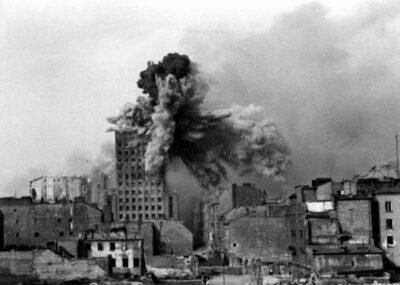
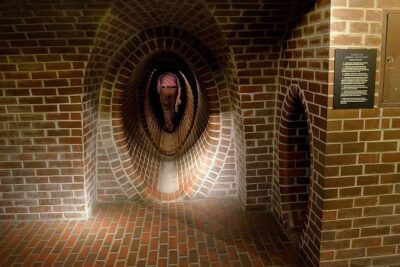
Warsaw Uprising Museum (1944) : PRIVATE SERVICE /inc. Pick-up/
Read our review →
Warsaw Uprising and WWII Old Town Walking Tour with Museum
Read our review →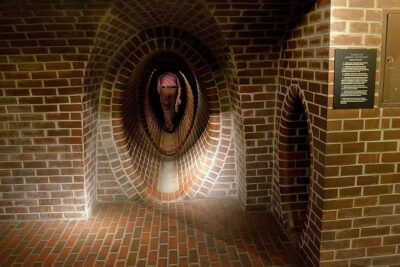
Warsaw Uprising Museum (1944) + POLIN Museum : SMALL GROUP /inc. Pick-up/
Read our review →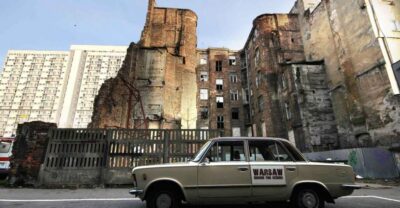
WWII Private Tour by Retro Minibus with Hotel Pickup
Read our review →
Warsaw Uprising Museum (1944) + POLIN Museum: PRIVATE TOUR /inc. Pick-up/
Read our review →
Majdanek – German camp from II World War – Private Tour – 1 DAY TRIP FROM WARSAW
Read our review →Browse the lists this tour appears in