
Reviewed · WARSAW UPRISING & WWII HISTORY
Warsaw at War 1939-1945: A Self-guided Audio Tour
What makes this audio tour interesting is that it turns a simple city walk into a clear, chronological story of Warsaw under WWII, from the Old Town streets all the way to Józef Piłsudski. I love the offline VoiceMap setup, because you can keep going without hunting for cell signal, and I also like the sound design that uses narration plus effects and music to keep the walk engaging.
One possible drawback to keep in mind is navigation can take attention. The built-in route guidance and the off-route alert can feel a bit sensitive if you stray onto the opposite side of a street, so plan on checking your screen now and then rather than walking on autopilot.
Key highlights at a glance
- 90 minutes, about 3 km of walk, with frequent chances to pause and explore
- English narration with sound effects and music, tuned for easy listening
- Offline audio, maps, and geodata so you can roam more freely
- Memorial stops including Mały Powstaniec and the Tomb of the Unknown Soldier
- Finish at the Józef Piłsudski statue, tying the WWII story to Poland’s earlier fight for independence
A 90-minute self-guided walk that tells WWII Warsaw in order
This is a self-guided audio experience, so you control the pace. The format is simple: start the tour in the VoiceMap app, then follow the guidance through central Warsaw. You’re looking at roughly a 3 km walk over about 90 minutes, but the important word is time. You can stop anytime, step into a side street, or take a break before continuing.
The value here is how the story is staged along real landmarks. This route does not ask you to sit and read your way through tragedy. Instead, you move through the city and let the narration connect the places. It’s the kind of route that works well if you are traveling solo, because it does not depend on a group schedule.
I also appreciate the way the tour is built for flexibility in listening. You can use ear buds or headphones, and if you are in a small group you can even carry a small speaker. That means you can keep the experience social, but still private enough to hear clearly.
More Warsaw Uprising and WWII history walks:
- World War 2 in Warsaw walking tour in English
★ 4.7 · 237 reviews - Warsaw for WWII Buffs – private tour with hotel pickup
★ 5.0 · 166 reviews - Warsaw Uprising Museum (1944) : PRIVATE SERVICE /inc. Pick-up/
★ 4.5 · 18 reviews
Where it starts, where it ends, and why that matters
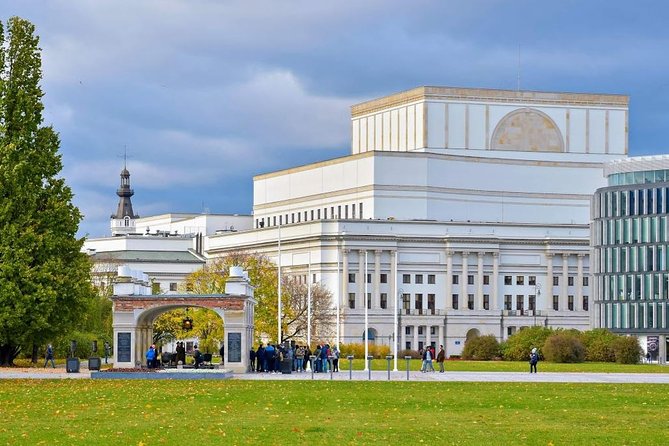
The tour starts at Kościół Akademicki św. Anny, Krakowskie Przedmieście 68. It ends at the Statue of Józef Piłsudski, plac Marszałka Józefa Piłsudskiego. That start-to-finish arc is useful, because it gives you a built-in backbone: begin near the historic Old Town area, then work your way toward a final focal point tied to Polish independence.
The tour is offered in English, and it is designed for most travelers. There is a listed maximum size of 10 travelers, though the experience itself is self-guided through the app, so you are not stuck with a large crowd moving pace-to-pace.
Timing is also forgiving. The meeting point locations show open hours from 12:00 AM to 11:59 PM, which basically means you can plan around your day without feeling cornered by a tight ticket window. Just remember, the city’s regular life still sets the real mood and crowd levels.
Stop 1: Old Town, the walk itself, and smart detours
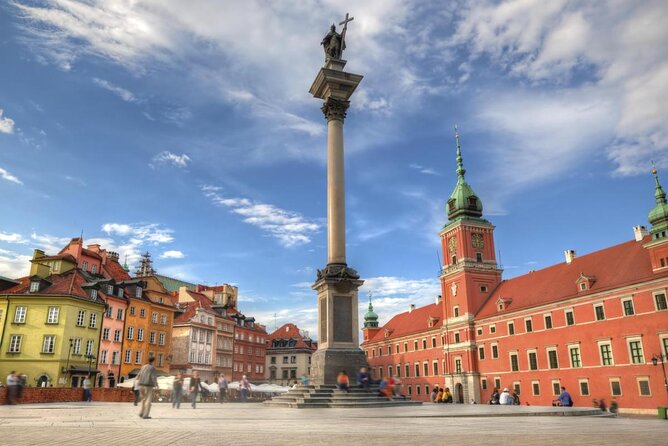
The tour begins just outside Warsaw’s famed Old Town and leads you through the streets for the core exploratory walk. The narration is built to guide you street by street, and the walk takes about 90 minutes total for this segment.
The practical beauty of starting here is that Old Town gives you immediate visual context. Even if you know you want to focus on WWII, you still need the setting: where the city’s story unfolds, and how it looks today. As you move, the tour encourages you to pause and explore around you. That matters, because Warsaw is not a museum you can rush. You’ll likely spot side attractions that you may want to add on.
Two examples you might consider, based on what the tour suggests along the way:
- The Vodka Museum, if you want something lighter that still fits the Old Town vibe
- A lunch stop at one of the many restaurants nearby, so you do not turn this into a rushed marathon
The tour also gives you an option to wander the Saxon Garden if you want a calmer pause between memorial-style stops. That kind of breathing room helps the heavier parts land better.
A small navigation tip that can save you stress
Because this is self-guided, you will be using the app during the walk. Plan to check your map occasionally, especially at turns. One review-style issue that can pop up with this kind of routing is the route-deviation alarm being too sensitive. If you step onto the other side of a street, it can trigger. You can avoid most frustration by staying aware of which side you are walking on and confirming the prompt before crossing.
Other Warsaw tours to compare
- Warsaw’s Old Town A Self-Guided Audio Tour
★ 4.5 · 10 reviews - Medieval Warsaw Walking Tour with Smartphone App
★ 2.7 · 4 reviews
Mały Powstaniec: remembering the child insurgents of 1944
Mid-route, the tour shifts to one of the most moving memorial stories on this walk: Mały Powstaniec, the memorial to child soldiers who fought and died during the Warsaw Uprising of 1944.
This stop works because it does not treat the uprising as a vague historical event. It narrows the focus to a specific human reality, children caught up in armed resistance. That changes how you interpret everything you heard before. Suddenly, WWII in Warsaw is not only about generals, walls, and dates. It is about the people who should not have been there.
A good strategy for this kind of stop is to slow down your body. Step off your normal walking pace. Let the narration finish the main points before you move on. Then look around with your eyes, not just your phone. Even if you think you already understand the uprising, Mały Powstaniec can make the scale feel personal.
The Tomb of the Unknown Soldier: a sacred place with a lot of history in one spot
Another key stop on the tour is the Tomb of the Unknown Soldier. Here, the audio pauses you for respect and attention, and it explains the monument’s history.
The detail I find especially powerful is that the tomb today contains ashes and soil from every 20th-century battlefield where Polish soldiers lost their lives. That is a big statement, and it makes the site feel less like a single story and more like a national record of loss.
This stop is also a good example of what the tour does well overall. It gives you a framework to read the place. You are not just standing at a monument. You are standing at a summary of wars and sacrifices. The narration helps connect why this kind of memorial matters in a country that has had to rebuild after repeated destruction.
Practical note: even if you think you are prepared for the emotional tone, give yourself a moment before you resume walking. This is the type of stop where rushing can make the experience feel flat.
The end at Józef Piłsudski: closing the loop from WWII to independence
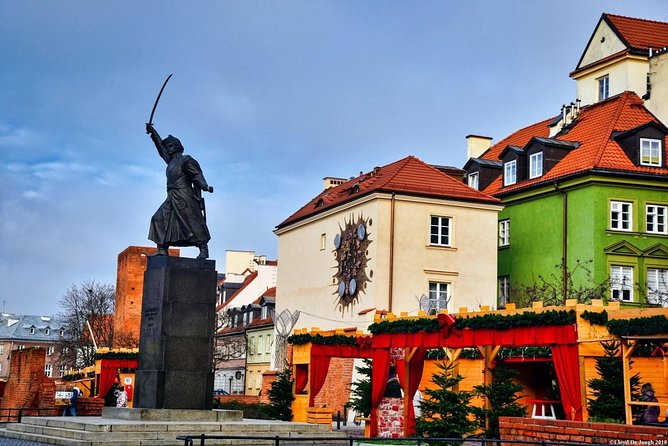
The tour ends with a face-to-face moment with Józef Piłsudski, described as a political and military hero. The story connects your experience to Poland’s earlier fight for independence, and then ties it forward into the WWII era mindset.
You hear about how Piłsudski fought relentlessly to free Poland from Russian control. The narration also highlights a specific turning point: he ultimately defeated Lenin’s Red Army at the gates of Warsaw in 1920.
Why this ending matters is that it keeps the bigger story from feeling one-dimensional. Warsaw’s WWII experience was brutal, but Poland’s relationship with the region did not start in 1939. Ending at Piłsudski gives you a reference point for the stubbornness and determination that the narration frames as part of Polish identity.
If you enjoy history through “cause and effect,” this structure hits well. You see how struggles for sovereignty can echo across decades, and how a city can carry old lessons into newer catastrophes.
Price and value: $9.99 for a story you can replay
At $9.99 per person, this audio tour is priced for casual adoption. You are not paying for an all-day guided group, and you are not paying for museum tickets inside the experience. You are paying for a built package of narration plus maps and offline files.
What makes it feel like good value is the lifetime access. You do not have to squeeze this into one perfect trip date. If you loved it, you can reuse it later, or follow the route again on a return visit with a new viewpoint.
Also, the included offline access to audio, maps, and geodata is the real cost saver. Warsaw is walkable, and if you can keep your route working without data, you can spend less time solving phone problems and more time paying attention.
What’s included vs not included, so you can plan sanely
Here is the practical split:
Included:
- Lifetime access to the tour
- VoiceMap application
- Offline access to audio, maps, and geodata
Not included:
- Smartphone
- Transportation
- Food and drinks
- Tickets or entrance fees to museums or attractions along the way
This means the route can stay flexible, but any add-on museums or attractions you choose are on your dime. The tour itself lists admission ticket free for the walking experience, so you are not buying an entry fee just to do the route.
How to get the most out of the app in real Warsaw streets
Audio tours are only as good as the moment you start them. A few practical moves can improve your experience right away.
First, start the tour in the app, and then follow the direction through the streets. The tour description suggests a flow where you can put your phone away after launch and let the guide direct you. In practice, I’d treat that as a comfort option, not a rule. If you are the type who likes to confirm turns, keep the screen handy.
Second, use your listening setup in a way that fits your surroundings. Ear buds and headphones are easiest for focus. If you are walking with a small group and you want shared listening, a small speaker can work, but keep volume reasonable so you do not drown out the city.
Third, plan for interruptions. The narration lets you pause anytime. If you want photos, a quick shop stop, or a detour through Saxon Garden, the tour is designed to tolerate it.
Finally, watch for the route alarm behavior. If you step off the exact lane or cross the wrong way, you may get alerts that feel too sensitive. When that happens, do not panic. Just return to the guided path and keep going.
Who this tour is best for
This is a strong fit if you want:
- A self-guided way to cover Warsaw’s WWII narrative without waiting for a group
- Clear landmark stops, not just a lecture
- A manageable time commitment, about 1 hour 30 minutes
It is also good if you travel solo and like to move at your own pace. The structure supports that, because you can pause and explore wherever you are without feeling you are falling behind.
If you dislike any form of app-based navigation, or you get easily annoyed when the screen tells you you are off-route, you may find it slightly irritating. That is not a reason to skip it, but it is a reason to go in with the right expectations.
Should you book Warsaw at War 1939-1945?
I think this is worth booking if you want a meaningful WWII walk that you can actually finish in one sitting. The price is low, the experience includes offline maps and replayable access, and the route hits emotionally heavy landmarks without turning them into a rush-through list.
Book it if you:
- Like stories that connect places in a logical order
- Want an experience you can control minute by minute
- Appreciate a mix of narration, effects, and music that keeps attention on the move
Skip it if:
- You hate app routing and alarms, and you prefer fully offline, paper-based navigation with no prompts
- You are looking for museum entry tickets included in the price
If you are aiming for a smart, self-guided introduction to Warsaw’s wartime memory, this one is a solid, low-stress choice.
FAQ
How long is the Warsaw at War 1939-1945 self-guided audio tour?
It takes about 1 hour 30 minutes.
What is the walking distance for the tour?
The walk is approximately 3 km.
Where do I start and where does the tour end?
Start at Kościół Akademicki św. Anny, Krakowskie Przedmieście 68, and end at the Statue of Józef Piłsudski, plac Marszałka Józefa Piłsudskiego.
Is the tour available in English?
Yes, the narration is offered in English.
Does the tour include any museum tickets or entrance fees?
No. Tickets or entrance fees to museums or other attractions are not included.
Can I use the audio and maps offline?
Yes. The tour includes offline access to audio, maps, and geodata.
Is a smartphone included?
No. A smartphone is not included.
Are service animals allowed?
Yes, service animals are allowed.
Can I get a refund if I cancel?
No. This experience is non-refundable and cannot be changed for any reason.
Recently added in Warsaw
- Warsaw: Wolf’s Lair & Swieta Lipka Small-Group Tour + Lunch★ 5.0 · 3 reviews
- World War II Warsaw Old Town, Military Cemetery Walking Tour★ 4.7 · 3 reviews
- Warsaw Wolf’s Lair with St. Lipka and Mamerki Private Guided★ 4.2 · 3 reviews
- Warsaw Zoo Skip-the-Line Entry Ticket with Private Transport★ 4.8 · 3 reviews
- Warsaw: Vodka Tour★ 4.4 · 18 reviews
- Wilanów Palace: 2-Hour Guided Tour with Entrance Tickets★ 4.8 · 8 reviews
- Warsaw Uprising and WWII Old Town Walking Tour with Museum★ 4.7 · 15 reviews
- Warsaw: Private Vodka Tasting Night with Snacks and Pickup★ 5.0 · 7 reviews
Other Warsaw Uprising & WWII History Tours


Warsaw for WWII Buffs – private tour with hotel pickup
Read our review →
Warsaw Uprising Museum (1944) : PRIVATE SERVICE /inc. Pick-up/
Read our review →
Warsaw Uprising and WWII Old Town Walking Tour with Museum
Read our review →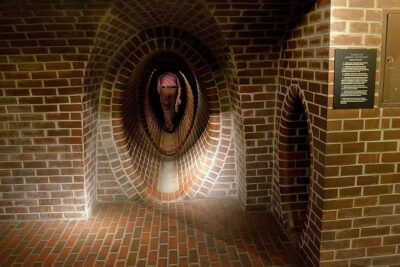
Warsaw Uprising Museum (1944) + POLIN Museum : SMALL GROUP /inc. Pick-up/
Read our review →
WWII Private Tour by Retro Minibus with Hotel Pickup
Read our review →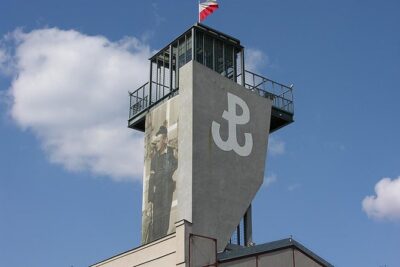
Warsaw Uprising Museum (1944) + POLIN Museum: PRIVATE TOUR /inc. Pick-up/
Read our review →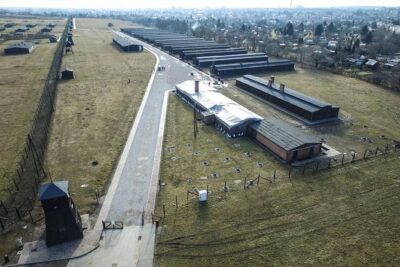
Majdanek – German camp from II World War – Private Tour – 1 DAY TRIP FROM WARSAW
Read our review →Browse the lists this tour appears in