
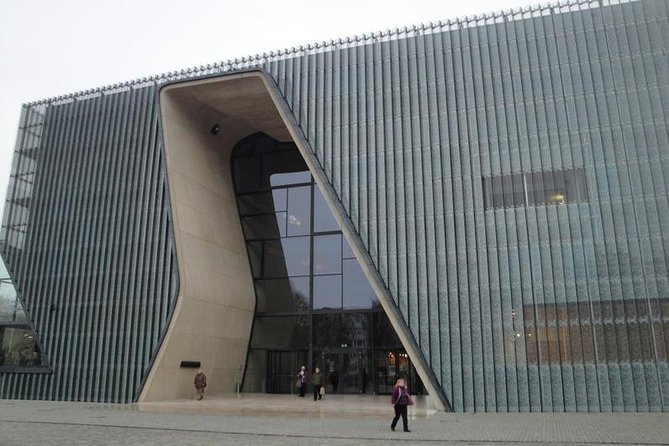
Reviewed · WARSAW GHETTO & JEWISH HERITAGE
Jewish heritage in Warsaw
Jewish heritage in Warsaw hits you fast, because you see how a community lived, was shattered, and somehow kept its landmarks standing. This 5-hour private route is built for people who want the key sites without stitching an itinerary together on your own. You’ll also hear it all in plain language from Renata Kopczewska.
Two things I really like: you cover major WWII anchors in one morning, and hotel pickup and drop-off remove the stress of local transport. One thing to consider is the subject matter is heavy, and if you’re visiting on a Saturday, the Jewish cemetery is closed, while the Nozyk Synagogue has limited access tied to prayer times.
If you want a thoughtful, efficient way to understand Jewish Warsaw, this tour is a strong choice, with one small caveat: a past group review mentioned a very tight car, so if legroom is a dealbreaker for you, you may want to ask ahead about vehicle size.
Key highlights you will feel right away
- Hotel pickup, round-trip drop-off means you spend time looking, not planning.
- Nozyk Synagogue survived WWII and is still functioning, so you’re not only looking at ruins.
- Umschlagplatz is a named departure point from where deportations began, including symbolic names on the walls.
- The Jewish Cemetery explains Warsaw through matzevot and also includes mass-grave context and memorial stones.
- Praga-Północ keeps older Jewish structures where you can still spot stories in everyday settings.
- The route is guided with film context from The Pianist, so the streets feel less abstract.
Jewish Warsaw in five hours, with the right kind of structure
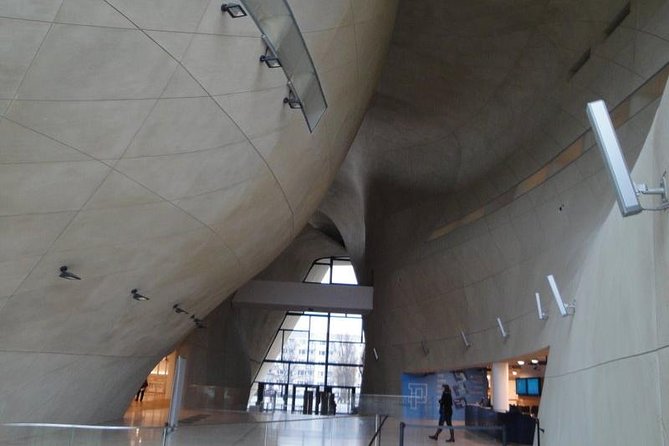
Warsaw can feel like a city of layers. You walk a block, and it’s as if time changes the scene. This tour helps you read those layers quickly, without requiring you to become a historian overnight.
You get a guided flow that starts in the Warsaw Ghetto area and then moves outward to key memory sites and surviving Jewish places. It’s not random stops, and that matters, because the emotional weight lands better when the geography has a logic. A strong highlight is how the tour ties together places you may have only seen in photos, plus some locations connected to The Pianist, so the cityscape clicks into meaning.
Value matters here, too. The price is listed as $270 per group, up to 4 people. In other words, you are not paying per person, which can make it competitive if you’re traveling with a small group or a couple. The tour also helps you avoid paid time lost to sorting out transit and ticket logistics.
More Jewish heritage walks in Warsaw:
- Warsaw: Warsaw Ghetto Private Walking Tour with Hotel Pickup
★ 4.9 · 369 reviews - Warsaw: Jewish History Guided Walking Tour in English
★ 4.7 · 324 reviews - Private Tour: Warsaw’s Jewish Heritage by Retro Fiat
★ 5.0 · 208 reviews
Price and logistics: what you really get for $270
Let’s talk about cost in practical terms. At $270 per group (up to 4), you’re paying for guided access to several major sites plus round-trip transport. You can absolutely pay more in Warsaw for a single museum entrance and still feel like you only scratched the surface.
Here’s what’s included:
- Hotel pickup and drop-off
- Driver/guide
- Fuel surcharge
- A mobile ticket
- A private group setup, meaning your schedule is not at the mercy of strangers
What’s not included:
- Lunch
- Entrance fees where they apply (notably the Jewish Cemetery, Nozyk Synagogue, and Jewish Historical Institute are listed as not included)
That mix is actually useful. You can budget for what you need, and you are not surprised by “everything costs extra” once you’re on the street.
Stop-by-stop guide: what each place means and what to watch for
The itinerary runs about 5 hours total. The pacing is designed for a morning or midday slot, and you’ll have short stretches at each stop rather than long museum marathons. That works well when you want to connect the dots across multiple WWII-related landmarks.
Also, keep in mind this is a tour for people with moderate physical fitness. You’ll be walking and standing at multiple outdoor or semi-outdoor sites. Wear shoes you trust.
Stop 1: Warsaw Ghetto, Rappaport monument, Mila 18, and Umschlagplatz area memorials
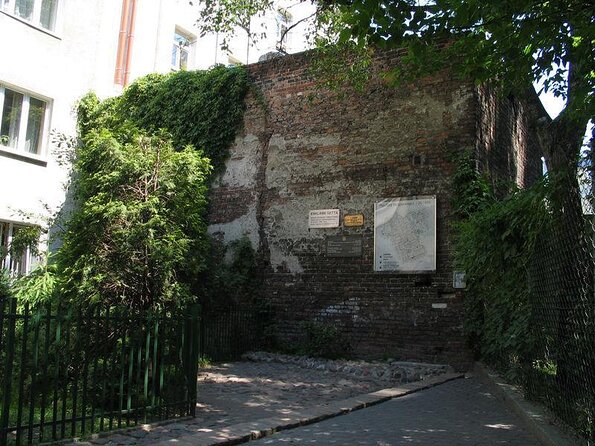
You start in the Warsaw Ghetto area, which sets the tone immediately. The ghetto itself was destroyed after the collapse of the Uprising, so the point here is not “imagine a preserved neighborhood.” Instead, you’re learning how memory is mapped onto the city through monuments and named locations.
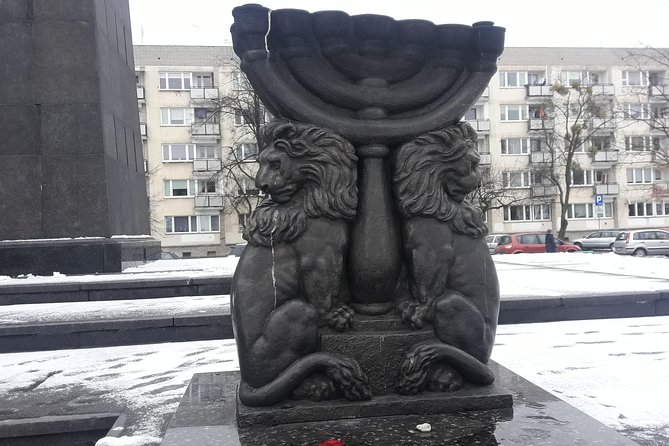
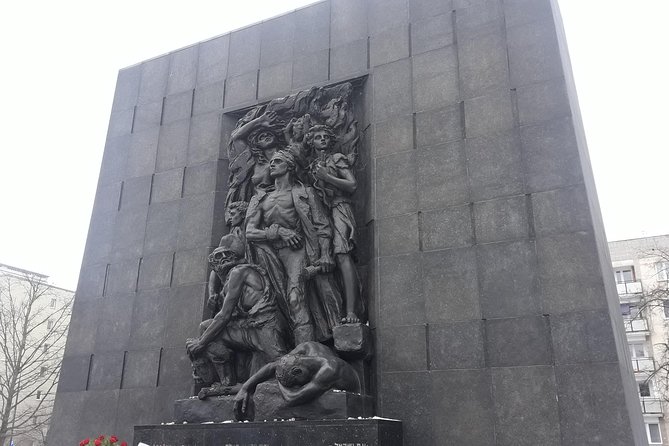
At this part of the route, you see the Rappaport monument dedicated to Heroes of the Ghetto, plus landmarks tied to the ghetto’s story such as Mila 18 and the Shmul Zygielbojm memorial, with Umschlagplatz also part of the surrounding context.
What I find useful about starting here is how it organizes your understanding. Before you reach the more direct departure-site memorials, you already grasp the surrounding story of resistance, survival, and forced movement.
One drawback? The ghetto section is powerful, but it’s also where your emotions may run high. Give yourself a minute before rushing onward.
Time at this stop is around 1 hour, and there is no admission ticket fee for this portion.
More historical tours in Warsaw:
- Warsaw: POLIN Museum of the History of Polish Jews Ticket
★ 4.7 · 1,142 reviews - Warsaw: Chopin Concert at Historical Venue in Old Town
★ 4.7 · 445 reviews - Small-Group Historical Guided Tour of Warsaw with pick up/drop off. Public Tour.
★ 4.5 · 343 reviews - Warsaw: Warsaw Historical Group Tour with Pickup & Drop-Off
★ 4.6 · 233 reviews
Stop 2: Jewish Cemetery (Cmentarz Żydowski) and what matzevot teach you
Next is the Jewish Cemetery, and this is where Warsaw becomes personal. Even without going deep into one family line, you can learn a lot from the preserved matzevot (grave markers). The way names, dates, and inscriptions are recorded turns history into something you can read.
You’ll also get context on WWII tragedies through mass graves and memorial stones dedicated to those who perished in the extermination camp at Treblinka.
Important practical note: the cemetery is listed as closed on Saturdays. So if you’re visiting on a Saturday, this is the first thing to flag, because it affects what you can actually see.
Admission here is not included, so you should plan for an extra ticket if the site is open on your day. Even so, it’s one of the most educational stops because it shifts you from monuments and dates to language, identity, and community continuity.
Time at this stop is about 45 minutes.
Stop 3: Umschlagplatz, the rail-departure site, and the symbolic names
Then you reach Umschlagplatz, located where a former railway station once stood. This is one of those places where the facts feel blunt because you’re standing where deportations began.
The tour focuses on the fact that in summer 1942, about 300,000 Jews from Warsaw Ghetto were deported from this rail point. On the walls, you’ll see 300 first names arranged alphabetically, used as a symbolic inscription.
This stop is short, about 15 minutes, but it’s not “quick and forgettable.” The wall names give you something concrete to hold onto, which is especially helpful if you’re trying to understand the scale without drowning in numbers.
Time at this stop is about 15 minutes, and it is free.
Stop 4: Nozyk Synagogue, the surviving synagogue you can still visit
Now comes one of the most hopeful parts of the route. The Nozyk Synagogue is described as the only synagogue in Warsaw that survived WWII. It was built in the beginning of the 20th century, and it is still functioning.
This is where the tour does something smart: it doesn’t treat the synagogue as a static ruin. You see a living place of worship that survived catastrophe.
There’s also a clear Saturday rule: on Saturdays, it is opened only for prayers. During that time, there is no admission fee charged. Outside that prayer window, the admission ticket is listed as not included, so it may cost depending on how the visit lines up.
Time at this stop is about 15 minutes. The big payoff is that you get to compare two realities side by side: sites that are memorials for destruction, and a synagogue that stayed standing.
Stop 5: Praga-Północ, where Jewish buildings survived in a different way
Praga-Północ is the “different Warsaw” section. Since this area was not destroyed as heavily as downtown, you can still find older Jewish structures that survived in recognizable form.
You’ll stop in places such as:
- a students’ dormitory where Menachem Begin lived as a student
- a shelter for poor people and orphans, now used as a puppet theater
- a former mykveh (ritual bath), which survived and is now a high school
What I like here is that it shifts your thinking from only WWII memory to continuity in urban life. You’re seeing Jewish-related spaces that became other kinds of public buildings, which tells you how the city adapted.
Time at this stop is about 30 minutes, and it is listed as free.
A consideration: if you expect a “museum-style” explanation at each building, the outdoor and street-level nature of these stops can feel brief. Still, the guide’s job is to point you to what you’re looking at, and you’ll get that.
Stop 6: Jewish Historical Institute, the Judaistic Library traces, and ghetto archives
The final major stop is the Jewish Historical Institute. The tour points out it was formerly the Judaistic Library, which survived WWII. Because of its proximity to the Great Synagogue, and because the Great Synagogue was blown up, there are visible traces of fire on the floor.
You also see an exhibition with a map of prewar Poland and former shtetles, plus ghetto archives that miraculously survived.
This stop matters because it moves you from “what was lost” to “what evidence survived.” If you want proof that history was not just erased, this is where it shows up in physical traces and archived materials.
Admission here is listed as not included, so you may want to budget time for ticket purchase or whatever entrance process the site uses on the day you go.
Time at this stop is about 45 minutes.
What makes the guide experience stand out (Renata Kopczewska)
The strongest praise tied to this tour is the guide. Renata Kopczewska comes through as very organized and genuinely strong at answering questions. One group highlighted that the tour didn’t just throw stories at them, it connected each site to what happened next, and she kept answering as curiosity came up.
That kind of guidance is not a small thing. On heritage tours, your experience depends heavily on interpretation. Standing in front of a memorial without a clear explanation can feel like reading a caption. A good guide turns the same scene into something you can actually understand and remember.
Also, the tour is described as seeing many more sites than people expected, even though it stays around 5 hours. That only happens when the itinerary is well paced, and when the guide knows how to use time on the ground.
Timing, emotion, and how to prepare so the tour lands well
This tour is designed to run in the morning window, with opening hours listed as 9:00 AM to 1:00 PM. That helps you plan the rest of your day afterward.
Since many stops involve WWII loss, I suggest you prepare in two simple ways:
- Keep your phone charged and bring a small notebook. You’ll want to write down names like Rappaport, Zygielbojm, and Menachem Begin as they come up.
- Wear layers. Warsaw weather can swing, and you’ll be outside in multiple stretches.
Because you’re in a private group up to 4, you can also expect a bit more flexibility in pace, but the tour still follows the set route. If you get overwhelmed, pause, take a breath, and let the guide know you need a minute.
Who this tour fits best
This is a great fit if you want:
- WWII-focused Jewish heritage in Warsaw without the research work
- a clear route that balances memorials, departures, and surviving places
- a guide who can answer follow-up questions without rushing you
It might be less ideal if:
- you need lots of time inside museums, since the itinerary relies on focused stops rather than long indoor sessions
- you are very sensitive about vehicle comfort, because one review flagged tight legroom in the car for a portion of the ride
Should you book this Jewish heritage Warsaw tour?
I’d book it if you want an efficient, respectful route and you value a guide who can explain what you’re seeing. The combination of major WWII sites like Umschlagplatz, a preserved cemetery with matzevot, and the surviving functioning Nozyk Synagogue gives you a balanced view of Jewish Warsaw, not just one theme.
If you’re visiting on a Saturday, double-check your priorities first because the Jewish Cemetery is closed on Saturdays, and the synagogue’s access is tied to prayer hours.
If you’re traveling as a small group, the pricing structure becomes especially attractive because $270 covers the whole group up to 4, not per person. And with pickup and drop-off included, you’re buying back your time, which in Warsaw is often the real cost.
FAQ
FAQ
How long is the Jewish heritage tour in Warsaw?
The tour lasts about 5 hours.
What is the price and group size?
It costs $270 per group for up to 4 people.
Is hotel pickup and drop-off included?
Yes. Round-trip transport is included with hotel pickup and drop-off.
What sites do we visit during the tour?
You visit the Warsaw Ghetto area landmarks, the Jewish Cemetery, Umschlagplatz, Nozyk Synagogue, Praga-Północ, and the Jewish Historical Institute.
Are entrance fees included?
Entrance fees are not included. The tour includes some stops with free admission, but tickets for the Jewish Cemetery, Nozyk Synagogue, and the Jewish Historical Institute are listed as not included.
Is the Jewish Cemetery open on Saturdays?
No. The Jewish Cemetery is closed on Saturdays.
Can I enter Nozyk Synagogue on Saturdays?
On Saturdays it is opened only for prayers. During that time, there is no admission fee charged.
What is the cancellation window for a full refund?
You can cancel up to 24 hours in advance of the experience for a full refund.
Recently added in Warsaw
- Warsaw: Wolf’s Lair & Swieta Lipka Small-Group Tour + Lunch★ 5.0 · 3 reviews
- World War II Warsaw Old Town, Military Cemetery Walking Tour★ 4.7 · 3 reviews
- Warsaw Wolf’s Lair with St. Lipka and Mamerki Private Guided★ 4.2 · 3 reviews
- Warsaw Zoo Skip-the-Line Entry Ticket with Private Transport★ 4.8 · 3 reviews
- Warsaw: Vodka Tour★ 4.4 · 18 reviews
- Wilanów Palace: 2-Hour Guided Tour with Entrance Tickets★ 4.8 · 8 reviews
- Warsaw Uprising and WWII Old Town Walking Tour with Museum★ 4.7 · 15 reviews
- Warsaw: Private Vodka Tasting Night with Snacks and Pickup★ 5.0 · 7 reviews
Other Warsaw Ghetto & Jewish Heritage Tours
Warsaw Ghetto Private Walking Tour with Hotel Pickup
Read our review →
Private Tour: Warsaw’s Jewish Heritage by Retro Fiat
Read our review →
Ghetto, Jewish Cemetery & POLIN Museum Private Tour
Read our review →
Browse the lists this tour appears in