

Reviewed · WARSAW GHETTO & JEWISH HERITAGE
Warsaw: Jewish History Guided Walking Tour in English
Warsaw’s Jewish history can feel heavy before you even start walking, but this tour turns that weight into clear, specific places you can actually stand in and understand. You get to see the Nożyk Synagogue, and you also walk through the streets tied to the ghetto’s layout. Two things I really like about this experience are the way it anchors big history to exact street corners and the chance to hear how Jewish life shaped the city across centuries.
The other big win is the focus on Chłodna and Waliców Street, including the bridge on Chłodna that connected parts of the ghetto and Waliców Street as the ghetto border with ties to the Warsaw Uprising. The main drawback to consider is also simple: it is a 150-minute walk, outdoors, and the topic is difficult, so come ready for a thoughtful pace and a lot of emotion.
Key highlights worth planning for
- Nożyk Synagogue: the only surviving pre-war Warsaw synagogue
- Chłodna Street bridge site: how the ghetto was physically connected
- Waliców Street: ghetto border and the link to the Warsaw Uprising
- A long view of Jewish Warsaw, from the 19th century through the interwar years
- Stories of both persecution and resilience, ending with today’s community
Finding Jewish Warsaw in Plain Sight: Chłodna, Waliców, and the City’s Memory
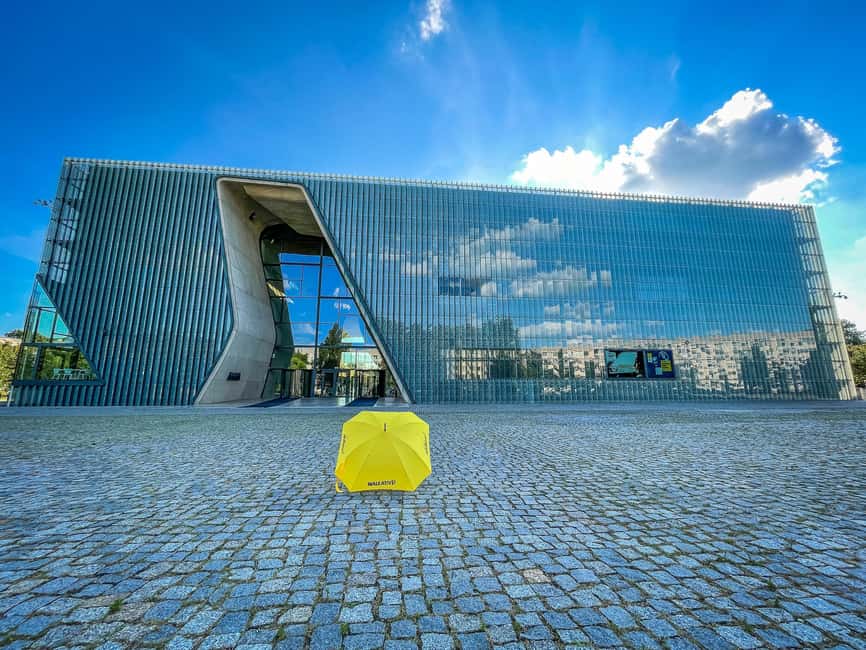
This is the kind of tour that works because it keeps pointing you at real geography. Warsaw was the second-largest Jewish city in the world before the war, and you feel that scale when the guide connects centuries of everyday life to the Second World War and the Holocaust. You are not just hearing names and dates. You are learning what those names and dates meant on the street level.
I also like how the tour holds two truths in the same hand. It does not only focus on persecution and death. It also talks about Jewish participation in city life in good times and bad, including a role in struggles against occupying powers and participation in Polish uprisings. That matters, because it prevents the past from turning into a single, grim snapshot. When you understand the pre-war variety, the destruction afterward hits with sharper clarity.
One practical note: the story can feel emotionally intense. That is not a reason to avoid it, but it is a reason to pick the right moment in your trip. If you are tired, jet-lagged, or already overwhelmed by museum days, you might want to place this earlier or later, not as the first thing you do after a long travel day.
More Jewish heritage walks in Warsaw:
- Warsaw: Warsaw Ghetto Private Walking Tour with Hotel Pickup
★ 4.9 · 369 reviews - Private Tour: Warsaw’s Jewish Heritage by Retro Fiat
★ 5.0 · 208 reviews - Warsaw: Ghetto, Jewish Cemetery & POLIN Museum Private Tour
★ 4.8 · 132 reviews
Nożyk Synagogue: The Quiet Anchor of Pre-War Jewish Warsaw
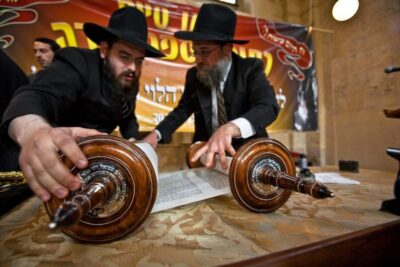
The tour’s centerpiece stop is the Nożyk Synagogue, described as the only surviving pre-war Warsaw synagogue. That single sentence is powerful. It tells you that so much physical memory was erased, and yet one building still holds part of the earlier world in place.
When you approach a surviving landmark like this, the guide’s job gets easier because your eyes can do what a timeline cannot. You can see scale, materials, and location. And you can listen to the meaning behind those facts, including how Jewish life in Warsaw did not start and end with the ghetto. It had institutions, worship, community rhythms, and cultural life long before the war.
From what I’ve seen in how guides deliver this stop, you should expect a careful balance: respect for the solemnity, but also enough context that you understand how this synagogue fit into Jewish Warsaw’s wider social fabric. Some guides also bring support like photos and maps to help you place events relative to streets you are seeing in real time.
The Chłodna Street Bridge Site: Where the Ghetto’s Shape Becomes Understandable
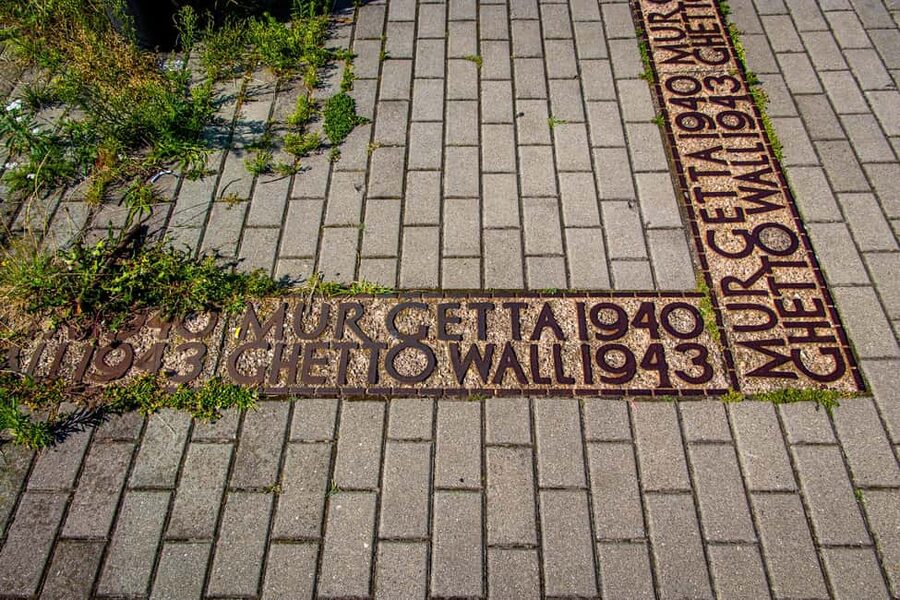
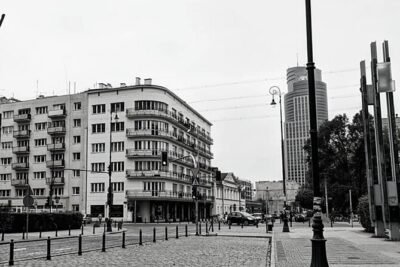
Walking on Chłodna Street gives you one of the most sobering “details that makes the whole thing real” moments. The highlight here is the site of the bridge on Chłodna Street that joined parts of the ghetto. The tour uses that spot to explain something crucial: the ghetto was not just an idea. It was an engineered space, with connections, barriers, and movement controlled by power.
This is also where an engaging guide can really change your experience. In the best guides I’ve heard about for this tour, questions are encouraged. You might hear them clarify why certain places mattered, or how the city’s layout shaped what people could and could not do. That kind of back-and-forth helps you follow the logic instead of just absorbing tragedy.
Because this tour is outdoors and runs about 150 minutes, plan your body for steady walking. If you are sensitive to cold, dress like it is worse than you think. More than one guide experience is described as happening in freezing weather, with people staying engaged anyway. You can too, as long as you do the simple thing first: warm layers, a hat, and comfortable shoes.
Waliców Street as a Real Boundary: Ghetto Life and the Warsaw Uprising Link
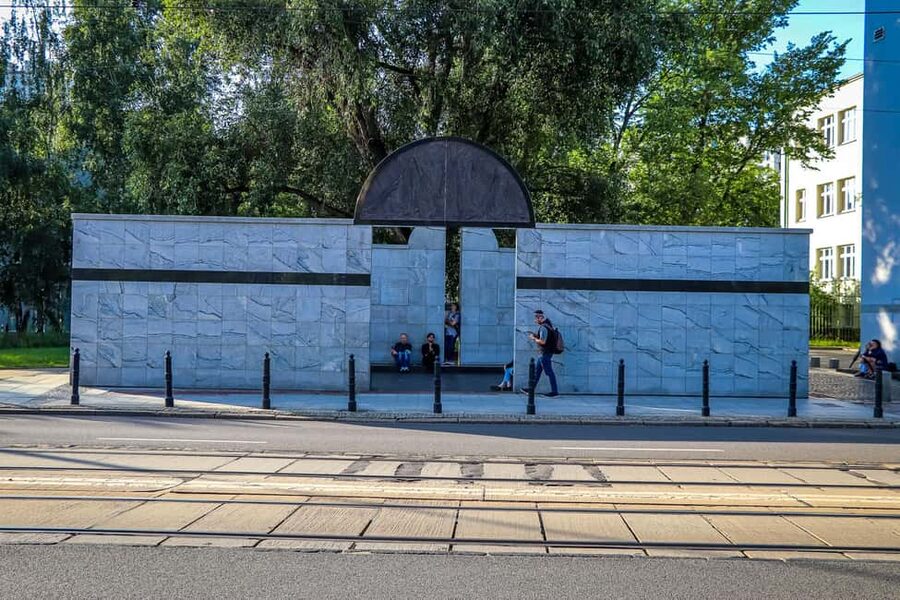
Waliców Street is the other anchor point, described as the ghetto border. Standing near where a border once defined who belonged where, the story stops being abstract. You start to understand daily life through limits: movement restrictions, fear, and the constant presence of power over ordinary choices.
The tour also ties Waliców Street into the Warsaw Uprising. That connection is important because it shows how events overlapped. The uprising was not a separate chapter that exists in its own space. It connects to the pressures and realities under occupation and within the ghetto system.
If you want a tour that gives you cause and effect, this is one. You learn why the border mattered, and you learn how people’s actions fit into larger currents of resistance. Even when the subject is hard, the goal is clarity, not confusion.
More historical tours in Warsaw:
- Warsaw: POLIN Museum of the History of Polish Jews Ticket
★ 4.7 · 1,142 reviews - Warsaw: Chopin Concert at Historical Venue in Old Town
★ 4.7 · 445 reviews - Small-Group Historical Guided Tour of Warsaw with pick up/drop off. Public Tour.
★ 4.5 · 343 reviews - Warsaw: Warsaw Historical Group Tour with Pickup & Drop-Off
★ 4.6 · 233 reviews
Jewish Warsaw Before the War: Interwar Culture, Artists, and Everyday Energy
One of the strongest parts of this tour is how it refuses to let you jump straight from pre-war to war. In the interwar period, Jewish Warsaw flourished with hundreds of artists, actors, writers, and journalists calling the city home, and the cultural life was described as incomparable to any other time and place in history. That is not just a poetic line. It is a structural part of how the guide teaches you to understand what was lost.
I like that the tour frames Jewish history as something lived over centuries, including participation by Jews alongside other Warsaw residents in struggles against occupying powers in the 19th century. That helps you see Warsaw as a shared city, not a collection of separate stories that only meet during tragedy.
This is also where you get the sense that the tour is not only about yesterday. The ending look at today’s Jewish community in Warsaw, described as young, diverse, and energetic with an optimistic eye to the future, gives your brain a place to land. You leave with a better sense of continuity, not only catastrophe.
How the Guides Keep a Difficult Topic Understandable
The most praised aspect across guides for this kind of tour is how they handle a heavy subject without turning it into a lecture with no human thread. You should expect guides to be engaging, to explain in clear English, and to answer questions. Some guides are even noted for humor, described as helping people stay connected while still respecting the seriousness of events.
Names you may hear include Andrzej and Christopher, both described as engaging and thorough. Other guides mentioned include Jacek, Luke, Agnieszka, and Ana, with comments highlighting strong English delivery and the ability to answer questions readily. That pattern matters: the tour is designed for real understanding, not just for walking from one point to another.
You might also notice that some guides use photos and maps, which helps when buildings no longer exist or the city has changed. That is a realistic challenge in Warsaw, and the best guides handle it by giving you visual anchors so you can follow the story even when the original setting is gone.
Price and Time: Is $26 for 150 Minutes Good Value?
At $26 per person for a 150-minute walking tour, this sits in the “serious history, practical length” category. What makes it feel like good value is what you get for the money: a local guide and a focused route that hits major sites tied to Jewish Warsaw’s pre-war life, the ghetto’s geography, and key wartime connections.
Also, the time is long enough to matter. 150 minutes is about two and a half hours, which gives the guide enough space to do more than list facts. And because it is a walking tour, you are using your time efficiently, mixing learning with seeing street-level Warsaw.
The one tradeoff is that you are outdoors the whole time. If you are paying attention to comfort, plan for cold weather and bring layers. The tour’s length makes sense for a walking story, but you do not want to be unprepared.
Meeting Point and What to Bring for a Smooth Walk
You meet next to the All Saints Church at Grzybowski Square, and you should look for a yellow umbrella. That is refreshingly simple. In a city where meeting points can be vague, this one is easy to spot.
For what to bring, keep it practical:
- Warm clothing, since the tour runs for about 150 minutes outdoors
- Comfortable walking shoes
- A small water bottle if you tend to get dry mouth in cold weather
- Questions, because the guides are described as encouraging them
If you need a mental break during the most intense parts, it helps to know you can step aside briefly on your own. Just do not disappear from the group for long, and stay with the guide when the route is moving.
Who This Tour Fits Best (and Who Might Prefer Something Else)
This tour is a strong match if you want street-level context for Jewish history in Warsaw and you like learning through specific locations. It is also a good choice if you want more than ghetto-focused storytelling. The tour includes pre-war life, interwar cultural growth, and a look at today’s community.
It may be less ideal if you know you cannot handle emotionally heavy material, or if you prefer purely “light” sightseeing days. This is the kind of tour where the subject matters, and the guide treats it seriously while keeping you engaged.
Should You Book the Warsaw Jewish History Walking Tour?
Yes, if you want a focused, well-taught walk that connects the Holocaust and the ghetto to exact places like the Nożyk Synagogue, the Chłodna Street bridge site, and Waliców Street as the ghetto border. The combination of clear location-based storytelling and guides who are praised for engagement, humor, and answering questions makes it feel worth it.
Skip it only if you are not up for a two and a half hour outdoor walk in cold weather, or if you prefer a lighter topic for your schedule.
FAQ
How long is the Warsaw Jewish History guided walking tour?
The tour lasts 150 minutes, about two and a half hours.
Where do I meet the guide?
Meet next to the All Saints Church at Grzybowski Square. Look for a yellow umbrella.
Is the tour in English?
Yes, this guided walking tour is in English.
What is included in the price?
The price includes a local guide and the walking tour.
Is hotel pickup or drop-off included?
No, hotel pickup and drop-off are not included.
Is it a private tour?
It joins the general walking tour, and the amount you pay covers the reservation fee and the guide’s payment. If you want a smaller, private tour, you can contact the supplier after booking to organize it.
More Walking Tours in Warsaw
- Warsaw: Old Town Highlights Walking Tour in English
★ 4.7 · 1,516 reviews - Warsaw: Old Town Guided Walking Tour
★ 4.9 · 599 reviews - Half-Day Polish Food Walking Tour with Guide and Dinner
★ 4.5 · 381 reviews - Old Town Warsaw Walking Tour
★ 4.5 · 333 reviews
Recently added in Warsaw
- Warsaw: Wolf’s Lair & Swieta Lipka Small-Group Tour + Lunch★ 5.0 · 3 reviews
- World War II Warsaw Old Town, Military Cemetery Walking Tour★ 4.7 · 3 reviews
- Warsaw Wolf’s Lair with St. Lipka and Mamerki Private Guided★ 4.2 · 3 reviews
- Warsaw Zoo Skip-the-Line Entry Ticket with Private Transport★ 4.8 · 3 reviews
- Warsaw: Vodka Tour★ 4.4 · 18 reviews
- Wilanów Palace: 2-Hour Guided Tour with Entrance Tickets★ 4.8 · 8 reviews
- Warsaw Uprising and WWII Old Town Walking Tour with Museum★ 4.7 · 15 reviews
- Warsaw: Private Vodka Tasting Night with Snacks and Pickup★ 5.0 · 7 reviews
Other Warsaw Ghetto & Jewish Heritage Tours
Warsaw Ghetto Private Walking Tour with Hotel Pickup
Read our review →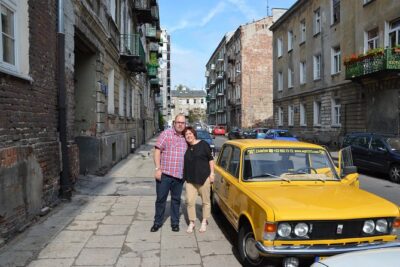
Private Tour: Warsaw’s Jewish Heritage by Retro Fiat
Read our review →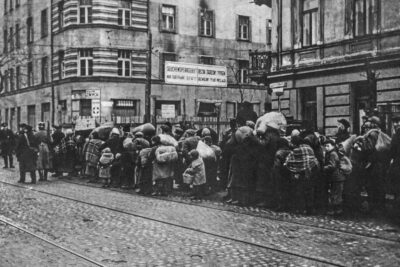
Ghetto, Jewish Cemetery & POLIN Museum Private Tour
Read our review →
Browse the lists this tour appears in