Reviewed · TOURS
Warsaw Behind the Scenes – small group tour with hotel pickup
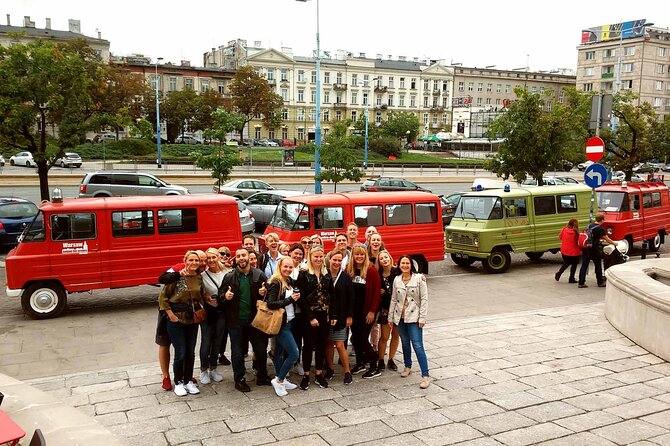
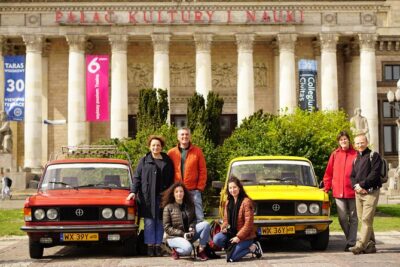
This tour is interesting because it shows Warsaw as a place where history is still written into the streets. You ride in a small group, often in a vintage minibus, and the route links architecture, daily life, and major events without turning the whole day into a textbook.
I love the small-group pacing and the guide-led feel, it is not a rush-job where you just hop off and snap photos. I also like the focus on WWII sites and their modern setting, including places connected to The Pianist and the Warsaw Uprisings. One thing to consider is the comfort factor: you will do walking segments at each stop, and the classic vintage vehicles do not have air conditioning.
Key highlights worth your attention
- Hotel pickup in many areas saves time and helps you start in the right frame of mind.
- A tight, chronological route moves from the ghetto, to uprisings, to the broader war, then forward to 1989.
- Muranów and the ghetto bridge location help you visualize what happened in a built-up city.
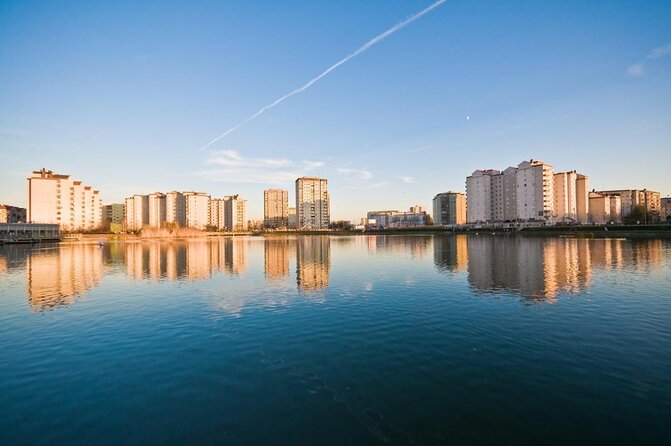
- Praga-Północ across the Vistula gives you a different Warsaw mood, with prewar atmosphere still present.
- Śródmieście and the communist rebuild show how politics shaped the city’s layout and architecture.
- Guides who answer questions well keep the stories grounded and personal, even when the subject is heavy.
Price and what you get for your time in Warsaw
At about $133 per person for roughly 3 hours, this is not a budget tour. But for Warsaw, it is priced like a guide-first experience with logistics included, especially the hotel pickup and drop-off service (for participating hotels).
You are also paying for a specific kind of route. This is not just “see the sights.” It is a guided walkthrough of how ghetto life, resistance, destruction, rebuilding, and political change all overlap in the same neighborhoods you might otherwise stroll past without context.
If you like your city history with street-level details, this format often feels like better value than a long, generic bus tour where you barely get time to ask questions.
Other things to do in Warsaw:
- Warsaw: Chopin Concert in the Old Town
★ 4.8 · 2,287 reviews - Warsaw: Traditional Galar Cruise on The Vistula River
★ 4.6 · 1,640 reviews - Warsaw: Old Town Highlights Walking Tour in English
★ 4.7 · 1,516 reviews
The vintage minibus (Zuk-style) and small-group comfort reality check
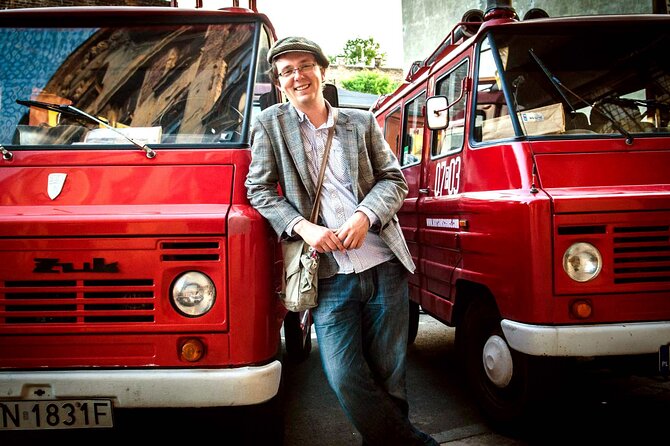
This tour runs with minibus transfers plus walking time at each stop. Each vehicle fits up to 8 passengers, and the overall tour maximum is 39 travelers. That size matters because it keeps the group conversational, and it helps the guide keep an eye on everyone.
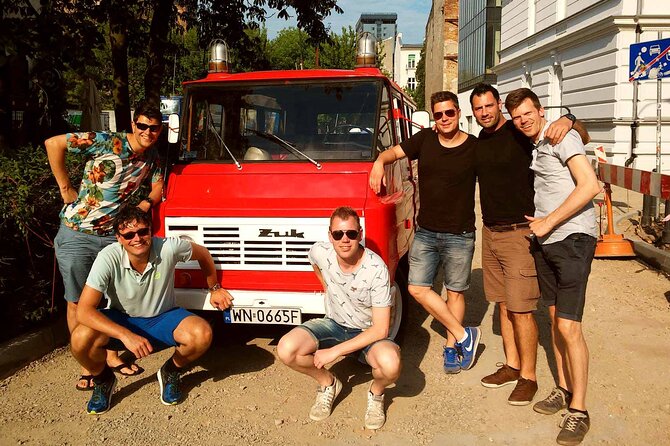
The vehicles are classic vintage and not air conditioned. Some do not have seat belts, which is allowed for historic vehicles. They do have heating for winter, but in summer you should expect the ride to be warm.
I suggest packing for comfort rather than for looks. Wear shoes that handle uneven sidewalks and expect your legs to do real work, even though each stop is relatively short.
The 10:00 start: how the pickup works and why timing matters
You start at 10:00 am. Pickup is available for hotels listed by the operator, and you confirm your exact pickup time through the Viator message system after booking.
This timing detail matters because the route is planned tightly. If you want to actually absorb the stories, show up calm and ready. A late morning scramble will just steal the first hour from you.
Stop 1: a quick Warsaw and Poland orientation so the rest makes sense
The tour begins with a short historical introduction after your pickup. Think of this as the guide turning the city map into a timeline.
In about 10 minutes, you get essential context about how past events shaped modern Warsaw. It is brief, but it helps everything that follows land more clearly, especially when the stops jump between the ghetto districts, war destruction, and later communist rebuilding.
If you arrive with zero background, this starter context is a big plus.
Elsewhere in Warsaw:
- Warsaw Concert: Chopin – Painted by Candlelights with Wine
★ 4.8 · 1,442 reviews - Warsaw: City Sightseeing Hop-On Hop-Off Bus Tour
★ 3.6 · 1,415 reviews - Warsaw: POLIN Museum of the History of Polish Jews Ticket
★ 4.7 · 1,142 reviews - #1 Pub Crawl Warsaw with Optional Premium 1 Hour Open Bar
★ 5.0 · 790 reviews
Stop 2 in Muranów: the “normal” housing district built on ghetto ground
Muranów is where the tour gets serious, fast. This district sits on the former site of the Jewish Ghetto that Nazi Germany established in 1940. On the surface, parts of Muranów can look like ordinary postwar neighborhoods.
The guide’s job here is to connect the ground under your feet to the events under the surface. In roughly 20 minutes, you learn how the ghetto was destroyed and later reconstructed, so you understand why the present-day streets feel both familiar and haunted.
What makes this stop valuable is the contrast. You are not only learning what happened, you are learning how cities rebuild and how memory can be harder to spot when the architecture looks everyday.
Stop 3 at Chłodna and Żelazna: the wooden ghetto bridge and The Pianist
At the intersection of Chłodna and Żelazna Streets, you visit the location tied to the iconic wooden ghetto bridge shown in The Pianist. The bridge once connected two sealed parts of the ghetto and was suspended high above the street.
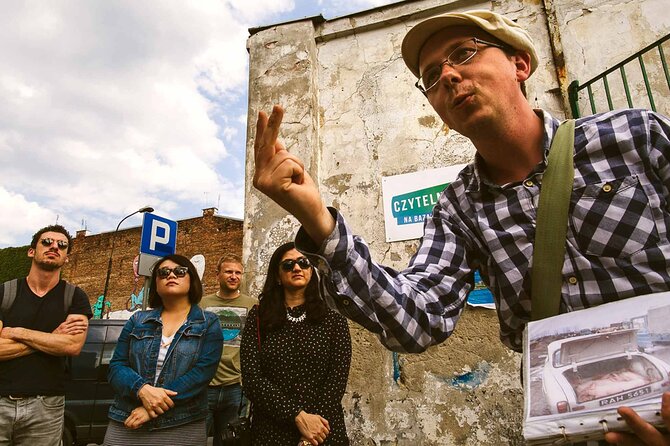
The guide uses historical photographs to help you visualize what the area looked like when the bridge was working and when movement was controlled. In about 15 minutes, you get a mental picture that is hard to recreate on your own, because the modern street does not naturally explain the bridge’s former role.
If you have seen The Pianist, this stop is a strong way to turn movie imagery into real geography. If you have not, it is still useful, because it explains how physical infrastructure mirrored confinement.
Stop 4 in Nowolipki: the Warsaw Ghetto Uprising of 1943
Nowolipki is focused on the Warsaw Ghetto Uprising of 1943. Jewish resistance fighters launched a final stand against deportation. After weeks of fighting, the ghetto was razed.
In about 15 minutes, you also get the commemorative angle: how tragedy is remembered, and how history layers itself into the modern city.
This is one of those stops where a good guide makes the difference. The strongest tours here avoid sensationalism and instead explain the logic of events and the lived stakes. In past tours, guides like Tom, Marcin, and Mark have been singled out for balancing detail with empathy and for being able to handle questions without rushing people.
Stop 5 on Bielańska: from “local” war to Poland’s political future
The route continues beyond the ghetto story into the wider collapse of the city and the political reshaping of Poland. You hear how agreements between the Western Allies and Stalin placed Poland under Soviet control.
Then the Warsaw Uprising of 1944 enters the picture as Poland’s last major effort to change that outcome. After its collapse, Nazi forces systematically destroyed about 85% of Warsaw. The Red Army entered the ruined city in January 1945.
This stop is only about 15 minutes, but it provides the crucial bridge between WWII destruction and the postwar rebuild you will see later. It also helps you understand why communist-era architecture later had to follow ideological demands, not just practical ones.
A drawback to expect here is emotional weight. If you are sensitive to WWII topics, pace yourself. You can also ask the guide to slow down when you need a moment to absorb what you are hearing.
Stop 6 in Praga-Północ: crossing the Vistula and seeing a calmer Warsaw mood
After the heavy WWII beats, the tour crosses the Vistula River to Praga-Północ. You get riverbank views before exploring.
Praga is distinctive because it survived the war largely intact, which means you see a prewar atmosphere more than you see an “entirely rebuilt” city. The area is known for Belle Époque buildings, traditional courtyards, and a strong local identity.
And today, Praga has a reputation as a creative neighborhood that is still not as dominated by mass tourism. That makes it a great contrast to the earlier stops, and it helps your brain switch from tragedy mode to city-life mode.
The time here is longer, about 30 minutes. So you get more breathing room and a chance to notice details on your own, like courtyards and building textures.
Stop 7 in Śródmieście: the communist rebuild and Soviet-influenced compromises
Back in central Warsaw, you stop near the former Polish Communist Party headquarters. Here the focus is rebuilding after 1945, and how architects worked to create a modern, functional capital while also fitting Soviet-inspired ideological demands.
This is the part where you start looking differently at buildings. You are not just admiring style. You are trying to spot compromise: what was practical, what was political, and what was demanded from above.
In about 30 minutes, the guide helps you connect street-level features to that broader system. If you like architecture and urban planning, this stop often lands as a highlight because it turns “this is a nice building” into “this building tells you who had power.”
Stop 8 in Warsaw: 1989, Solidarity, and the end of communist rule
The final stop brings the story forward to 1989. You learn how the Solidarity movement and Pope John Paul II played key roles in ending communist rule in Poland.
From there, Warsaw transitions again, into democracy and capitalism, and the city changes once more. This ending matters because it prevents the tour from feeling like a museum loop. You end with a sense of continuity, how the city keeps rewriting itself.
In about 15 minutes, the guide helps you connect the dots between the rebuilding you saw earlier and the political shift that fueled the next era of transformation.
The best way to use this tour in your first day planning
I think this tour shines when you do it early in your trip. It helps you build a mental “map of meanings” so you understand why some neighborhoods feel different and why certain streets carry unusual weight.
It also helps you later when you visit places like museums, memorials, or historical exhibitions. You will already know what question to ask.
If you want to get the most out of it, do two things:
- Come ready with a couple of questions you care about, like how the ghetto system affected everyday movement or how 1989 changed life on the ground.
- Pay attention to the guide’s photos. Those images make the invisible parts of the city story visible.
What to wear and bring so the walking parts feel easy
This tour uses minibus transfers with walking at each stop, so your feet matter. Wear comfortable clothing and suitable footwear.
In summer, plan for heat in an older vehicle with no air conditioning. In winter, the minibuses have heating, but you still want warm layers because you may be out near memorial sites and in open streets for short stretches.
Also, bring an open mind. This is a WWII-focused tour, and it covers antisemitism, confinement, resistance, and destruction. You will get context, but you should also expect serious moments.
Should you book Warsaw Behind the Scenes?
If you want a guided walkthrough that connects WWII sites to modern Warsaw streets, this is an easy yes. The route is designed to build understanding in a logical order, and the small-group format helps you actually interact with the guide instead of just listening from the back.
Book it if:
- you are doing Warsaw for the first time and want quick orientation with real context
- you like history that explains what you are seeing, not just what happened elsewhere
- you value a guide who can explain sensitive topics clearly and answer questions
Skip it or consider timing differently if:
- you dislike walking, because you will move on foot at each stop
- you are very sensitive to WWII topics and want a gentler pacing
FAQ
How long is the Warsaw Behind the Scenes tour?
It runs for about 3 hours.
Is hotel pickup included?
Pickup is offered, but only for hotels listed by the operator. If your hotel is not listed, you should contact the operator to choose the most comfortable pickup point.
What language is the tour in?
The tour is offered in English.
How big is the group?
The tour has a maximum of 39 travelers, and each minibus accommodates up to 8 passengers.
Do the minibuses have air conditioning?
Classic vintage minibuses are not equipped with air conditioning. Some vehicles may also lack seat belts, which is permitted for historic vehicles. Heating is available for winter season.
Is the tour mostly walking?
No, it is a mix of minibus transfers and walking segments at each stop. Comfortable clothing and suitable footwear are recommended.
Are there height requirements for children?
Adults and children over 150 cm (4 ft 9 in) can participate. Children under 150 cm require seat boosters under Polish law, so you need to contact the operator in advance to check availability.
How do I get tickets?
You receive a mobile ticket.
Can I cancel for a full refund?
Yes. You can cancel up to 24 hours in advance for a full refund. Canceling less than 24 hours before start time does not get refunded.
Recently added in Warsaw
- Warsaw: Wolf’s Lair & Swieta Lipka Small-Group Tour + Lunch★ 5.0 · 3 reviews
- World War II Warsaw Old Town, Military Cemetery Walking Tour★ 4.7 · 3 reviews
- Warsaw Wolf’s Lair with St. Lipka and Mamerki Private Guided★ 4.2 · 3 reviews
- Warsaw Zoo Skip-the-Line Entry Ticket with Private Transport★ 4.8 · 3 reviews
- Warsaw: Vodka Tour★ 4.4 · 18 reviews
- Wilanów Palace: 2-Hour Guided Tour with Entrance Tickets★ 4.8 · 8 reviews
- Warsaw Uprising and WWII Old Town Walking Tour with Museum★ 4.7 · 15 reviews
- Warsaw: Private Vodka Tasting Night with Snacks and Pickup★ 5.0 · 7 reviews
Tours, compared.
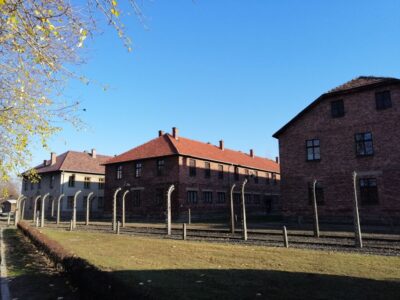
Tour to Krakow and Auschwitz by Train with Pickup
Read our review →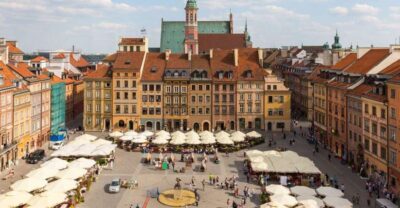
Private Tour: Warsaw City Sightseeing by Retro Fiat
Read our review →