
Reviewed · PRAGA DISTRICT TOURS
Warsaw: 2-Hour Praga Walking Tour
Warsaw’s Praga feels like a whole different city, right on the Vistula’s east side, with pre-war scars, communist-era blocks, and today’s art-and-food scene in the same short walk. If you like real neighborhoods instead of postcard Warsaw, this 2-hour Praga tour is a strong fit, with stops tied to the film The Pianist and the story of people who tried to save others during WWII.
What I like most is the way you get both the buildings and the human stories at once, especially when the guide brings the area to life in clear, organized turns. You’ll also love the focus on Praga’s mix of history and modern reinvention, including a visit to the Koneser vodka factory complex. The main drawback is simple: it is a walking tour with no food included, so you’ll want good shoes and a plan for when hunger hits.
Another practical note: the tour is private, which is great for asking questions, but it also means your timing matters. I suggest you confirm your start time shortly before you go, since one published experience showed a last-minute time change.
Key points worth knowing before you go
- A real Warsaw contrast in just 2 hours, from pre-war tenements to communist-era apartment blocks
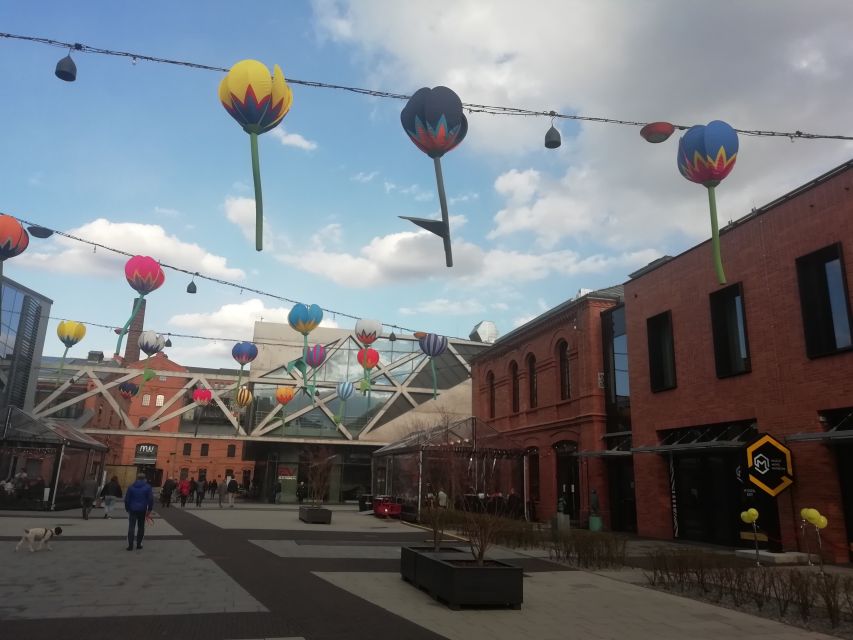
- Koneser vodka factory complex, where old industry has turned into a modern destination
- The Pianist filming streets, a cinematic way to see where the story connects to Warsaw
- St. Florian Cathedral and an orthodox church, tied to earlier Jewish religious life
- Bullet holes and survival-era details, the kind of atmosphere you do not get from museums alone
- Marzena-style guiding, with patient answers and history explained in an easy-to-follow way
Why Praga feels different from the postcard Warsaw you know
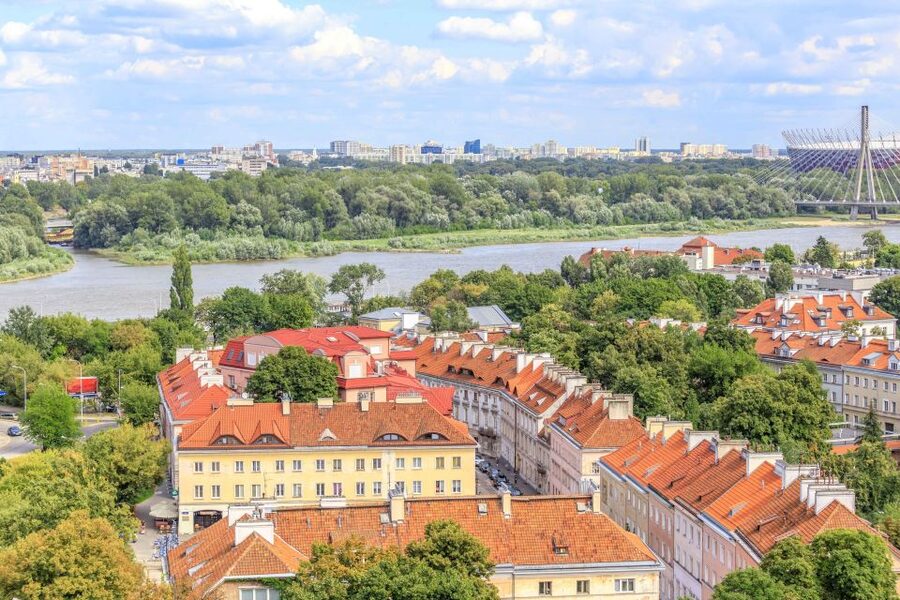
Praga sits on the right bank of the Vistula, just a short trip from the Old Town vibe. Historically, it was a zone of trade and industry, shaped by people from different religious communities living close together, including Christians, Jews, and Orthodox residents. That mix still shows in the street rhythm: workaday buildings, faded and repaired facades, and corners that feel more like a living neighborhood than a staged attraction.
On this tour, you move through that layered feel fast, in about two hours. The pacing is tight enough to keep energy up, but long enough to connect the dots between what you see and what it meant. You will also get the “trendy” part of Praga, not as a vague buzzword, but as a practical story of how workshops, factories, and old housing are now used for galleries, boutiques, and restaurants.
If you care about architecture, this is also a nice change of pace. Instead of only seeing restored highlights, you spend time on the in-between Warsaw: tenements with visible evidence from the past, tougher-looking communist-era blocks, and post-industrial zones that now hold creative spaces.
More Praga district tours:
- Discover the Dark Side of Warsaw in Praga District by Retro Bus
★ 5.0 · 327 reviews - Warsaw: 2.5-Hour Dark Side – Praga District by a Retro Bus
★ 4.5 · 248 reviews - Warsaw Praga Guided Historical Walking Tour
★ 4.5 · 21 reviews
Starting at Maria and Magdalena, then stepping into the right-bank story
You meet in front of the Metropolitan Cathedral of Maria and Magdalena, at the exit from the subway line M2. The guide waits there with a PolinTours sign, so you are not left playing guessing games with street crossings.
I like this meeting point for two reasons. First, it is easy to reach using public transit. Second, it sets you up for the story arc: you start with a major landmark, then walk toward the district that developed on the other side of the river and grew with different economic forces.
Once you get going, you are not stuck in one “theme” the whole time. The guide steers between eras and purposes, so you start noticing patterns fast. You begin to see how trade shaped street life, how war scarred buildings, how later politics changed housing, and how the current creative scene has found new uses for older spaces.
The streets with bullet holes, and what pre-war Warsaw looks like in real life
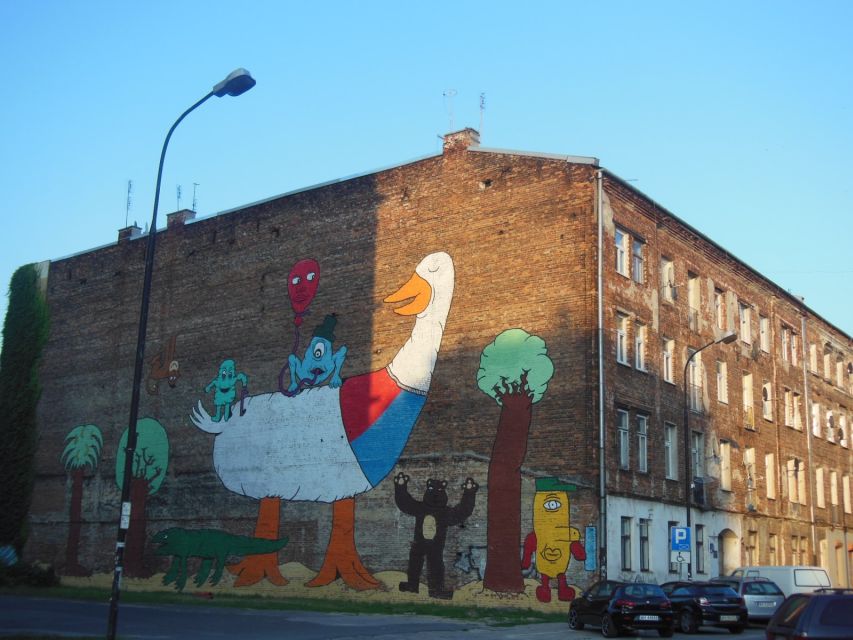
One of the biggest values of this tour is that you see pre-war Warsaw as it actually appears, not as a single museum display. You spend time on streets lined with pre-war tenement houses where you can spot bullet holes, plus the contrast of later grey apartment blocks from the communist era.
This is important because it changes how you read the city. Warsaw is often framed as a story of destruction and rebuilding, but here you get the day-to-day texture: the way buildings stood close together, how neighborhoods worked as industrial and commercial hubs, and how residents lived side by side across different communities.
You also get context for the shifts. Praga’s role as a trade and industry hub was not a random accident. The guide connects that function to the kinds of buildings you see, and later to the neighborhood identity that was tied to free trade during communist years. Even in a short walk, you end up with a clearer mental map of why Praga “feels” the way it does today.
St. Florian Cathedral and the orthodox church, where religions overlap in the architecture
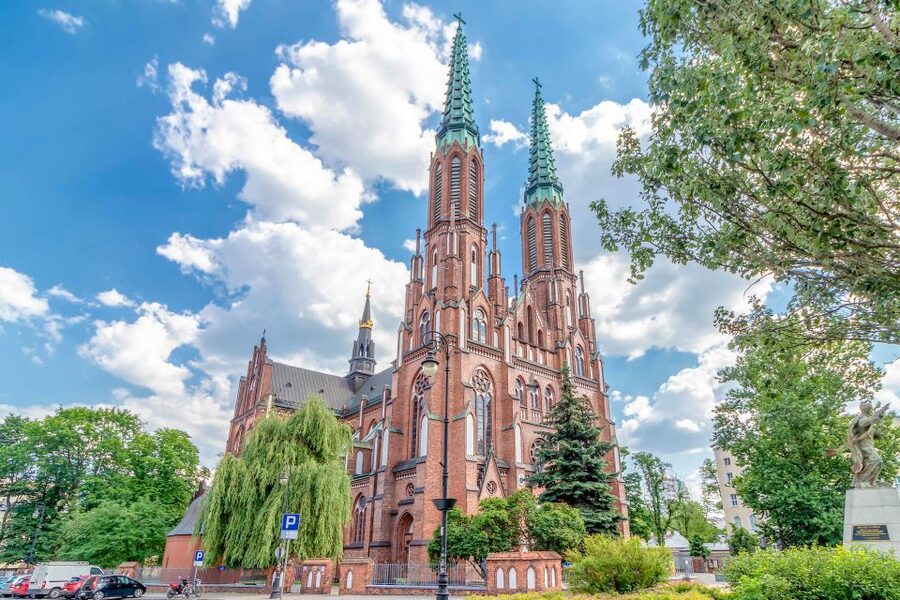
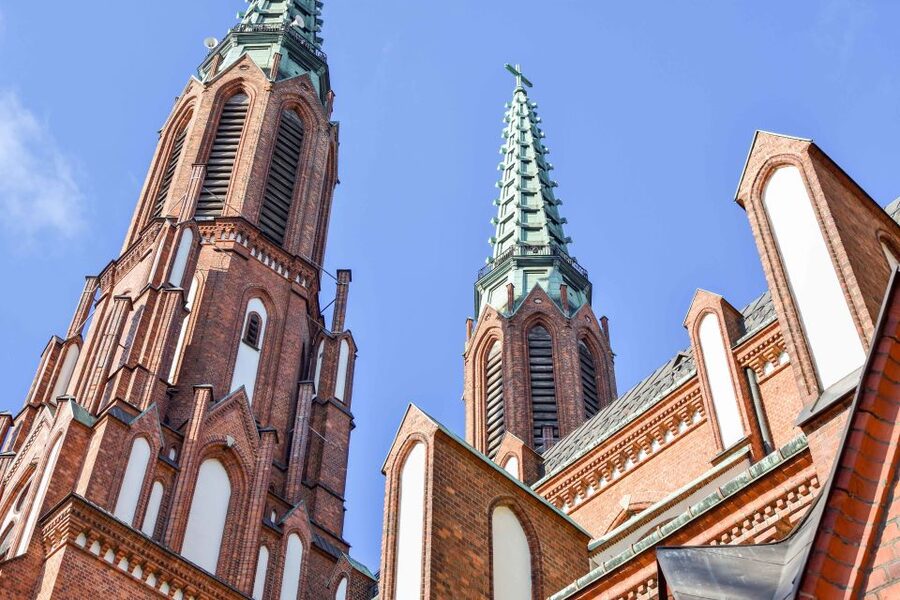
The tour includes St. Florian Cathedral, a meaningful stop because it anchors the area in a larger religious and civic timeline. If you like reading cities through their architecture, this is the kind of place where you can look at stonework and layout and then let the guide supply the human story behind the walls.
From there, you visit an orthodox church that was once a synagogue and also connected to a ritual bath. That detail matters. It tells you that buildings in Praga were not locked into one identity forever. When communities changed, the structures often stayed, but their roles shifted.
I find this kind of stop especially valuable because it turns “old building” into “evidence of lived history.” You are not just looking at a pretty exterior. You are learning how religious life in the district was organized, and how the neighborhood’s cultural layers survived, changed, and overlapped.
More walking tours in Warsaw:
- Warsaw: Old Town Highlights Walking Tour in English
★ 4.7 · 1,516 reviews - Warsaw: Old Town Guided Walking Tour
★ 4.9 · 599 reviews - Half-Day Polish Food Walking Tour with Guide and Dinner
★ 4.5 · 381 reviews - Warsaw: Warsaw Ghetto Private Walking Tour with Hotel Pickup
★ 4.9 · 369 reviews
Rozycki Bazaar, the Praga street band monument, and the current neighborhood vibe
Praga is not only about what happened long ago. You also get an up-close look at spaces that connect to present-day street life. The tour includes the Rozycki Bazaar, which gives you a sense of local rhythms and the way commerce has remained part of the district’s identity.
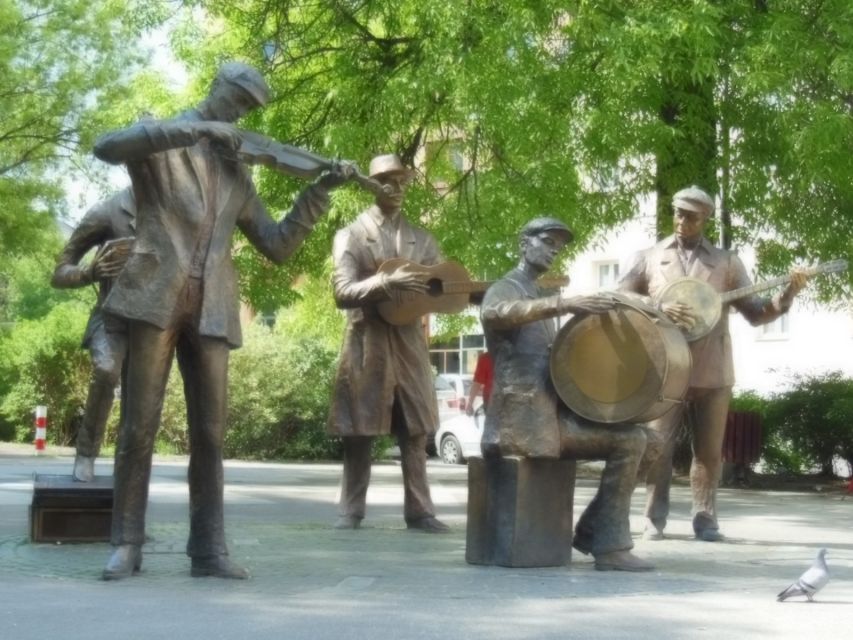
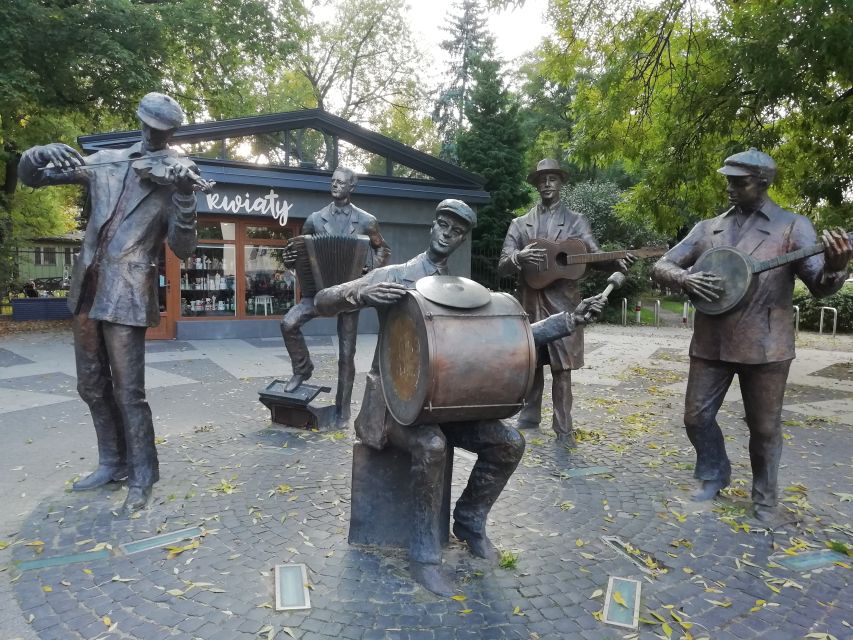
You also see a monument connected to the Praga Street Band. That kind of marker is useful because it signals the district’s character beyond big events. It is one more cue that Praga has its own local culture, not just “Warsaw stuff” transplanted across the river.
As you walk, the guide points out how today’s Praga uses older buildings. Some have become art galleries and boutique spaces, while others are now restaurants. You get the feel of a district in transition, but not the kind of sleek redevelopment that wipes history away. It is more like the city is adding chapters instead of replacing pages.
Koneser Vodka Factory complex: old industry you can actually stand in
If you only remember one stop from this tour, it should be the Koneser vodka factory complex. Industrial buildings can be hard to appreciate on a quick city visit, but this area makes it easier because the structures still do the talking.
You stroll along the site and learn about how it relates to the district’s larger trade and industry story. Then you see the present-day version of it, where older production spaces have been repurposed into a destination for visitors and locals.
This stop is also a good reality check. In Warsaw, it is easy to chase the most polished attractions. Koneser lets you notice how industry shaped everyday life, and how those same physical spaces now support a different kind of activity. You get to connect past to present without needing a long detour.
The Pianist filming streets, and why movies can be useful guides
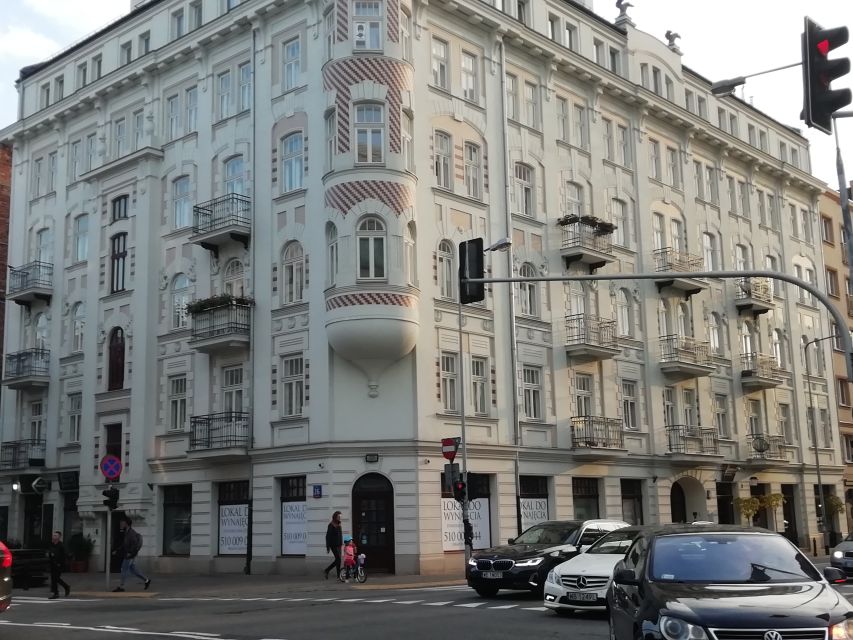
Praga is tied to film history too. The tour includes streets used in the Oscar-winning movie The Pianist by Roman Polanski. This is not a gimmick stop. It helps you picture how the district looked and felt, and it gives you another lens for understanding why the street layout matters.
When you walk through film-linked streets, you start spotting details you would normally miss: the scale of buildings, the closeness of facades, the feel of the road and corners. It is a quick way to deepen your city reading.
If you are a movie fan, you’ll enjoy the extra storytelling. If you are not, you can still appreciate it as a different way to connect Warsaw’s history and physical geography.
The Warsaw Zoo director and his wife: a rescue story told with care
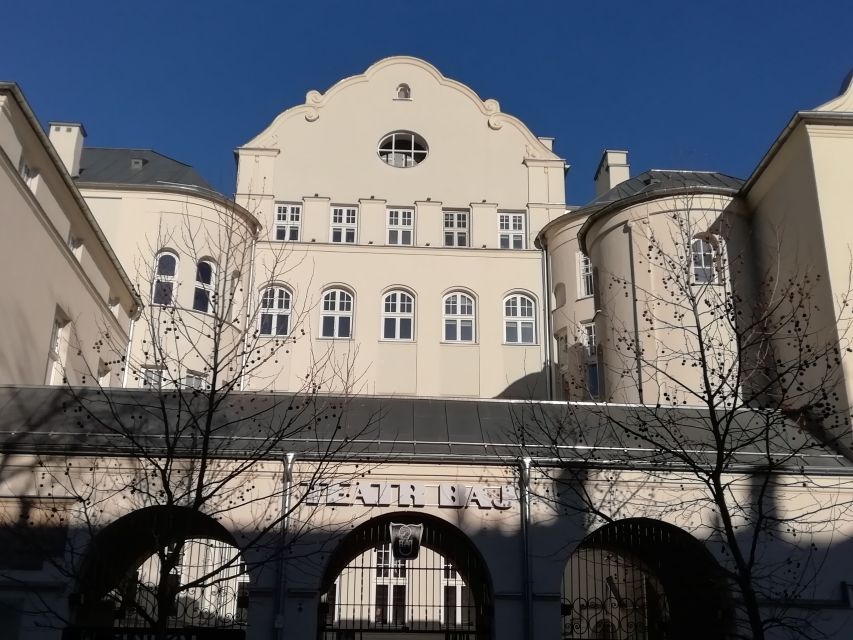
One of the most emotionally significant parts of this tour focuses on the director of the Warsaw Zoo and his wife, and what they did to help save hundreds of Jews from the Warsaw Ghetto. The point here is not only that it happened, but that you learn it while standing in the district where Praga’s WWII-era reality shaped lives.
I recommend treating this portion with the respect it deserves. The guide’s job is to keep it factual and understandable, and from what people say, the explanation stays clear and answer-friendly. This is one of those tours where your questions are welcome, not treated as a distraction.
Even in two hours, this kind of stop prevents the tour from becoming purely visual. You leave with a more human understanding of the city, and that changes how you look at Warsaw afterward.
What the guide does well, especially if you have questions
A consistent highlight from the published experiences is the guide, Marzena. People praise her for having strong historical knowledge and presenting it in an accessible way, without drowning you in dates. They also mention her patience with questions, including follow-ups about architecture and history.
That matters, because in a neighborhood like Praga, details can feel layered and confusing fast. A good guide helps you sort what you are seeing: which building evidence points to which era, how religious spaces shifted over time, and why industrial sites like Koneser connect back to Praga’s economic role.
You also get the tour in English, German, or Polish, which helps if you want to stay fully present without forcing your way through a language gap.
Price, timing, and comfort: is $69 worth it for a 2-hour walk?
At $69 per person for about 2 hours, this tour sits in the mid range. Is it a “worth it” price? For me, the value comes from three things you cannot easily replicate on your own in a short window:
- A curated walking route through Praga’s key contrasts, including specific named stops like St. Florian Cathedral and Koneser.
- Storytelling that connects places to events, including WWII rescue history and film location context.
- Guiding that answers questions, which is where a premium often lives, especially for neighborhoods with lots of visible layers.
You should also be realistic about what fits into two hours. This is not a slow, museum-style stroll where you stop for long interior visits. Expect mostly outdoor walking and short stops for explanation.
Wear comfortable shoes, because you will cover ground. The tour also suggests sunglasses, a sun hat, and sunscreen, which is a hint that you spend enough time outside that summer light can be intense. And because food and drinks are not included, I recommend planning a snack or scheduling your lunch after the tour.
Who should book, and who might prefer something else
This tour is a great match if you want:
- A short, high-impact introduction to Praga’s layers
- Real-world history, including bullet-scarred tenement details and WWII rescue context
- Film-linked street context for The Pianist
- A guide-focused experience where you can ask questions, including in English, German, or Polish
It might be less ideal if you want a long sit-down format, a heavy focus on indoor museums, or a day that includes lunch and drinks. Also, if you dislike walking around uneven city surfaces, you might feel the pace more than you want.
One more note: you should come without oversize luggage. The tour specifies no pets and no large bags, so travel light.
My quick booking advice
If you are choosing between “safe sightseeing” and “a neighborhood with texture,” I’d lean Praga. The combination of pre-war evidence, communist-era contrasts, Koneser’s industrial reuse, and the film streets makes this more than a themed walk. And with Marzena-style explanations, you get a clear thread through the chaos.
Before you book, do two simple things: wear shoes that can handle city sidewalks, and plan to eat outside the tour. If you are sensitive to schedule changes, confirm your start time close to the day, since at least one published experience involved a last-minute shift.
FAQ
How long is the Warsaw Praga walking tour?
The tour lasts 2 hours.
What is included in the tour price?
The tour includes a certified tour guide.
Where do I meet the tour guide?
You meet in front of the Metropolitan Cathedral of Maria and Magdalena, at the exit from subway M2. The guide will be waiting with a PolinTours sign. Address: aleja Solidarności 52, 03-402 Warszawa, Poland.
Are hotel pickup and drop-off included?
No, hotel pickup and drop-off are not included.
Is lunch or food included?
No, lunch and food and drinks are not included.
What languages are available for the tour?
The tour is offered in English, German, and Polish.
Is this a private tour?
Yes, it is listed as a private group.
Can I bring pets or large luggage?
No pets are allowed, and luggage or large bags are not allowed.
What should I bring for the walk?
You should bring comfortable shoes, sunglasses, a sun hat, and sunscreen.
What is the cancellation policy?
Free cancellation is available up to 24 hours in advance for a full refund.
More 2-Hour Experiences in Warsaw
- Warsaw: 2-Hour Guided Segway Tour
★ 4.8 · 34 reviews - Warsaw: 2-Hour Tour of Daily Life in the Ghetto Warsaw
★ 4.9 · 26 reviews - Warsaw: 2-Hour Chopin’s Life Walking Tour
★ 5.0 · 19 reviews - Warsaw: 2-Hour Old Town Walking Tour
★ 5.0 · 17 reviews
Recently added in Warsaw
- World War II Warsaw Old Town, Military Cemetery Walking Tour★ 4.7 · 3 reviews
- Warsaw: Wolf’s Lair & Swieta Lipka Small-Group Tour + Lunch★ 5.0 · 3 reviews
- Warsaw Wolf’s Lair with St. Lipka and Mamerki Private Guided★ 4.2 · 3 reviews
- Warsaw Zoo Skip-the-Line Entry Ticket with Private Transport★ 4.8 · 3 reviews
- Warsaw: Vodka Tour★ 4.4 · 18 reviews
- Wilanów Palace: 2-Hour Guided Tour with Entrance Tickets★ 4.8 · 8 reviews
- Warsaw Uprising and WWII Old Town Walking Tour with Museum★ 4.7 · 15 reviews
- Warsaw: Private Vodka Tasting Night with Snacks and Pickup★ 5.0 · 7 reviews
Praga District Tours, compared.
Discover the Dark Side of Warsaw in Praga District by Retro Bus
Read our review →
2.5-Hour Dark Side – Praga District by a Retro Bus
Read our review →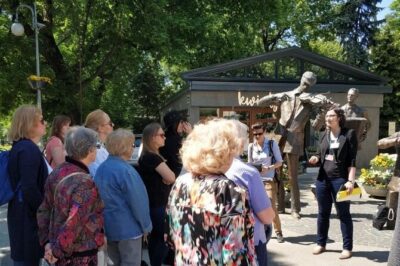

Warsaw Praga — where modern, traditional, and bohemian meet
Read our review →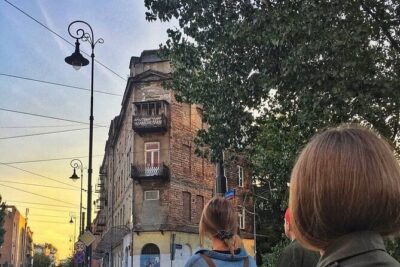
Offbeat Warsaw: Explore the Edgy & Artsy Praga District
Read our review →
Segway Tour Warsaw: Praga Tour – 2-Hours of Magic!
Read our review →
Praga District Tour with Vodka Museum and Tasting
Read our review →Browse the lists this tour appears in