
Reviewed · OLD TOWN WALKING TOURS
Walk through the Warsaw Old and New Town: like Phoenix from the ashes
Warsaw has a special kind of drama in its streets. This walk threads Old Town reconstruction with memorial stops, so you see why the city feels like a Phoenix from the ashes. It is guided, structured, and made for people who want meaning, not just photos, in about 2 hours.
I love that it ties famous places to real stories, including Chopin’s heart at Holy Cross Church and the way the tour explains what shaped the restored Old Town. I also like that you get a tight mix of landmarks, viewpoints, and wartime memory, not a random checklist.
One thing to consider: it is still a walking tour, so comfortable shoes matter, and the time at each stop is short. If you want long, in-depth museum time, you will need to pair this with free time later.
Key highlights you will care about
- Start with a clear anchor at Nicolaus Copernicus Monument, then move through central Warsaw with a licensed guide.
- Holy Cross Church stop focused on Chopin’s heart, with context around how Warsaw honors him.
- Castle Square plus Old Town reconstruction stories, including financing and the role of a Venetian painter.
- WWII and Uprising memory at St John the Baptist, including how the war front affected the church.
- A quick Vistula viewpoint at Gnojna Góra, so you are not stuck only indoors or only in architecture.
- Curie’s birthplace at Maria Sklodowska-Curie Museum, with the one admission cost that is not included.
Why this Phoenix-from-the-ashes walk feels different
Warsaw’s story is not only in dates. It is in stone, street plans, and even in the way certain buildings were allowed to be rebuilt, remembered, or protected. This tour is built around that idea, with a route that links “then” and “now” without turning into a lecture.
You start in a classic setting along Krakowskie Przedmieście, then move toward memorials and royal power symbols, and finally step into the Old Town area that carries UNESCO status. The pacing is brisk, but the guide’s job is to keep the meaning connected. You will hear why rebuilding mattered, who supported it, and how the city chose what to show again.
If you like walking tours that give you clear takeaways you can use while wandering on your own later, this one has the right structure.
More Old Town walking tours in Warsaw:
- Warsaw: Old Town Highlights Walking Tour in English
★ 4.7 · 1,516 reviews - Warsaw: Old Town Guided Walking Tour
★ 4.9 · 599 reviews - Old Town Warsaw Walking Tour
★ 4.5 · 333 reviews
Price and what you really get in two hours
The price is $72.87 per person for about 2 hours. That sounds simple, but value comes from the package shape: a licensed city tour, tax included, and a guide accompanying you for the whole walk.
You are also getting practical perks. The tour includes group discounts, and it uses a mobile ticket, which saves time if you hate printouts. It is offered in English, which matters in a city where you will see plenty of Polish and some German signage around landmarks.
Admissions are mostly free, with one exception (more on that soon). That means you are not budgeting for repeated ticket lines. The one practical drawback is that snacks and transport are not included, so you should plan a quick drink beforehand and assume you will walk between stops.
At this price point, I think it makes sense if you want a guided spine to Warsaw’s Old and New Town, and you do not want to pay for multiple museum tickets during the same outing.
Meeting point, route flow, and how to pace yourself
Your meeting point is at Nicolaus Copernicus Monument, on Krakowskie Przedmieście, and you look for a guide holding a sign for PolinTours. The tour ends at the Warsaw Uprising Monument in plac Krasińskich.
The guide is described as German-speaking, and the tour is offered in English, so expect that you will be able to follow the story in English as you walk. The important part for you is that it is not a self-guided route. You will have someone shepherding you from stop to stop so you do not lose time figuring out what you are looking at.
The tour is also set up as a private tour/activity for your group only. That detail matters more than people think. When it is just your group, the guide can slow down if you have questions, and it becomes easier to talk about what you are actually seeing rather than listening from the back of a crowd.
The route is timed in short segments, so come prepared to move. If you want longer photos at Castle Square or more time around memorials, plan to add extra free time before or after the tour.
Krakowskie Przedmieście to Holy Cross Church: Chopin’s heart and the meaning behind it
The tour begins on Krakowskie Przedmieście, with a guide picking you up from the Nicolaus Copernicus Monument area. This first segment is about orientation. You are anchored near a major landmark, and you start with a walk that quickly places you in the “story zone” of central Warsaw.
Then you reach Holy Cross Church (Kosciol Swietego Krzyza). This is the stop where the tour turns personal. The guide brings you close to the life story of Frèderic Chopin and shows the church where his heart rests.
Even if you already know Chopin’s music, this stop often hits differently because it is physical. It is one of those moments where a monument is not just a plaque. You get a sense of how Warsaw chose to honor him, and you start understanding why certain places become pilgrimage sites.
One practical tip: churches can have rules and sometimes restrictions on movement or behavior. You will likely want to dress respectfully and be ready for a short, focused visit rather than lingering.
More walking tours in Warsaw:
- Half-Day Polish Food Walking Tour with Guide and Dinner
★ 4.5 · 381 reviews - Warsaw: Warsaw Ghetto Private Walking Tour with Hotel Pickup
★ 4.9 · 369 reviews - Warsaw: Jewish History Guided Walking Tour in English
★ 4.7 · 324 reviews - World War 2 in Warsaw walking tour in English
★ 4.7 · 237 reviews
University of Warsaw and the Tomb of the Unknown Soldier: power, age, and national memory
Next you visit the University of Warsaw (Uniwersytet Warszawski), focusing on the oldest part of the institution. This is a quick stop, but it helps you understand the city’s layers. Warsaw is not only about royal palaces and wars. It also has long educational roots, and that gives the center of the city a deeper backbone.
From there, the tour pauses at the Grob Nieznanego Zolnierza, the Tomb of the Unknown Soldier. Here you learn more about the estate of the Saxon kings in Poland. This is a good example of how the tour mixes memorial meaning with political and architectural context.
Why this stop matters: memorials are not only for grief. They are for identity. You are being guided to see how Warsaw frames sacrifice, and how older power structures and later national narratives overlap in the same urban space.
Then you continue toward the Palac Prezydencki, where you admire the seat of the Polish President and hear about his unprecedented history. The tour is careful here to keep things understandable: you get a sense of what the building represents, not just a photo opportunity.
If you like architecture that carries political weight, these mid-tour stops are a strong payoff.
Castle Square and the Royal Castle: UNESCO Old Town and why the rebuilding was its own story
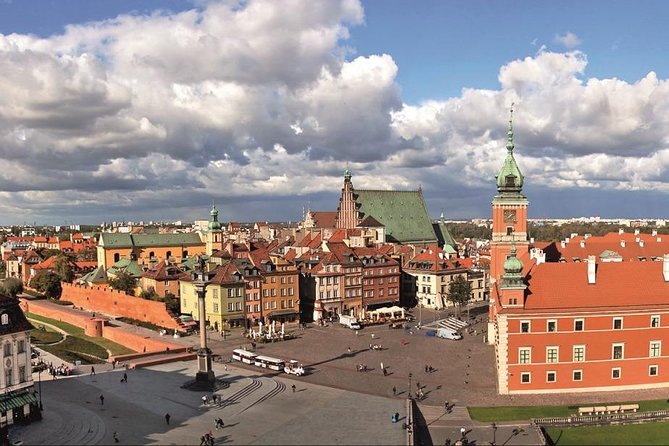
Now you reach Plac Zamkowy (Castle Square), the gateway into Warsaw’s Old Town. This is a highlight because it is not just “pretty streets.” You get a guided explanation of the Old Town as a UNESCO World Heritage Site and the point that it is described as the youngest Old Town in the world, thanks to reconstruction after major destruction.
The tour explains the unparalleled reconstruction, including the role of a Venetian painter and how the project was financed. That may sound niche, but it is exactly what makes the Old Town feel different from many other European reconstructions. You are not only looking at buildings. You are learning the logic behind how the city decided to rebuild.
You will also get to marvel at the Royal Castle and learn about the history of the first democratic constitution in Europe. The key value here is connection. The Old Town streets, the castle presence, and the broader political story are all placed in one narrative arc.
Short caution: Castle Square is a place where people naturally want to linger. Since your tour time is limited at each stop, you will probably get the essential overview and then you can return later on your own if you want slower wandering.
St John the Baptist’s wartime scar and the Warsaw Uprising context
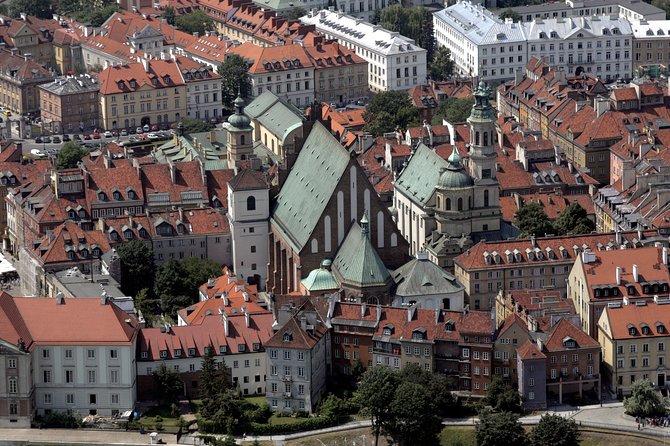
The next stop is the Archcathedral Basilica Of St John The Baptist. This is another standout because of the way the tour frames the church as a living witness to war.
The guide points out that it is the only church in Europe, through which the war front ran during the Second World War. You then learn about the heroic struggle of the Poles in the Warsaw Uprising and the role of the Russian army, as presented in the tour’s story.
Whether you already know the broad events or not, hearing it directly at the site changes the tone. You are literally standing where history happened under pressure. And because it is a church, the emotional weight feels immediate, not abstract.
One practical thing to plan for: this kind of stop often shifts your mood fast. Give yourself a minute before moving on, especially if you are sensitive to memorial settings.
From Gnojna Góra to Rynek Starego Miasta: the Vistula pause and Old Town legends
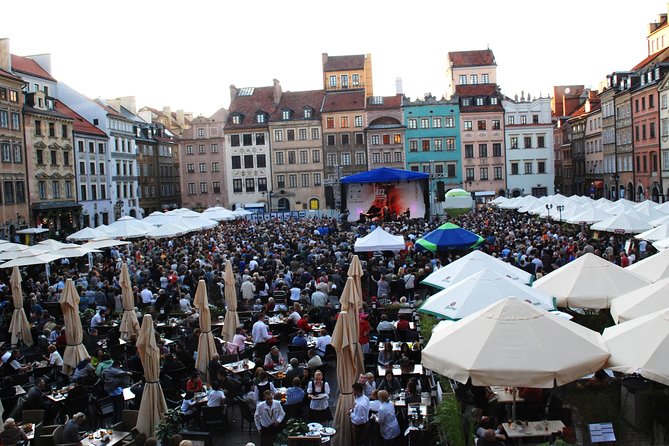
Then the tour moves to Gnojna Góra, described as a viewpoint looking toward the Vistula. This is a short stop, but it works as a reset. You get a break from only buildings and you can reorient your sense of place.
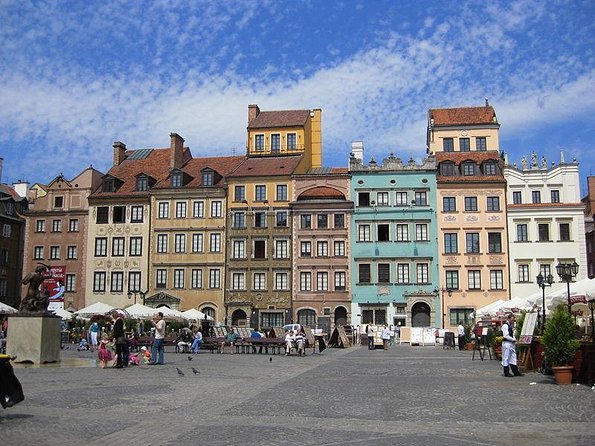
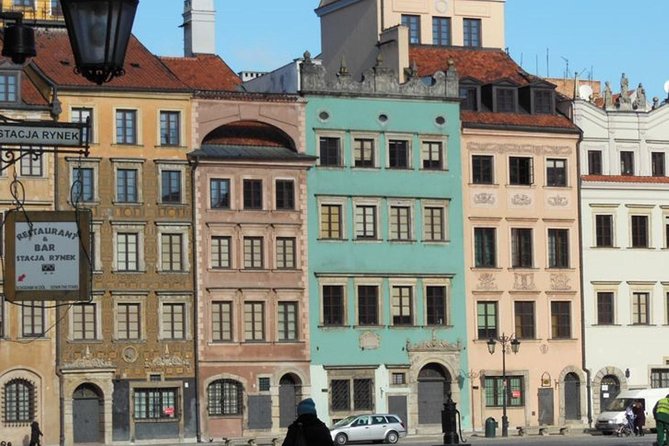
After that you head to Rynek Starego Miasta, the marketplace in the Old Town. Here the tour focuses on the picturesque streets and the most famous landmarks of Warsaw, plus legends and authentic stories.
This is where your brain starts connecting. You begin to see why certain facades and corners become “the shot” people talk about. A guide helps you understand what those corners are supposed to represent, so your free wandering later feels purposeful instead of random.
If you are the type who likes to know what you are looking at, this is the kind of stop that pays back later that day when you revisit the streets for photos.
Entering the New Town and meeting Curie in the Maria Sklodowska-Curie Museum
Through the city gate, you step into the new town area. The tour then includes a visit to the Muzeum Marii Sklodowskiej-Curie.
This stop is only 10 minutes in the tour timing, and here is the key detail for your planning: admission at the Curie museum is not included. The tour itself still moves you to the spot, but you will need to handle the museum ticket if you choose to go inside during that time.
If your main priority is Warsaw’s Old Town reconstruction and wartime memory, you may treat Curie as a quick stop. If you love science stories, this museum placement is a smart shift. It balances the heavier war narrative with a major Polish figure tied to global discovery.
Also consider the practical rhythm. Ten minutes is enough to orient yourself, but not enough for a full museum visit. If you want Curie in depth, you might do this stop as a highlight and then return later, or you might skip the paid entrance if timing is tight.
Field Cathedral of the Polish Army and the Warsaw Uprising Monument finish
The tour ends at the Field Cathedral of the Polish Army, with the final arrival at the Warsaw Uprising Monument in plac Krasińskich.
This ending makes sense emotionally. You have already had the war front and uprising context at St John the Baptist, and now you close with memorial focus. The route is built to take you from central landmarks, into rebuilt identity, and finally into the places where remembrance is not optional.
If you want an easy final photo stop, this is a strong place to wrap up. And because you finish at a monument, you can plan your onward walk or transport with that clear endpoint in mind.
What kind of traveler should do this tour
This works especially well if you want:
- A structured walk that connects Old Town reconstruction with wartime memory
- English narration that helps you understand what you see at key landmarks
- A fast way to get oriented before you explore on your own later
It is also a good match if you care about people history, not just stones. The tour includes Chopin’s heart and brings in major Polish figures like Marie Curie, plus strong memorial stops.
One more practical note: the tour is described as near public transportation and allows service animals. And it says most travelers can participate, which is a helpful signal for a walking tour in a dense city center.
Is it worth booking? My call
If your goal is to understand Warsaw, not just to see it, I would book this. The 5 out of 5 rating, plus the fact that everyone recommends it, tells you the balance hits a nerve for people who want story-driven sightseeing.
The best reason to choose it is the way it connects multiple themes in a short time: Chopin at Holy Cross Church, the rebuilt Old Town narrative at Castle Square, wartime memory at St John the Baptist, and then memorial closure at the Field Cathedral and Warsaw Uprising Monument. You come away with a coherent picture.
The main reason to hesitate is also the main tradeoff: time at each stop is brief. If you want long stops, private access, or paid museum time as a centerpiece, you may want to pair this with extra independent time after the tour, especially for the Curie museum where admission is not included.
FAQ
How long is the walk through Warsaw Old and New Town?
It runs for about 2 hours.
What is the price per person?
The price is $72.87 per person.
Is the tour private?
Yes. It is set up so only your group participates.
What language is the tour offered in?
The tour is offered in English, and a German-speaking guide accompanies you.
Are any admissions included?
Most stops list admission as free. The Maria Sklodowska-Curie Museum admission is not included.
Where do I meet the guide?
You meet at Nicolaus Copernicus Monument on Krakowskie Przedmieście, Warsaw.
Where does the tour end?
The tour ends at the Warsaw Uprising Monument in plac Krasińskich.
Is transport included?
No, transport is not included.
Can I get a refund if my plans change?
Yes, there is free cancellation up to 24 hours in advance for a full refund.
Can service animals join the tour?
Service animals are allowed.
Recently added in Warsaw
- World War II Warsaw Old Town, Military Cemetery Walking Tour★ 4.7 · 3 reviews
- Warsaw: Wolf’s Lair & Swieta Lipka Small-Group Tour + Lunch★ 5.0 · 3 reviews
- Warsaw Wolf’s Lair with St. Lipka and Mamerki Private Guided★ 4.2 · 3 reviews
- Warsaw Zoo Skip-the-Line Entry Ticket with Private Transport★ 4.8 · 3 reviews
- Warsaw: Vodka Tour★ 4.4 · 18 reviews
- Wilanów Palace: 2-Hour Guided Tour with Entrance Tickets★ 4.8 · 8 reviews
- Warsaw Uprising and WWII Old Town Walking Tour with Museum★ 4.7 · 15 reviews
- Warsaw: Private Vodka Tasting Night with Snacks and Pickup★ 5.0 · 7 reviews
Old Town Walking Tours, compared.

Warsaw Old Town 1.5-Hour or Full 3-Hour Segway Tour
Read our review →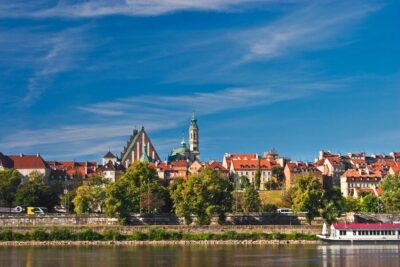

Segway Tour Warsaw: Old Town Tour – 1,5-Hour of Magic!
Read our review →

Taste of Poland, Old Town food tour and guided walk – 12 tastings
Read our review →Browse the lists this tour appears in