
Reviewed · WARSAW GHETTO & JEWISH HERITAGE
Tour of the Warsaw Ghetto
Warsaw’s former Jewish Ghetto is one of those places where the story finally clicks when you’re standing in the real spots. This tour gives you a street-level route through the most important locations, from surviving synagogue buildings to major memorial points tied to the 1940s.
I especially like the way the walk mixes clear timelines with human-scale details, so it is not just dates and names. And I like that you finish at the POLIN Museum area, so you can easily choose how much extra time you want for museum time after the tour.
One consideration: this is heavy history, and it includes a lot of walking plus public transit. It is also not suitable for children, so plan accordingly if you are traveling as a family.
Key things I’d plan around
- Hotel pickup plus a route built around where you’re staying, so you are not zig-zagging across town needlessly
- Mostly walking, with short transit hops, which keeps the pace focused on street sites
- Nozyk Synagogue stop is conditional, depending on the day and time you go
- Umschlagplatz and deportation sites, handled with context so you understand the symbolism
- POLIN Museum area without the main exhibition visit, meaning you may want to add that time yourself
- Guides who use maps and historic photos, including before-and-after visuals that help you grasp scale
How the 3-hour route tells the ghetto story without rushing you
This experience runs about 3 hours, with roughly 2.5 hours on foot and about 30 minutes using bus, tram, or underground. That mix matters. You spend enough time walking to actually feel like you are moving through the neighborhoods, not just being transported from one plaque to the next.
It is also adapted to your starting area. The order of stops can shift based on where your hotel pickup is happening, which helps you stay focused and not waste time cutting across the city.
Because this is offered as a private activity for your group, you can bring questions as you go. That can be a big deal on a topic this difficult, since you may want to ask what you are seeing, not just hear a lecture.
More Jewish heritage walks in Warsaw:
- Warsaw: Warsaw Ghetto Private Walking Tour with Hotel Pickup
★ 4.9 · 369 reviews - Warsaw: Jewish History Guided Walking Tour in English
★ 4.7 · 324 reviews - Private Tour: Warsaw’s Jewish Heritage by Retro Fiat
★ 5.0 · 208 reviews
Nozyk Synagogue: the surviving link you can still step into
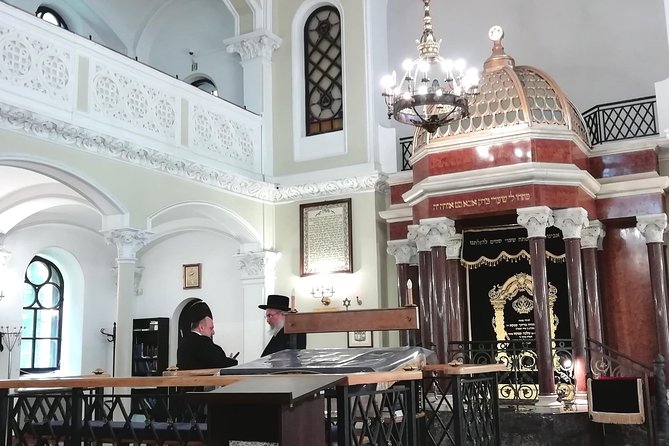
The tour begins at Nozyk Synagogue, described as the only synagogue to survive the Second World War and still operating today. The visit here is short, about 15 minutes, but it sets an important tone. It grounds the story in religious and community life, not only in the events of 1943 and deportations.
Practical note: Nozyk Synagogue admission is not included. It is €5.00 per person. Also, if you are going Friday afternoon (from 1 p.m.), or on Saturdays and Jewish holidays, the tour is conducted without visiting the synagogue. In other words, your first stop may be different depending on the calendar.
If you care about seeing a living landmark, this stop is a real plus. If you are trying to avoid extra ticket costs, it is still manageable since it is just this one paid admission in the route.
Próżna and Waliców: last surviving streets and ghetto wall fragments
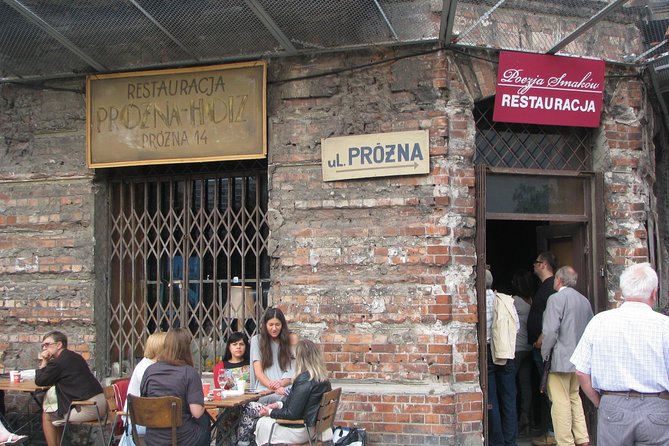
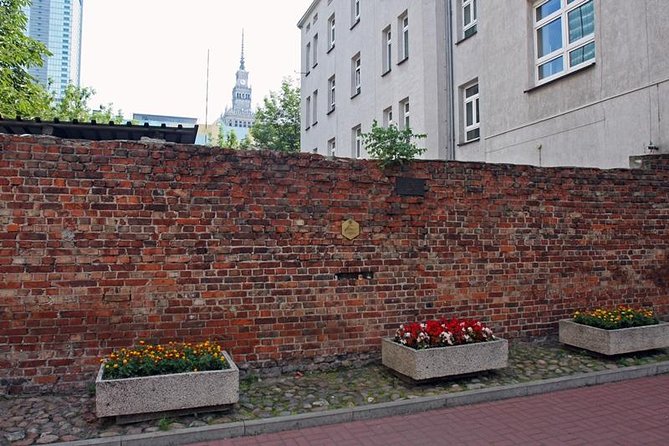
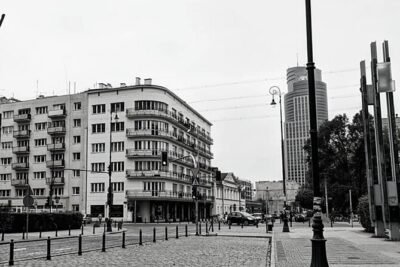
From Nozyk Synagogue, you head toward Próżna, and then Waliców. These are built around the idea of what survived. You explore the last surviving streets and neighborhoods within the ghetto area, and you also see fragments of the ghetto wall.
Why this part works: it helps you understand that the ghetto was not a single building or one dramatic scene. It was an urban space, with everyday life happening in cramped, controlled conditions, and later it became the setting for the uprising.
You will also hear what the route means historically, including discussion of the origins, everyday life, and the 1943 uprising. The time blocks are brief (around 20 minutes for Próżna and 15 minutes for Waliców), but the stops are set up to keep you oriented: you see the remaining structures first, then you connect them to the larger story.
Chłodna Street: where the Small and Big Ghetto connection is remembered
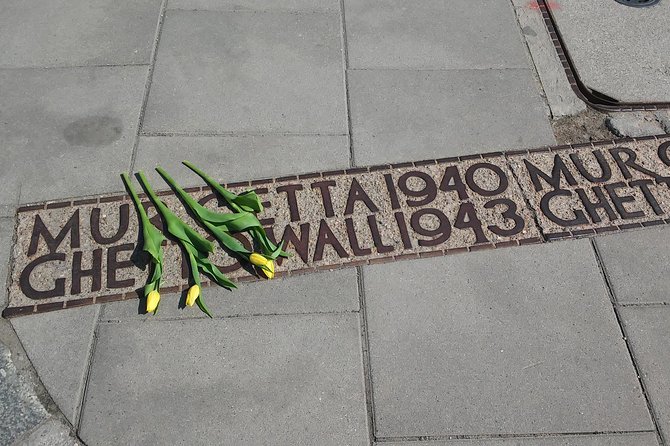
At Chłodna Street, the tour focuses on the point where the connecting bridge between the Small and Big Ghetto was located. This is one of the symbolic locations in the Warsaw Ghetto story, and it’s also a spot where popular culture can help you get your bearings.
You will connect what you are seeing to the character and story of Władysław Szpilman, known from the book and film The Pianist. That link is useful because it puts the geography into your brain fast. You start to picture how people moved, how spaces were divided, and how the city’s layout shaped the lived experience.
This stop is about 20 minutes. The value here is not just the photo opportunity, it is understanding why a bridge became a symbol of division and control.
Elsewhere in Warsaw:
- Warsaw: Chopin Concert in the Old Town
★ 4.8 · 2,287 reviews - Warsaw: Traditional Galar Cruise on The Vistula River
★ 4.6 · 1,640 reviews - Warsaw: Old Town Highlights Walking Tour in English
★ 4.7 · 1,516 reviews - Warsaw Concert: Chopin – Painted by Candlelights with Wine
★ 4.8 · 1,442 reviews
Umschlagplatz: the plan put into practice
Next comes Umschlagplatz, with about 15 minutes on site. The tour explains the real places where the Nazi plan for the Final Solution was put into action.
This is one of those stops where interpretation matters, because the location carries heavy symbolism. If you only skim the facts, you can miss the point. The tour’s goal is to help you understand how the plan moved from ideology into logistics, step by step.
Even though the stop is short, it is central to the experience. It is also a moment where you may want to slow down and take it in quietly. If you tend to get overwhelmed with big emotionally charged places, bring extra patience for yourself here.
POLIN Museum area: uprising context and memorial symbolism
After Umschlagplatz, you spend time around POLIN Muzeum Historii Żydow Polskich. The tour uses this stop to shift into the story of the heroic uprising in the Warsaw Ghetto.
You learn what life looked like inside the ghetto, why Jews took up arms, and who helped. The route also touches the memorial symbolism tied to the Ghettohelden Memorial, where Willy Brandt performed his famous Kniefall moment.
Important limit: during this tour, there is no visit to the main exhibition at POLIN Museum. Instead, you focus on the relevant areas tied to the ghetto story. The tour also gives you a useful nudge: if you want the full museum experience, you should plan about 2.5 hours for the main exhibition using audio guides available in German.
Museum opening hours included in the details you should know:
- Mo., Do., Fr.: 10:00 am to 6:00 pm
- Tue.: closed
- Wed., Sa., So.: 10:00 am to 8:00 pm
Pomnik Willy’ego Brandta and the Mila 18 memorial
Two more short stops complete the memorial arc.
First is the Pomnik Willy’ego Brandta, about 10 minutes, at the spot connected to Brandt’s Kneeling moment. Even if you have seen photos before, being at the real location changes how the event lands.
Then you move to the Memorial at Mila 18, also about 10 minutes. This stop is tied to the former location of the bunker at Miła 18, and you learn the eventful history connected to it. It’s brief on the clock, but it helps you connect the uprising story to specific places where resistance leaders and community members fought for survival and dignity.
These two stops are short, yet they steer you toward remembrance. They also help you understand that memorials are not just decorations. They are part of how the story gets preserved and communicated.
Pawiak Prison Museum: the machinery behind repression
The final listed stop is Pawiak Prison Museum, around 10 minutes. Here, the tour explains more about the prison itself.
Even if this is not the stop that grabs you most at first glance, it adds a necessary piece. Warsaw’s ghetto story is often told through deportations and uprising, but a prison site reminds you that repression was systematic and ongoing, not only one sudden chapter.
By the time you finish here, you are also set up well for the POLIN Museum area since the tour ends at POLIN Museum (Mordechaja Anielewicza 6).
Price and logistics: why $102.78 can still feel fair
At $102.78 per person for about 3 hours, this is not a bargain-basement walking tour. The value comes from the structure and the guided interpretation of key sites, including stops that can be hard to connect on your own.
Here is what you get that supports the price:
- Pickup from your hotel in the city center, with a licensed city tour
- Private group format, meaning it is only your group on the activity
- Mobile ticket and English guiding
- A route that mixes walking and short transit hops to connect multiple sites efficiently
- Stops that focus on the places tied to origins, daily life, deportations, and resistance
What is not included:
- Nozyk Synagogue admission at €5.00 per person
Another practical value point: the tour’s end at POLIN Museum can help you avoid decision fatigue. If you want more museum time, you can add it right away. If not, you have still covered the most critical street-level context.
Who this suits best, and who should skip it
This tour works best if you want a guided, chronological feel to the ghetto story and you only have a few hours to do it. If you hate guessing your way through heavy history, having someone lead the route matters.
It is not suitable for children, based on the tour details. If you are traveling with a teenager who can handle serious WWII history, you would still want to think carefully, since the provider explicitly says it is not suitable for children in general.
If you are short on energy or hate walking, you should plan for a lot of time on your feet. There are transit segments, but it still adds up.
Guides, storytelling style, and what to ask for
The strongest repeated theme in the experience is the guides’ ability to tell the story in a way that feels respectful and clear, even when the material is brutal. Many people highlight that guides bring strong storytelling, and they do it with sensitivity rather than sensationalism.
Two guide names come up often: Marzena and Olivia. If you want a guide known for pacing and careful explanations, it is worth aiming for one of them if that option exists when booking. One of the standout mentions tied to Marzena is her use of photos and maps to show what the area looked like before destruction and what remains today. That visual approach is not fluff. It helps you understand scale quickly.
Also, expect lots of opportunity for questions. The tour is structured so you can ask about what you see, not just wait until the end.
Should you book the Warsaw Ghetto tour?
Book this tour if:
- You want a tight, guided route through key ghetto locations in about 3 hours
- You care about understanding daily life, deportations, and the 1943 uprising as a connected story
- You like the idea of ending near POLIN Museum, where you can add extra time to the main exhibition later
Skip it or choose something else if:
- You do not want a lot of walking, even with transit segments
- You want the main POLIN Museum exhibition included in the tour itself, since it is not part of this route
- You are traveling with children, since this is not suitable for them
- You are going on a day when synagogue access is unavailable, since Nozyk Synagogue may be skipped on Friday afternoons, Saturdays, and Jewish holidays
If you go, give yourself permission to feel what you feel. This tour is designed to make the history concrete, and that can land hard, in the best way.
FAQ
How long is the Warsaw Ghetto tour?
It runs for about 3 hours.
Is hotel pickup included?
Yes. Pickup is offered from your hotel in the city center. If you are staying outside the city center, you may wait outside if you are in an apartment.
What does the tour include at POLIN Museum?
You do not visit the main exhibition at POLIN Museum during this tour. You will end at POLIN Museum, and you can add the main exhibition on your own.
Do I need to pay an admission fee for Nozyk Synagogue?
Yes. Nozyk Synagogue admission is not included, and it costs €5.00 per person.
Are there days when the synagogue visit is not done?
Yes. On Friday afternoons (from 1 p.m.), Saturdays, and Jewish holidays, the tour is conducted without visiting the synagogue.
Is this tour only for my group?
Yes. This is a private tour/activity, so only your group participates.
Is the tour offered in English?
Yes. The tour is offered in English.
Can I cancel and get a refund?
Free cancellation is available. You can cancel up to 24 hours in advance for a full refund. If you cancel less than 24 hours before the start time, the amount you paid is not refunded.
Recently added in Warsaw
- World War II Warsaw Old Town, Military Cemetery Walking Tour★ 4.7 · 3 reviews
- Warsaw: Wolf’s Lair & Swieta Lipka Small-Group Tour + Lunch★ 5.0 · 3 reviews
- Warsaw Wolf’s Lair with St. Lipka and Mamerki Private Guided★ 4.2 · 3 reviews
- Warsaw Zoo Skip-the-Line Entry Ticket with Private Transport★ 4.8 · 3 reviews
- Warsaw: Vodka Tour★ 4.4 · 18 reviews
- Wilanów Palace: 2-Hour Guided Tour with Entrance Tickets★ 4.8 · 8 reviews
- Warsaw Uprising and WWII Old Town Walking Tour with Museum★ 4.7 · 15 reviews
- Warsaw: Private Vodka Tasting Night with Snacks and Pickup★ 5.0 · 7 reviews
Other Warsaw Ghetto & Jewish Heritage Tours
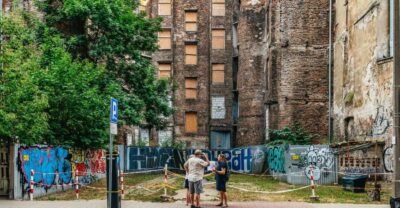
Warsaw Ghetto Private Walking Tour with Hotel Pickup
Read our review →
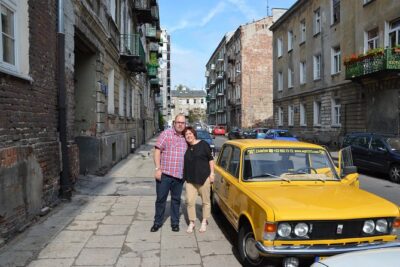
Private Tour: Warsaw’s Jewish Heritage by Retro Fiat
Read our review →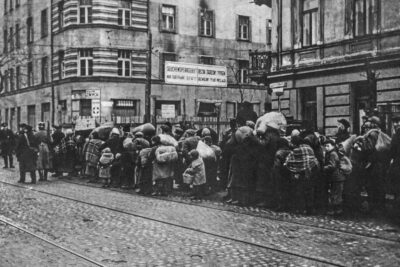
Ghetto, Jewish Cemetery & POLIN Museum Private Tour
Read our review →
Browse the lists this tour appears in