Reviewed · PRIVATE
13-Day Highlights of Poland Tour – private for 2-10 persons
If you want Poland in one smooth package, this 13-day private tour is interesting because it handles the hard parts for you, airport transfers and a comfortable private vehicle. I like that you do not have to hunt down lodging, plan long-distance rides, or guess where to buy tickets, because the trip runs on a set rhythm with guides and prearranged entries.
My favorite part is that the itinerary mixes big landmarks with real local atmospheres, from Warsaw’s rebuilt Old Town to Krakow’s Wawel hill. One possible drawback: the days are full, and you will spend a lot of time in transit and walking, plus you hit heavy WWII and Holocaust history that deserves your full attention.
Key Highlights You Should Know Before You Go
- Warsaw Old Town to Łazienki Park in one organized day, with time for Royal Castle and the uprising story
- Masuria’s Wolfs Lair and a castle stay in Lidzbark Warminski for a totally different Poland mood
- Elbląg Canal cruise that turns sightseeing into something active and scenic
- Malbork Castle as one of Europe’s standout medieval fortresses, with a guided focus
- Wieliczka Salt Mine plus Schindler Factory Museum, two major lessons in very different settings
- Tatra views and Dunajec rafting from Zakopane and the Pieniny National Park area
Price and Logistics That Actually Matter
At $5,350 per person for 13 days, this is not a budget tour. The value comes from the stuff that normally eats your time and energy: a private vehicle, 3 and 4-star hotels, licensed and local guides, airport transfers, and entries into the planned attractions.
Also, the tour is designed for small groups. It’s private for groups of 2 to 10, and the broader group size is capped at max. 15, with only your group participating. That usually means less waiting, easier pacing, and fewer awkward moments trying to herd people through big sites.
The other logistics factor is meal planning. You get 12 breakfasts and 12 dinners, but some dinners are on your own on certain days, so you should still be comfortable finding a good meal in a new town.
Other Warsaw tours to compare
- Private Tour: Warsaw City Sightseeing by Retro Fiat
★ 5.0 · 562 reviews - Warsaw: Warsaw Ghetto Private Walking Tour with Hotel Pickup
★ 4.9 · 369 reviews - Private Tour: Warsaw’s Jewish Heritage by Retro Fiat
★ 5.0 · 208 reviews
Warsaw First, Because It Sets the Tone of the Whole Trip
Your tour starts at Frederic Chopin Airport in Warsaw at 9:00 am, with arrival transfer to the hotel. Then in the early afternoon you meet your tour leader and jump right into the story of a city that was utterly destroyed in WWII and rebuilt with intention.
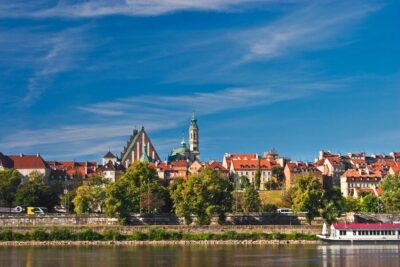
The Old Town walk is the anchor. You’ll see the Warsaw Old Town, plus stops around major landmarks that explain Warsaw’s identity: the Warsaw Uprising Monument, the Royal Castle area, and the Royal Łazienki Park grounds, famous for the Frederic Chopin monument and the Palace on the Water.
What I like is the mix of formal history and pleasant strolling. Łazienki Park gives you a break from museums and monuments, and it is a nice way to arrive and not immediately burn out your legs. If you prefer a calmer pace on Day 1, plan to keep your walking light once you’re in the park, because later days also ask for stamina.
Łazienki Park, Royal Castle, and the Uprising Story in One Flow
Within Warsaw, you get distinct experiences rather than one long blur. The Łazienki Garden walk is a focused way to slow down, and the Royal Castle stop gives you a clear sense of the city’s restored “center.”
The Warsaw Uprising Monument stop is brief, but it matters. This isn’t just about pretty buildings, it’s about how Warsaw remembers itself, and how that memory shapes how you read the rest of Poland.
If you are sensitive to heavy history, take this as a prompt to go slower, especially after dinner in the Old Town area. That welcome dinner is a practical reset after a travel day, and it also helps you start building rapport with your guide and group.
Masuria and the Wolfs Lair, Plus a Night in a Castle
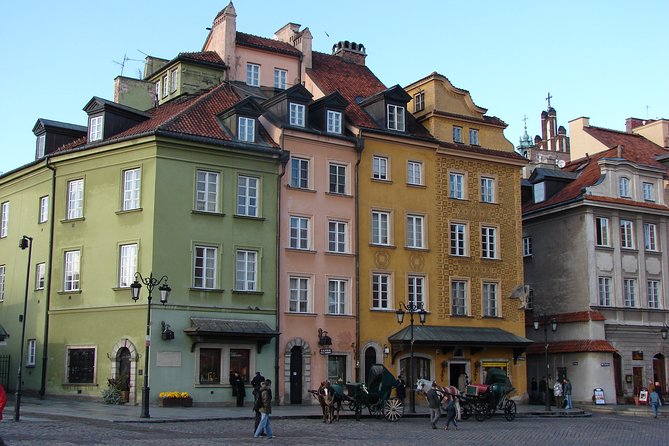
After breakfast you head north toward Masuria, known as the Region of Thousand Lakes. This is not a quick jump, it’s a long drive of about 4.5 hours, and it pays off because Masuria feels different from Poland’s big-city centers.
The centerpiece stop is the Wolfs Lair, Hitler’s WWII headquarters. You get a guided tour with a local specialist, and this is the kind of visit where having a guide matters, because you need context to make sense of what you are seeing.
Then you transfer to Lidzbark Warminski and check into a hotel inside a renovated 14th-century castle. This is one of the strongest “value-for-feeling” parts of the trip. You’re not just sleeping somewhere historic, you get free time tied to castle life, including options like a castle pool, sauna, and other activities you can pay for if you want them.
A castle dinner also helps the day land well. It’s a rare moment where the night setting matches the history you just saw earlier, without turning it into a nonstop grim marathon.
Elsewhere in Warsaw:
- Warsaw: Chopin Concert in the Old Town
★ 4.8 · 2,287 reviews - Warsaw: Traditional Galar Cruise on The Vistula River
★ 4.6 · 1,640 reviews - Warsaw: Old Town Highlights Walking Tour in English
★ 4.7 · 1,516 reviews - Warsaw Concert: Chopin – Painted by Candlelights with Wine
★ 4.8 · 1,442 reviews
Elbląg Canal Cruise and Malbork Castle: Medieval Poland at Full Strength
From Masuria you head to the Elbląg Canal area. You start with an early breakfast and then go straight to Buczyniec for a unique 2-hour cruise along the Elbląg Canal. This is listed as a “tourist wonder,” and the point is that it’s not a standard river cruise, it’s tied to the canal’s engineering history and the way it moves along the landscape.
After that, you go to Malbork, home to the Teutonic Knights fortress, often described as the greatest castle in Poland. You tour the medieval stronghold as a major highlight, and it’s one of those places where the scale can surprise you even if you usually ignore “big castle” stops.
One practical note: this day is a lot of moving parts. Between cruise time, driving, and castle touring, you’ll want a comfortable day bag with water and a layer for cooler interiors. Wear shoes you trust, because stone and uneven walking are part of the deal at big fortresses.
Gdansk by the Water, Westerplatte, and Sopot’s Long Pier
You spend a night in Gdansk, and you start the day with breakfast plus a sightseeing focus on Poland’s maritime heritage. This part of the trip gives you atmosphere: you’ll see the Basilica, the Neptune Monument, Żuraw Gdański crane, the harbor area, and Westerplatte, the place where WWII officially began.
Westerplatte is a short stop, but it’s meaningful. You should treat it like a moment to slow your brain down and absorb the significance, not like another quick photo stop.
Later you add Sopot, a health resort on the Baltic with the famous wooden pier. You get time for a relaxing walk along the seaside, which is a smart change of pace after the intensity of wartime sites. Dinner is on your own that evening, so you can decide what you want, from casual seafood to a simple Polish meal, while keeping the rest of the itinerary on track.
Toruń and the Copernicus Thread Through the Old Town
Toruń is a very different kind of city stop. You travel there after breakfast and check into a local hotel, then take a guided tour of the Old Town built around its river setting on the Vistula.
The big draw here is the mix of medieval structure and learning. You visit the city’s historic core, including the City Hall area and cathedral sights, and you also get time around Nicolas Copernicus’s Museum linked to Copernicus’ home.
If you like history that connects to science, this is a good day. If you prefer more atmosphere than facts, you can still get plenty from walking the Old Town streets and soaking in the river views, without needing to memorize every date.
Biskupin, Gniezno, and Poznań: Early Poland’s Power Centers
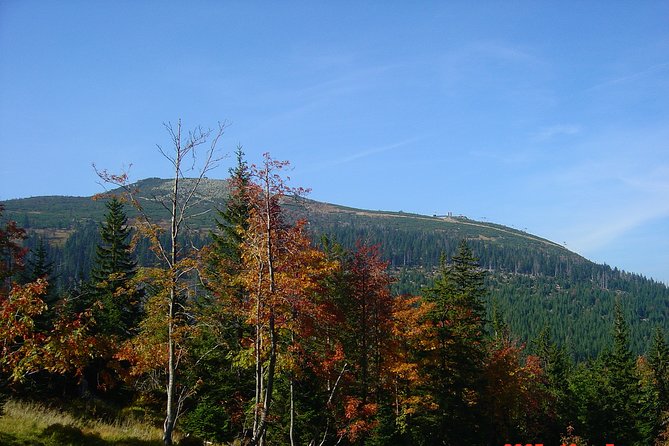
One day you’re in Biskupin, an open-air archaeological site with a reconstructed settlement dated around 750 B.C. You get a guided visit, and it’s one of the best “you are really seeing history” stops because it’s built to be walked through.
From there you go to Gniezno, described as the historic capital of Poland. You’ll visit the cathedral with a local guide, which is one of those experiences where the building helps you understand the story.
Then you continue to Poznań for hotel check-in and dinner. The Poznań Old Town guided tour focuses on major landmarks like the Town Hall and the cathedral that ties to early rulers. If you like your culture stops to have a clear geographic and political “why,” this section makes sense because it shows how Poland’s power centers moved through time.
Czestochowa’s Black Madonna and the Shift to Auschwitz
Czestochowa is both religious and cultural gravity. The visit to the Jasna Góra Monastery and the Black Madonna icon is guided, and you also get time tied to the monastery’s significance. This is an intense place, but it is also a place of ritual and meaning, not just a museum.
The day continues south, because you leave Czestochowa before noon to drive to Oświęcim, where you stay near the Auschwitz area.
This is also the point where your emotional pacing matters. If you want to make the next day easier on your mind, you’ll thank yourself for getting a steady night of rest, because Auschwitz-Birkenau is not a casual stop.
Auschwitz-Birkenau: Treat It as the Center of Your Trip
You visit Auschwitz-Birkenau with a guided tour. This is listed as a Nazi German concentration and death camp area, now a martyrdom museum.
I’m not going to tell you how to feel, but I will say this: if you rush through this kind of history, you rob it of its purpose. Make sure you can hear your guide, and do not overload the day with extra side stops. It’s scheduled as a dedicated activity, and that structure is exactly what this visit needs.
The rest of the day includes return to your hotel for dinner and overnight. That matters because it gives you a decompression block instead of pushing straight into the next big attraction.
Pieniny and Dunajec Rafting: A Hard Reset in the Mountains
After breakfast you head to the Pieniny mountains area, with a stop in Wadowice on the way to see the basilica connected to John Paul II. You also get a chance to taste the famous cream cakes of the Pope, which sounds like a small detail until you realize how welcome it can be after WWII days.
Then you reach the rafting portion in Dunajec Gorge. You’ll do Dunajec River rafting with raftsmen piloting the boats, and the ride includes views of the two castles of Niedzica and Czorsztyn before you enter the deep gorge with white limestone walls.
You end up in Zakopane in the evening, check in, and you have dinner there. This is an excellent “soft landing” into Polish nature and scenery after serious history, because your attention shifts to movement, water, and the rhythm of the gorge.
Zakopane’s Wooden Town and Gubalówka Cable Car Views
Zakopane is where the trip turns outward, with mountain air and wooden architecture. You start with a guided city tour focused on 19th- and early-20th-century wooden architecture in the Zakopane region.
Then you ride a cable car to Mount Gubałówka (spelled here as Gubalowka), and from the top you get panoramic views of the Tatra Mountains. If you like photo moments, this is one of the easiest places to get them without complicated hiking.
The afternoon gives you free time for local shops and handcrafted items, and there is also an option for a 2-hour guided walk in a valley of the Tatra National Park. Dinner is at a regional restaurant with live music, which is a nice change from museums and fortresses.
If you want one practical tip here: bring a layer. Even in warmer months, mountains can change fast, and you’ll thank yourself on cable car rides and in the evening.
Wieliczka Salt Mine and Schindler Factory: Two Types of Underground
You leave Zakopane in the morning for Wieliczka Salt Mine, which is about 800 years old and described as the oldest salt mine in Europe. You should expect cold down there, and you are specifically told it stays around 14 degrees Celsius, so bring something warm.
The mine tour focuses on the underground “rock-salt fantasy world,” including St. Kinga’s Chapel, carved salt sculptures, and areas with original medieval mining equipment. This is one of those visits where engineering and art meet, and it also keeps you moving through an organized route.
Right after the salt mine you also visit the Schindler Factory Museum for about an hour. This adds a different kind of WWII lens, more personal and historical in tone, right when your mind is already tuned to that era.
Then you travel to Krakow for hotel check-in. Dinner is on your own that night, which is helpful because by then you might want something familiar and low-key rather than another long guided meal.
Krakow’s Wawel Hill and Old Town Walking: The Classic Ending
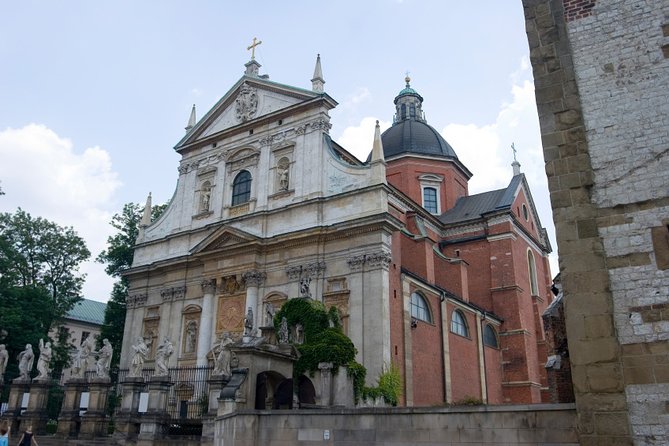
Krakow is the “wrap it all up” part of the trip, and it earns that spot. You begin with a guided walking tour that starts at Wawel Hill, including the Royal Castle and the Coronation Cathedral, where Polish kings and notable figures are buried.
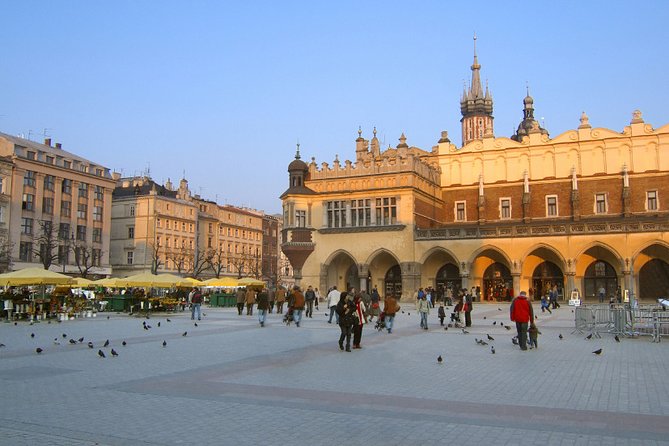
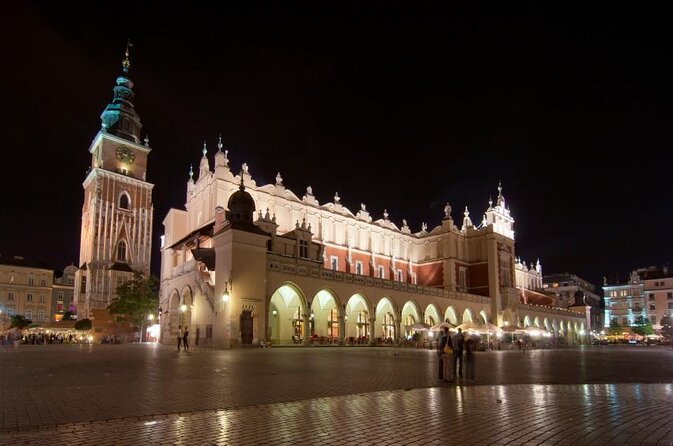
You also get inside access to the Royal Chambers, where you can see Flemish tapestries. Then you continue into Krakow Old Town with sights like the defensive walls, the Barbican, and Market Square dominated by St. Mary’s Church.
A key practical plus here is that Krakow is one of the least exhausting cities to be in after long drives. It’s walkable, and the walking tour is scheduled in a focused block, about 4 hours.
You also get optional time around major square landmarks like the Cloth Hall (Sukiennice). Then your final day is simpler: you check out and transfer to Krakow airport if your tour ends there.
The Rick-Steves Style Verdict, with Real Tradeoffs
I like this tour because it’s built to protect your attention. You do not spend your vacation juggling trains, rewriting schedules, or negotiating ticket lines, and that matters when your days include major guided experiences like Auschwitz-Birkenau and large medieval sites.
The best parts are the combination days. You’ll get cultural density in big cities, then you’ll get active scenery in places like Dunajec and Zakopane. That balance is what makes the trip feel like a journey instead of a checklist.
Just be honest with yourself about the tradeoffs. You are moving around a lot, and some dinners are on your own. Also, the WWII and religious sites are not light entertainment, so plan to bring a respectful mindset and a willingness to slow down when it counts.
Should You Book This Poland Tour?
Book it if you want Poland with structure, guided access to major sites, and a small-group feel where your logistics are handled. This is a strong choice for first-timers, couples, and small groups who want both culture and nature without the planning headache.
Skip it if you prefer total freedom day by day, or if you get overwhelmed by long days with lots of scheduled stops. Also, if WWII history feels too intense for your current travel headspace, you might want a different Poland route.
If you do book, pack comfortable shoes, a warm layer for the salt mine, and mentally plan for at least one day where the pace becomes quiet and deliberate.
FAQ
What’s included in the tour price?
The tour includes air-conditioned vehicle transport, 3-star and 4-star hotels, licensed tour guide and local tour guides, attraction entry tickets, airport transfers on arrival and departure, plus breakfast and dinner for 12 days.
Is this tour private?
Yes. It is described as a private tour/activity where only your group participates.
How large is the group?
The tour is small-group style, with a maximum of 15 people.
Where does the tour start and what time?
It starts at Frederic Chopin Airport in Warsaw, Poland, with a start time of 9:00 am.
Does the tour include airport transfers?
Yes, airport transfers on arrival and departure are included.
Do you have to arrange tickets and entrances?
No. Entry tickets for attractions and activities on the itinerary are included.
What kind of hotels do you stay in?
You stay in 3-star and 4-star hotels, based on the tour details.
What about physical requirements?
Travelers should have a moderate physical fitness level.
Are meals fully included?
Breakfast and dinner are included for 12 days. Some dinners are on your own on certain days, based on the daily plan.
What should I wear for Wieliczka Salt Mine?
The mine is kept around 14 degrees Celsius, so you should wear something suitable and warm.
Is the tour refundable if I cancel?
No. The experience is non-refundable and cannot be changed for any reason. If canceled, the amount paid is not refunded.
Recently added in Warsaw
- Warsaw: Wolf’s Lair & Swieta Lipka Small-Group Tour + Lunch★ 5.0 · 3 reviews
- World War II Warsaw Old Town, Military Cemetery Walking Tour★ 4.7 · 3 reviews
- Warsaw Wolf’s Lair with St. Lipka and Mamerki Private Guided★ 4.2 · 3 reviews
- Warsaw Zoo Skip-the-Line Entry Ticket with Private Transport★ 4.8 · 3 reviews
- Warsaw: Vodka Tour★ 4.4 · 18 reviews
- Wilanów Palace: 2-Hour Guided Tour with Entrance Tickets★ 4.8 · 8 reviews
- Warsaw Uprising and WWII Old Town Walking Tour with Museum★ 4.7 · 15 reviews
- Warsaw: Private Vodka Tasting Night with Snacks and Pickup★ 5.0 · 7 reviews
Private, compared.
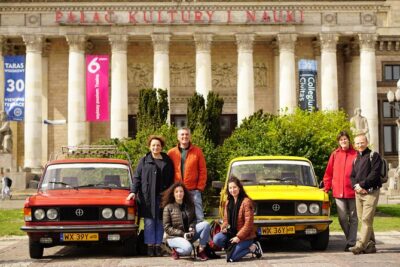
Private Tour: Warsaw City Sightseeing by Retro Fiat
Read our review →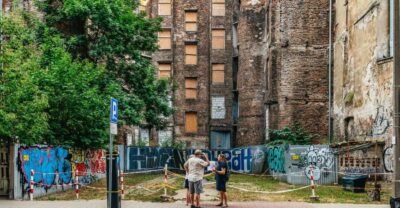
Warsaw Ghetto Private Walking Tour with Hotel Pickup
Read our review →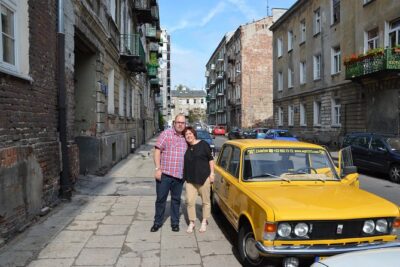
Private Tour: Warsaw’s Jewish Heritage by Retro Fiat
Read our review →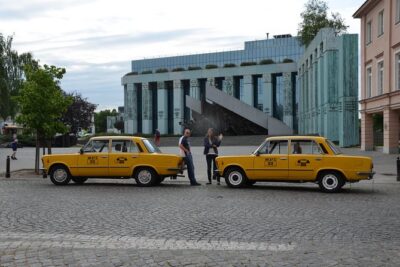
Private Historical Tour of Warsaw by a Retro Fiat with Pickup
Read our review →
Warsaw for WWII Buffs – private tour with hotel pickup
Read our review →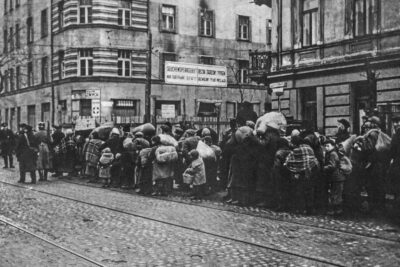
Ghetto, Jewish Cemetery & POLIN Museum Private Tour
Read our review →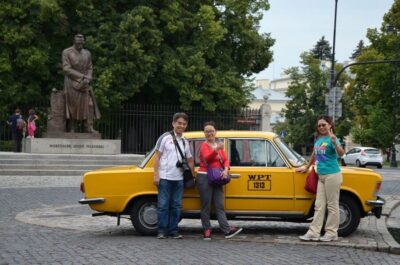
Warsaw Must-Sees: 4-Hour Private Tour by Retro Fiat
Read our review →