
Reviewed · WARSAW GHETTO & JEWISH HERITAGE
Jewish Warsaw
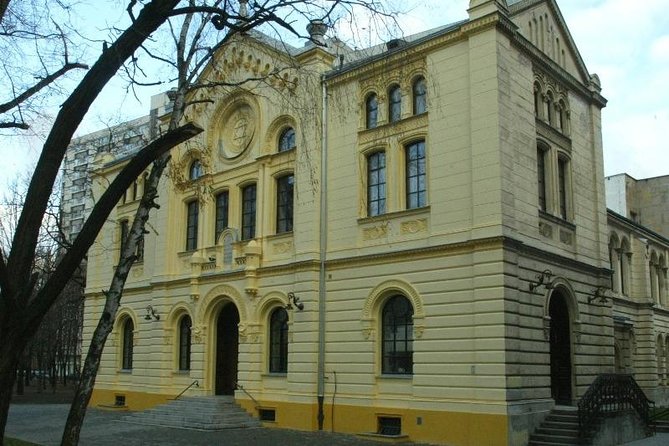
Jewish Warsaw is interesting because you see how a whole community lived in one city, from bustling streets to memorial sites, and then you finish at POLIN to tie it together. I love that the route is built around specific places like Prozna Street and the surviving Nozyk Synagogue, not vague talking points. Another thing I like is that you get real guidance in a short window, with a guide who can point out both what is known and what is easy to miss, like one guide named Mary called out in a 5-star review.
There is one drawback to keep in mind: some stops are not included for entry (notably Nozyk Synagogue, plus the Jewish Cemetery), so you should budget extra cash before you go. Also, this tour needs good weather because it is mostly walking through streets and outdoor sites.
Key highlights you will feel fast
- Start in pre-war Jewish Warsaw at Grzybowski Square, getting your bearings before you walk into the story
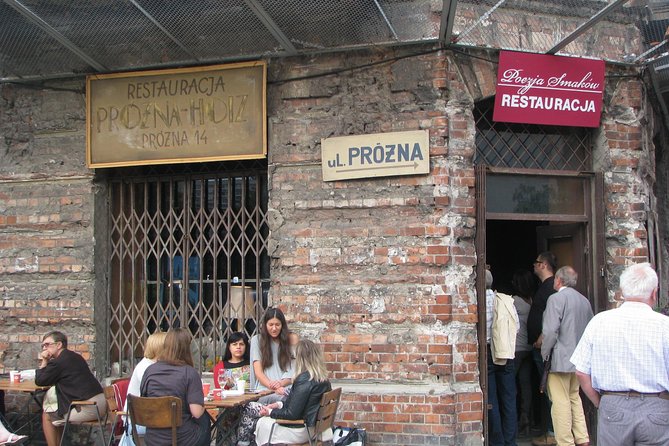
- Prozna Street and nearby blocks show preserved commercial life and residential texture
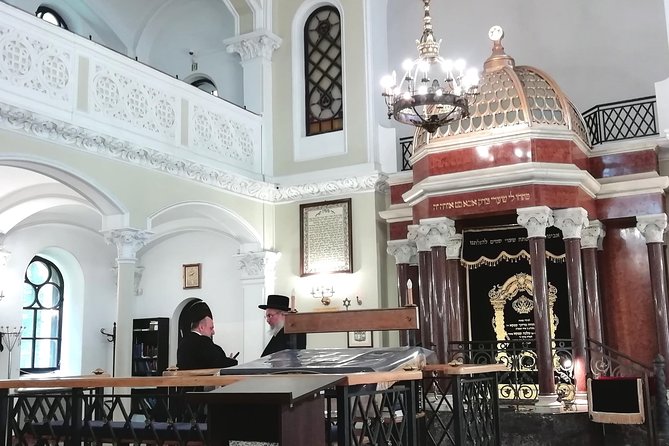
- Nozyk Synagogue is the one surviving synagogue from WWII that is still operating
- Krochmalna and Singer’s Warsaw link place to literature, so you picture the city more clearly
- Jewish Cemetery time is longer for a reason, with burial customs and connected topics like Janusz Korczak and Esperanto
- Finish at POLIN Museum, where the building itself has symbolism and you can continue with audio guides
Grzybowski Square to get your bearings in pre-war Warsaw
The tour begins at Grzybowski Square (Pl. Grzybowski 2), and that matters. Before you get into names and events, you need orientation, and this opening gives it to you quickly. Your guide brings you close to the daily reality of Warsaw’s Jewish community, which was the largest in Europe before WWII.
I like this start because it avoids the common problem on history tours, where you jump straight to tragedy and forget the living part. You are told that Jewish Warsaw was a real world with neighborhoods, businesses, and culture, not just a set of dates. If you arrive early and take a second to look around, you will understand why the later street stops hit harder.
Practical note: it is a 3-hour experience on foot in parts, with some transit by air-conditioned vehicle and pickup options. Wear shoes you trust, since the route moves street to street.
More Jewish heritage walks in Warsaw:
- Warsaw: Warsaw Ghetto Private Walking Tour with Hotel Pickup
★ 4.9 · 369 reviews - Warsaw: Jewish History Guided Walking Tour in English
★ 4.7 · 324 reviews - Private Tour: Warsaw’s Jewish Heritage by Retro Fiat
★ 5.0 · 208 reviews
Prozna Street and the commercial pulse of Ulica Prozna
Next up is Prozna Street (Ulica Prozna), where the atmosphere is different from a monument stop. This is a Jewish commercial street preserved in its original form, so you get a sense of what shopping, work, and social life could have looked like.
You also hear about inhabitants, including big names and famous families who lived in Warsaw. That is a smart choice, because it helps you connect place to people without getting lost in long lists.
A small consideration: this is a short stop, around 10 minutes, so if you are the type who wants to read every sign, you might feel a bit rushed. Still, the time is useful. It is enough to get the street’s shape in your head, then move on while the story stays coherent.
Nozyk Synagogue, the survivor you can still visit in operation
One of the most meaningful moments is at Nozyk Synagogue. This stop is special because it is described as the only synagogue that survived WWII and is still in operation. When a place continues to function, the history is not locked in the past. You are looking at a living thread that extends past the worst break in modern Jewish life.
Expect about 15 minutes here. The stop also has a clear practical detail: entrance is not included. So plan to pay the entry fee on site or follow whatever instruction your guide gives you that day.
If you want the tour to feel personal, this is where it can. Even if you do not consider yourself a synagogue-focused visitor, seeing how the building is used today changes how you read what happened before WWII and during it.
Krochmalna and Chlodna, where streets meet story and everyday life
After the synagogue, the tour shifts into the texture of neighborhoods.
You pass through Krochmalna, with a literary tie: the streets and places were described in the prose of Isaac Bashevis Singer. That is a good way to learn, because you are not only getting historical facts, you are learning how an author looked at the city. It gives you mental snapshots, the kind that make later museum exhibits easier to understand.
The stop itself is brief, about 5 minutes, but it works as a bridge. You move from religious history to cultural memory, then into the physical feel of homes and backyards.
Then you reach Chlodna Street, where you can explore houses that are still in their original condition and get a feel for Warsaw backyards. Again, the stop is around 10 minutes, which means your guide focuses on what matters most for seeing the city as it was, not just walking past it.
Here is the drawback to note: these streets are outdoors, and the route can be weather-dependent. The tour requires good weather. If it is raining or bitterly cold, your ability to linger in doorways or look closely at details will be limited.
Elsewhere in Warsaw:
- Warsaw: Chopin Concert in the Old Town
★ 4.8 · 2,287 reviews - Warsaw: Traditional Galar Cruise on The Vistula River
★ 4.6 · 1,640 reviews - Warsaw: Old Town Highlights Walking Tour in English
★ 4.7 · 1,516 reviews - Warsaw Concert: Chopin – Painted by Candlelights with Wine
★ 4.8 · 1,442 reviews
Keret House, the narrowest house in the world
At Keret House, you get a surprising contrast: a small architectural story in the middle of a heavier route. You will learn about the history of the narrowest house in the world, and that detail does more than entertain. It shows how Warsaw uses space creatively and how the city keeps changing even while you remember what came before.
The stop is about 10 minutes, and it is the kind of moment that refreshes your attention without breaking the thread of the walk. You go from religious survival and neighborhood streets into an example of architecture that makes people stop and stare, which helps the tour stay engaging.
If you are the type who likes photos, this is likely one of your best chances. The house is visually specific, and you will be positioned for pictures as part of the guidance.
Jewish Cemetery time for names, burial traditions, and connected history
The longest stop is the Jewish Cemetery (Cmentarz Zydowski), at about 40 minutes. This is also where the tour turns from place-based storytelling into ritual and memory.
You will visit where famous rabbis, zaddiks, and Jewish families rest. Your guide talks about Jewish burials and traditions, and the cemetery becomes a classroom for how communities carried faith and identity across generations.
This stop also includes extra threads, not just headstones. You learn about the history of the Esperanto language, Janusz Korczak’s orphanage, and the Jewish theater. Those connections matter because they widen your understanding of Jewish culture as something active and creative, not only religious or tragic.
Important practical point: entrance is not included. So this is another place where budgeting helps. If you arrive without small cash or without being ready to pay, you can lose precious time.
Another consideration: a cemetery requires your pace to slow down. If you are someone who dislikes quiet stops or you prefer only outdoor sightseeing, you might find this emotionally heavy. If you can handle solemn places, this is often the part that stays with you longest.
The Pomnik Bohaterow Getta stop and the Willy Brandt knee moment
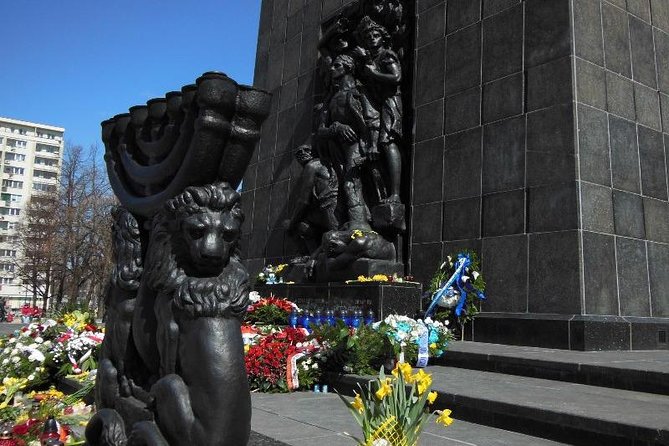
After the cemetery, you end up at the Pomnik Bohaterow Getta (Monument to the Heroes of the Ghetto). Your guide stops where Willy Brandt did his famous knee.
This is one of those moments where the world seems to focus for a second. Even if you already know the story of that act, hearing it in context and seeing the monument directly can make it feel less like a photo and more like an encounter with collective memory.
Expect about 15 minutes. That is enough time to take in the monument, absorb why it exists, and let the tour’s emotional rhythm catch up before you move toward POLIN.
POLIN Museum of the History of Polish Jews, where the walk becomes meaning
The tour finishes at POLIN Museum of the History of Polish Jews, at Mordechaja Anielewicza 6. You get about 15 minutes of guided attention here, focused on the building’s symbolism and architecture.
This is valuable because you do not finish the tour feeling like you just followed a map. Instead, you step into a museum with a framework for what you will see next. The museum is where you can connect all the streets and surviving places you walked past with objects, documents, and deeper interpretation.
The tour ends here, and you can visit the museum using audio guides. That is a practical bonus. Audio helps you control the pace, especially after a guided walk that already gave you a structured overview.
If you only have one museum time window during your Warsaw trip, this stop is your payoff. Keep some energy for POLIN, even if you feel “historied out” right after the walk. The museum lets you choose your own tempo and focus areas.
Price and what you are really paying for
The price is $89.35 per person for about 3 hours. That sounds like a lot until you look at what you get.
You get an air-conditioned vehicle, and you can also get hotel pickup if your hotel is in the right area. The guide meets you at the hotel reception with a PolinTours sign, or waits in the car outside. If your hotel is far from the center, the meeting point is arranged by email with the guide waiting at the agreed location.
You also get the convenience of a mobile ticket and a private setup where only your group participates. That can be a big value upgrade if you are traveling with family, friends, or anyone who asks questions.
Now the part to budget: entrances are not fully included. There is an additional fee for Jewish Warsaw at €5.00 per person. Nozyk Synagogue and the Jewish Cemetery have entrance fees that are not included in the tour price. Since these are timed stops, you will feel better if you are ready with payment.
Also, lunch is not included. If you are choosing to pair this with museum time, plan a meal either before the walk or after you finish at POLIN.
My take: the price works well if you want guided interpretation, not just sightseeing. If you are comfortable reading on your own and you already know where everything is, you could do some of this independently. But if your goal is to understand the city in a tight window, this tour earns its cost.
How the route moves, and what to expect day-of
This is a walking and stopping tour with short timed segments, followed by vehicle movement between points. It is designed for pacing, not marathon wandering.
Here is the rhythm you can expect:
- Grzybowski Square gives orientation (about 15 minutes)
- Prozna Street is a quick street-life snapshot (about 10 minutes)
- Nozyk Synagogue is a focused, meaningful visit (about 15 minutes, entrance not included)
- Krochmalna and Chlodna add neighborhood texture (about 5 minutes and 10 minutes)
- Keret House is a brief architectural stop (about 10 minutes)
- Jewish Cemetery is the long reflective moment (about 40 minutes, entrance not included)
- Pomnik Bohaterow Getta provides a public memory anchor (about 15 minutes)
- POLIN wraps the story and points you to deeper learning (about 15 minutes)
If you like having “just enough time” at each place, you will probably appreciate that structure. If you want more time per stop, the short segments might feel limited.
Who should book this Jewish Warsaw walk, and who might not
This tour fits you best if you want:
- a guided route that connects street layout to real people and real institutions
- a mix of surviving sites plus memorial locations
- a convenient finish at POLIN Museum, so you can keep learning without planning a second trip
It may be less ideal if:
- you want long free time at each location, since many stops are 10 to 15 minutes
- you are not comfortable with cemetery visits that can be emotionally intense
- you travel during questionable weather, since the tour requires good weather
If you are visiting Warsaw for the first time, this route is also a smart way to get your bearings fast. It gives you a sense of where things are, and it teaches you what to look for.
Should you book Jewish Warsaw?
If you want a short, guided, place-based introduction to Jewish Warsaw that ends at a major museum, I think this is a solid booking. The route is built around specific stops you might never find or interpret on your own, and the guiding style highlighted in a top review, including a guide named Mary, focuses on both known facts and details you can otherwise miss.
Just plan ahead for extra entry costs at Nozyk Synagogue, the Jewish Cemetery, and the €5.00 Jewish Warsaw fee. If you do that, you will spend the whole walk focused on the story, not on payment issues.
If the weather looks good and you have about half a day, book it. You will leave with a much clearer mental map of Jewish Warsaw and a stronger reason to spend time inside POLIN.
FAQ
How long is the Jewish Warsaw tour?
It runs for about 3 hours.
What language is the tour offered in?
The tour is offered in English.
Where does the tour start and where does it end?
It starts at Grzybowski Square (Pl. Grzybowski 2, 00-824 Warszawa) and ends at POLIN Museum of the History of Polish Jews (Mordechaja Anielewicza 6, 00-157 Warszawa).
Is hotel pickup included?
Yes, pickup is offered. The guide either meets you at reception with the PolinTours sign or waits in the car in front of your hotel. If your hotel is far outside the city center, a meeting point is arranged by email.
What is included in the tour price?
The tour includes an air-conditioned vehicle.
What is not included?
The tour does not include lunch, and certain entrance fees are not included, including Nozyk Synagogue and the Jewish Cemetery. There is also an additional fee of €5.00 per person for Jewish Warsaw.
Do I get a ticket on my phone?
Yes, the tour offers a mobile ticket.
Is the tour near public transportation?
Yes, it is described as being near public transportation.
What happens if the weather is bad?
This experience requires good weather. If it is canceled due to poor weather, you will be offered a different date or a full refund.
Can I cancel for free?
Yes. You can cancel up to 24 hours in advance for a full refund, based on the tour’s local start time.
Recently added in Warsaw
- Warsaw: Wolf’s Lair & Swieta Lipka Small-Group Tour + Lunch★ 5.0 · 3 reviews
- World War II Warsaw Old Town, Military Cemetery Walking Tour★ 4.7 · 3 reviews
- Warsaw Wolf’s Lair with St. Lipka and Mamerki Private Guided★ 4.2 · 3 reviews
- Warsaw Zoo Skip-the-Line Entry Ticket with Private Transport★ 4.8 · 3 reviews
- Warsaw: Vodka Tour★ 4.4 · 18 reviews
- Wilanów Palace: 2-Hour Guided Tour with Entrance Tickets★ 4.8 · 8 reviews
- Warsaw Uprising and WWII Old Town Walking Tour with Museum★ 4.7 · 15 reviews
- Warsaw: Private Vodka Tasting Night with Snacks and Pickup★ 5.0 · 7 reviews
Other Warsaw Ghetto & Jewish Heritage Tours
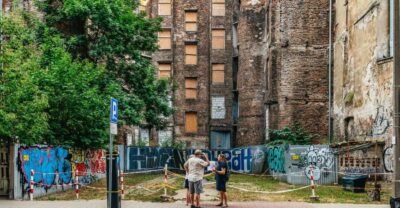
Warsaw Ghetto Private Walking Tour with Hotel Pickup
Read our review →
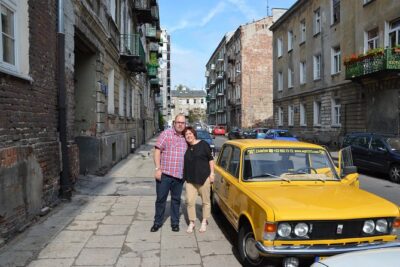
Private Tour: Warsaw’s Jewish Heritage by Retro Fiat
Read our review →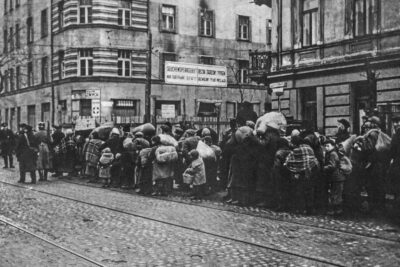
Ghetto, Jewish Cemetery & POLIN Museum Private Tour
Read our review →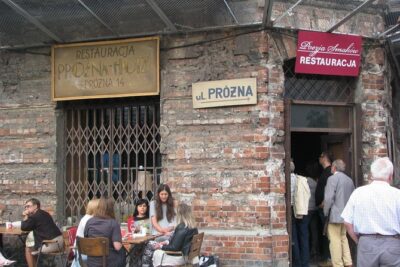
Browse the lists this tour appears in