
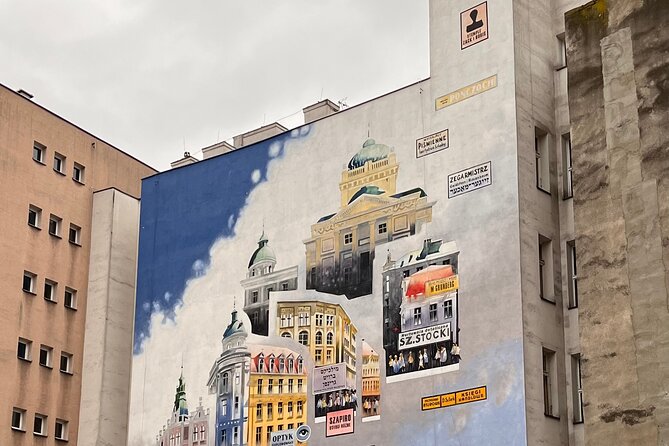
Reviewed · WARSAW GHETTO & JEWISH HERITAGE
Past Meets Present in Warsaw’s Jewish Ghetto
Warsaw’s Jewish Ghetto story is not something you read and move on from. This walking tour links key sites to what they meant then and why they still matter now, with a guide who keeps the tone human and honest. It’s a serious route, but you get structure, time to look, and space to understand.
I love that nearly every stop is free to enter, so you spend your money on the guide and the learning, not ticket fees. I also like the pacing, about 2 hours 30 minutes with small group size up to 10, which makes questions easier and the walk feel manageable. One thing to consider up front: the topic is emotionally heavy, so go in with a calm mindset and good shoes.
This is led by Mona (Mona_be_your_guide), and the vibe is both thoughtful and plainspoken. If you want a tour that’s respectful without being vague, this one has that. If you struggle with walking, it is not recommended for mobility or walking problems, so double-check your comfort level before booking.
Key highlights you should know before you go
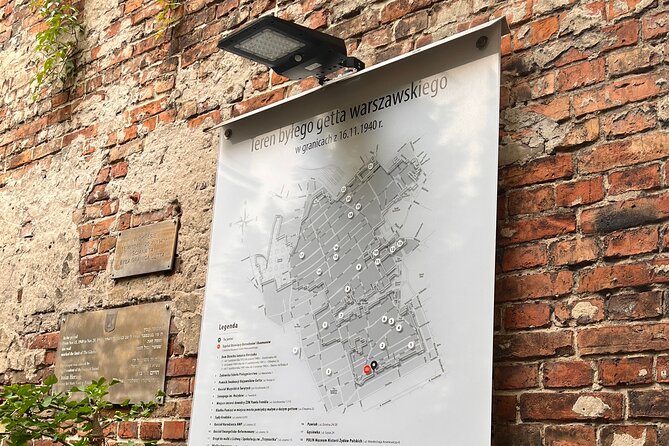
- Small group size (max 10), so you get real back-and-forth instead of a rushed lecture.
- English tour with a certified guide, which matters on this kind of history.
- Free entry at every main stop, including the archive building, memorial squares, and monuments.
- A focused, stop-by-stop route that moves from daily life in the ghetto to deportation and commemoration.
- A reflective ending near Willy Brandt Square, with ideas for where to get a coffee afterward.
- Near public transportation, so it’s easier to plug into the rest of your day.
Why this Warsaw Jewish Ghetto walk feels different
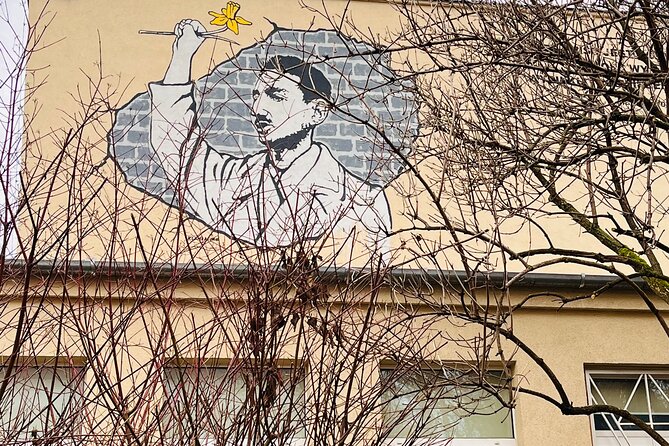
This isn’t just a list of monuments. The tour connects places to daily reality, forced confinement, resistance, and how Warsaw remembers today. You walk through the city and learn how the same streets can carry completely different meanings across time.
What makes it work is the balance of scales. You get small, concrete details at street and building level, then the tour widens to the biggest, most devastating realities. The guide, Mona, keeps the story human, while still being clear about what happened.
The result is a route that feels grounded, not abstract. You also get the practical benefit of a guided flow, about 2 hours 30 minutes from start to finish, so you are not left figuring out where to go next.
More Jewish heritage walks in Warsaw:
- Warsaw: Warsaw Ghetto Private Walking Tour with Hotel Pickup
★ 4.9 · 369 reviews - Warsaw: Jewish History Guided Walking Tour in English
★ 4.7 · 324 reviews - Private Tour: Warsaw’s Jewish Heritage by Retro Fiat
★ 5.0 · 208 reviews
Price and what value looks like for this tour
The cost is $112.43 per person, offered as a group experience with mobile ticketing and the possibility of group discounts. For a topic like this, I think the real value is the guided interpretation, not the physical sights themselves.
Nearly all stops are free, so you are not paying again and again for entry fees. You are paying for context, timing, and someone certified who can explain why each site matters, not just where it is. If you like tours where questions are welcome, this format is usually worth it, especially with a small group.
If you’re on a strict budget, you could do some landmarks on your own. But on this specific route, the guide’s framing makes a big difference, because the city layout can feel confusing without explanation.
The walk plan, timing, and how the route is paced
This tour runs about 2 hours 30 minutes and is designed as a steady walk with short stops. You start at the Monument of Slowackiplac Bankowy and end near Skwer Willy’ego Brandta and Mordechaja Anielewicza.
You should expect a “look, listen, then move” rhythm. Most stops are around 10 to 30 minutes, which is enough time to read what you see, absorb the context, and not feel like you are sprinting from one place to another.
The group is capped at 10 travelers, and that matters for a tour like this. With fewer people, Mona can answer follow-up questions and adjust the pace when the topic hits hard.
Stop 1: Zydowski Instytut Historyczny and why archives matter
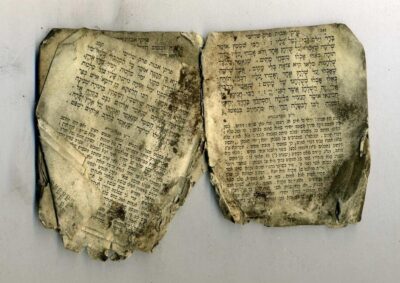
The tour begins at Zydowski Instytut Historyczny, the Jewish Historical Institute. During the war, the building served as one of the centers of Jewish social life in the Warsaw ghetto, and today it provides an archive of Jewish documentary material.
Even when a building feels quiet, an archive is never just storage. It is proof that community memory survived, that records were kept, and that the story is not only carried by survivors’ voices. This is a strong opening stop because it shifts you from “monument mode” to “documentation mode.”
Time-wise, the stop is about 15 minutes. Since admission is free here, you can focus fully on what the guide tells you instead of worrying about ticket costs.
Elsewhere in Warsaw:
- Warsaw: Chopin Concert in the Old Town
★ 4.8 · 2,287 reviews - Warsaw: Traditional Galar Cruise on The Vistula River
★ 4.6 · 1,640 reviews - Warsaw: Old Town Highlights Walking Tour in English
★ 4.7 · 1,516 reviews - Warsaw Concert: Chopin – Painted by Candlelights with Wine
★ 4.8 · 1,442 reviews
Stop 2: Długa Nalewki Street, where daily life was squeezed
Next comes Długa Nalewki Street, at the crossing with Długa street, in what’s described as the northern Jewish quarter. The area was known as the most lively and vibrant street, full of shops, manufactories, and stalls.
That detail matters. When you only think of ghettos as places of despair, you can miss the brutal truth that commerce, work, and daily routines still continued under impossible conditions. This stop helps you picture the ghetto as a real neighborhood with real economic activity, not just a tragedy from a textbook.
Expect about 10 minutes at this stop. It’s short, but the guide framing here helps you read the street layout as a clue to social life.
Stop 3: Ogrod Krasinskich, a calm break with a hard history
Then you move to Ogrod Krasinskich, described as an oasis of calm for Warsaw residents. During WWII, it was excluded from the ghetto, meaning it sat outside the forced boundaries people endured.
This is a smart pause in the route. You get greenery and a quieter feel, which helps your brain reset after the heavier elements. But you also get the reminder that “calm” was not the same for everyone, because the boundary between inside and outside was enforced.
The stop is about 20 minutes. Admission is free, and the goal is not to treat the garden like sightseeing. It is to feel the contrast and understand what exclusion meant in practice.
Stop 4: Warsaw Ghetto Square at POLIN and the daffodils ritual
One of the biggest stops comes at Warsaw Ghetto Square at the Polin Museum area, focused on the Monument to the Ghetto Heroes. This is identified as one of the most important commemoration sites, where Varsovians place daffodils on the anniversary of the Ghetto Uprising.
This stop gives you what most monuments lack: a living connection to the present day. When a city keeps marking an anniversary with flowers, the memory is not sealed in the past. It keeps re-entering public life.
You’ll spend about 30 minutes here. That longer time slot makes sense because this is the place where reflection usually happens naturally. It also pairs well with the tour’s overall title, because you can literally see remembrance in action.
Stop 5: Mordechaja Anielewicza mound at Mila 18
After that you head to Mordechaja Anielewicza, at the Anielewicz Mound at Mila 18. This mound commemorates the leaders of the Warsaw Ghetto Uprising.
This stop is not about famous names for trivia. It is about responsibility, courage, and what resistance looked like under extreme pressure. The guide’s tone, described as heartfelt and hopeful while staying brutally honest, is exactly the kind of framing that fits this moment.
Plan for about 30 minutes. Admission is free, but you may want extra personal time here, because a mound like this invites quieter thinking than street corners do.
Stop 6: Umschlagplatz, the departure point to Treblinka
The tour then moves to Umschlagplatz, marked as the departure point for Jews transported to the Treblinka Extermination Camp. The description notes that about 300,000 Jewish people died.
This is the hardest part of the route. The geography of a city can make mass murder feel too ordinary, and this stop is where the tour has to pull the story back into full focus. A good guide helps you look without turning away, and Mona’s style is repeatedly described as gentle but clear.
This stop lasts about 15 minutes. Short, but powerful. If you feel emotionally overloaded, this is where you might pause, take a breath, and let the information settle before moving on.
Stop 7: Willy Brandt’s memorial and closing thoughts
The last stop is the Pomnik Willy’ego Brandta, a memorial to Willy Brandt’s tribute to the murdered Jews of Warsaw and all victims of WWII. It is also where the tour ends, near Skwer Willy’ego Brandta and Mordechaja Anielewicza.
This ending matters because it turns your attention from the mechanics of tragedy to the meaning of remembrance. A memorial like this also signals that the story did not end with the events themselves. It continues through diplomacy, commemoration, and public acknowledgment.
You get about 15 minutes here. Then you finish at the Willy Brandt Square area, with recommendations for where to go for coffee nearby.
Mona’s guiding style: clear, compassionate, and not vague
Mona is the guide connected to the experience provider name Mona_be_your_guide, and the most praised aspect is how she handles the emotional weight of the subject. The tone is described as moving, rich in detail, gentle, and highly knowledgeable in the way she connects history to feeling.
What I like about this approach is that it respects the topic without sugarcoating it. You are not left with only dates and place names. You get explanations that help you understand survival, struggle, and the reality of human choices under pressure.
You also get the benefit of interaction. If you ask questions about Jewish history, the tour is built to answer them in context. That turns a walk into an education you can carry into the rest of your trip.
Practical tips so you get the most from the 2.5-hour walk
This route is designed for most travelers, but it is not recommended for anyone with mobility or walking problems. You will be on your feet for a significant portion of the 2 hours 30 minutes, and several stops ask you to stand and read.
I’d plan like this:
- Wear comfortable walking shoes and dress for outdoor weather.
- Bring water, since coffee or tea is not included.
- If you are sensitive to heavy topics, give yourself time after the tour instead of stacking another activity right away.
Because it is offered in English with certified guidance, you don’t need to do homework beforehand to follow along. Still, it helps to have a basic understanding that the tour covers the ghetto’s social life, the uprising, deportations, and commemoration.
Where the tour fits in your Warsaw itinerary
I think this tour works best when you are ready to slow down and focus. Put it in the middle of your Warsaw days if you want it to reshape how you interpret what you see afterward.
It also connects nicely to the area around POLIN Museum, because you’ll already be in the neighborhood. And it ends near Willy Brandt Square, so you can naturally continue with a coffee and a bit of independent wandering if you feel up to it.
Since the tour ends with suggestions for coffee nearby, treat that as part of the experience. It’s a good way to ground yourself after a topic this intense.
Should you book this Warsaw Jewish Ghetto tour?
If you want a small-group, English guided walk that connects ghetto history to the modern streets of Warsaw, I’d say yes. The value is strong because most stops are free, and the quality of the guidance, especially Mona’s compassionate but honest tone, seems to be the main reason people rate it highly.
Book it if you:
- want structured context for key sites, not just a self-guided checklist
- prefer a capped group size so you can ask questions
- are ready for a serious, emotionally direct story
Skip it or choose something else if:
- walking is difficult for you, since it is not recommended for mobility problems
- you need a lighter, purely sightseeing-style experience
Overall, this is the kind of tour that makes the city make sense. You finish with clearer context, a stronger sense of remembrance in public space, and a story you understand, not just one you pass by.
FAQ
FAQ
Is the tour in English?
Yes, the experience is offered in English.
How long is the tour?
The duration is approximately 2 hours 30 minutes.
What is the group size limit?
The tour has a maximum of 10 travelers.
Where do I start and where does it end?
You start at the Monument of Slowackiplac Bankowy, 00-142 Warszawa, Poland. The tour ends at Skwer Willy’ego Brandta Mordechaja Anielewicza, 01-999 Warszawa.
Is the guide included?
Yes, the tour includes a certified guide.
Are there admission fees at the stops?
The information provided lists admission tickets as free for each of the main stops mentioned.
Is coffee or tea included?
No, coffee and or tea are not included. The tour ends with recommendations for where to go for coffee nearby.
Recently added in Warsaw
- Warsaw: Wolf’s Lair & Swieta Lipka Small-Group Tour + Lunch★ 5.0 · 3 reviews
- World War II Warsaw Old Town, Military Cemetery Walking Tour★ 4.7 · 3 reviews
- Warsaw Wolf’s Lair with St. Lipka and Mamerki Private Guided★ 4.2 · 3 reviews
- Warsaw Zoo Skip-the-Line Entry Ticket with Private Transport★ 4.8 · 3 reviews
- Warsaw: Vodka Tour★ 4.4 · 18 reviews
- Wilanów Palace: 2-Hour Guided Tour with Entrance Tickets★ 4.8 · 8 reviews
- Warsaw Uprising and WWII Old Town Walking Tour with Museum★ 4.7 · 15 reviews
- Warsaw: Private Vodka Tasting Night with Snacks and Pickup★ 5.0 · 7 reviews
Other Warsaw Ghetto & Jewish Heritage Tours
Warsaw Ghetto Private Walking Tour with Hotel Pickup
Read our review →
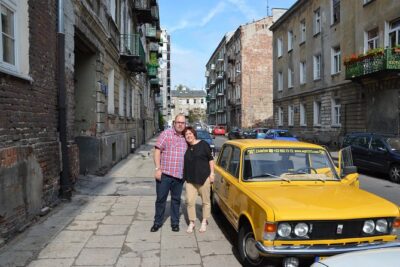
Private Tour: Warsaw’s Jewish Heritage by Retro Fiat
Read our review →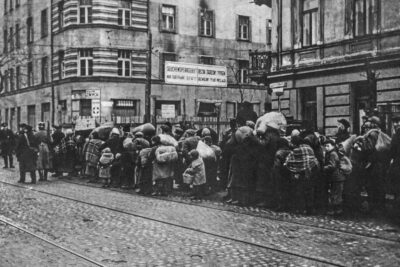
Ghetto, Jewish Cemetery & POLIN Museum Private Tour
Read our review →
Browse the lists this tour appears in