Reviewed · CITY TOURS
Warsaw City Tour – PRIVATE (4h)
Warsaw can feel like a city built in layers, not timelines, and this private half-day tour is a smart way to read those layers fast. You’ll get a guided walk through the Old Town area, plus stops that show how Warsaw rebuilt after destruction and reshaped itself into a modern capital.
I love the clear balance of meaningful monuments and real city strolling, especially around Old Town and the Barbican. I also like that guides can shape the pace, and in past groups I’ve seen examples like Anya customizing the tour to match what people want to focus on. One possible drawback to plan around is the mix of walking and short transfers, since parts of central Warsaw restrict cars.
Key things I’d zero in on
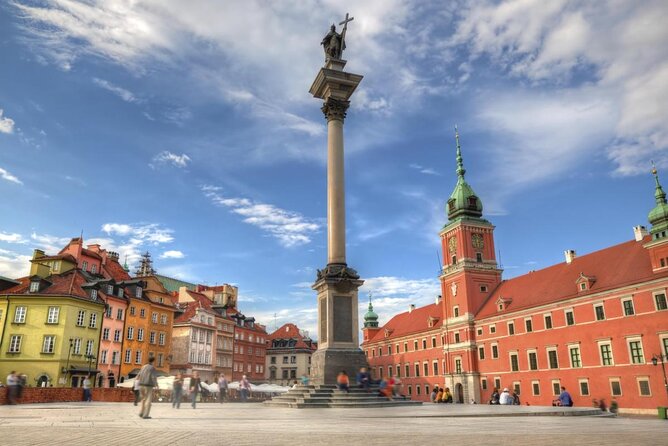
- Old Town UNESCO zone with quick, high-impact stops like Sigismund’s Column and the Warsaw Mermaid area
- Lazienki Park and the Rose Garden vibe, with a chance to slow down away from traffic
- Memorial-focused stops that explain the Warsaw Uprising in a direct, human way
- Royal Castle and St. John’s Cathedral for architecture plus the deeper stories you usually miss on your own
- Modern Warsaw hits including the tall Palace of Culture and Science and a look at the Copernicus Science Centre area
A half-day that teaches you how to see Warsaw
This tour works because it connects places that look like simple sightseeing, but each one points to a bigger theme. Old Town shows the medieval street life that shaped Warsaw as a trading hub, then explains what was erased in 1944 and why rebuilding took decades. Later stops shift to parks, palaces, and major 20th to 21st century landmarks, so you leave with a map in your head, not just photos.
You also get a real guide, not just directions. In recent experiences, guides like Grazyna and Karolina have been singled out for effort and care, even when the logistics were a bit messy. When the guide is firing on all cylinders, you’ll feel like the city is talking back.
One thing to know: this is not a stop-at-everything bus day. It’s short enough to fit in 4 hours, but that means you’ll move at a human pace, not a slow museum pace. Bring comfortable shoes and treat it like a guided walk with smart transfers.
Other Warsaw tours to compare
- Private Tour: Warsaw City Sightseeing by Retro Fiat
★ 5.0 · 562 reviews - Warsaw: Warsaw Ghetto Private Walking Tour with Hotel Pickup
★ 4.9 · 369 reviews - Private Tour: Warsaw’s Jewish Heritage by Retro Fiat
★ 5.0 · 208 reviews
Price and logistics: what you’re paying for at $195.18 per person
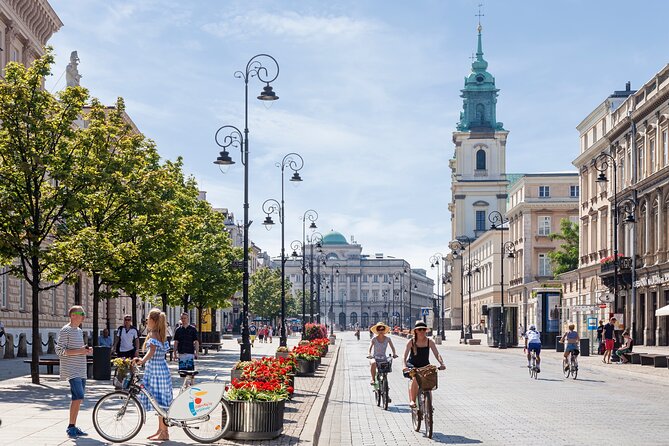
At $195.18 per person for a 4-hour private tour, this is positioned for convenience and interpretation, not bargain travel. You’re paying for hotel pickup and drop-off, a professional local guide, and private transportation with an air-conditioned vehicle listed as included.
Is it value? It can be, if you care about context and you want to avoid wasting time piecing together routes. Many of the stops are free to enter, so you’re not sinking extra money just to see the highlights. If you’re comfortable navigating on your own and you mainly want views and photos, the price will feel steep for a short day.
Do a quick reality check before you book: this tour is designed for a mixed experience. The central UNESCO Old Town area and parts of the Royal Route can limit car access, which means walking time is real.
Getting oriented at Sigismund’s Column and the Old Town perimeter
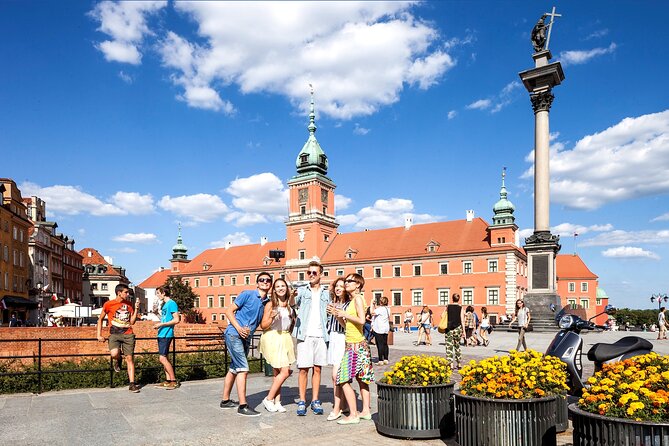
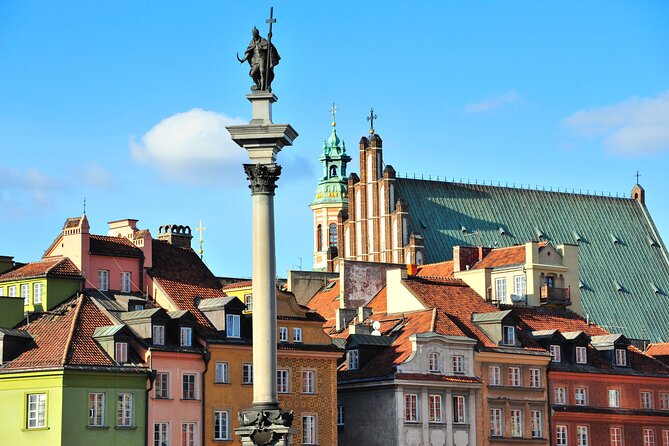
You start with one of Warsaw’s most recognizable symbols: King Sigismund’s Column (Kolumna Zygmunta). It’s described as the oldest public memorial in Warsaw, and the twist is that it isn’t even standing in its original spot. The column was moved when major street alignments changed in the 19th century, and then again after World War II during development tied to the WZ route.
That detail matters because it teaches you Warsaw’s habit of remaking its center. The column was brought down in September 1944 by German troops, and reconstruction finished in 1949. When you see it in place, it’s not just a statue, it’s a story of loss and rebuilding.
Then you shift into the Old Town atmosphere. Expect a guided stroll through the core of the UNESCO-listed area. You’ll hear how the city grew from a strategic river location on a trade route between the Baltic and the Black Sea. You’ll also get the grim context: in 1944, around 90 percent of the Old Town area was destroyed, and reconstruction took many years.
This is where the tour earns its “fast, but not shallow” reputation. In a short time, you connect architecture and street layout to real history, not just dates.
Old Town quick perks, plus one practical note
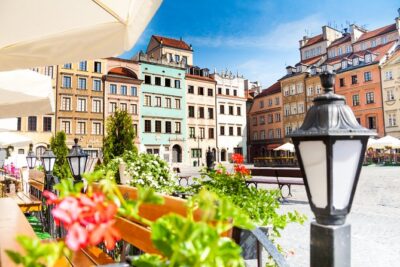
Most stops here are free to access, and you’ll get time in the open-air spaces around places like the Rynek Starego Miasta marketplace. That area is now framed by restaurants, cafés, and galleries, and the square includes a statue of the Warsaw Mermaid.
Practical note: Old Town streets are compact. If you’re sensitive to heat, rain, or lots of walking, treat this part as your “shoe test” early in the day. If you need a gentler pace, it helps to set expectations with your guide at pickup.
Elsewhere in Warsaw:
- Warsaw: Chopin Concert in the Old Town
★ 4.8 · 2,287 reviews - Warsaw: Traditional Galar Cruise on The Vistula River
★ 4.6 · 1,640 reviews - Warsaw: Old Town Highlights Walking Tour in English
★ 4.7 · 1,516 reviews - Warsaw Concert: Chopin – Painted by Candlelights with Wine
★ 4.8 · 1,442 reviews
From Royal Castle ruins to a careful reconstruction
Next you’ll visit the story of the Royal Castle, which is one of the clearest examples of how Warsaw chose to rebuild what was broken. The castle gained royal residence status in the 16th century after Masovia joined the Crown, and it was repeatedly destroyed and rebuilt long before the world wars.
Then came World War II: it was bombed early in the conflict, damaged by fire, and later blown up in retaliation tied to the Warsaw Uprising. The tour notes a key detail that keeps this from becoming just tragedy: priceless artworks were moved out in time and hidden before destruction. Those works that remained suffered plunder.
The rebuilding decision came later, in 1971, and work was funded largely thanks to community generosity. The site opened to visitors in 1984, and later it was placed on the UNESCO World Heritage List as an example of a faithful reconstruction.
If you only remember one thing from this stop, remember that reconstruction here is not cosplay. It’s an attempt to restore meaning, not just stone.
St. John’s Archcathedral Basilica: where ceremonies and music fit together
A short stop brings you to Archcathedral Basilica of St. John the Baptist. The church is one of Warsaw’s oldest, and it has a track record of major historic moments, including the oath related to the Constitution of May 3. It also has a crypt with tombs of many historical figures.
One detail worth timing your visit around is the International Organ Music Festival held every Sunday at 4 PM from July through September. If your travel dates line up, you might catch organ music that turns the inside of the church into something more than a photo stop.
Admission is listed as free, so you’re not paying to get the architecture and the atmosphere. Even if you don’t go inside for long, the guided framing helps you understand why this church sits in the middle of Warsaw’s identity.
Marketplace to Barbican: medieval defenses meet everyday Warsaw
From the Old Town square area, you move toward Warsaw Barbican (Barbakan Warszawski). This is a defensive wall element built in 1548 as part of roughly 4,000 feet of ramparts. Today it’s less about war readiness and more about walking, sketching, and small cultural moments.
The tour includes the barbican’s current role, plus the seasonal interior exhibition from May to October with historical photos and models of defensive lines and towers that no longer exist. That exhibition is especially valuable because it gives you a way to compare the past and present shape of the Old Town heart.
If you like to understand buildings in context, this stop is a good payoff. Even if you have only 15 minutes here, it’s the kind of 15 minutes that changes how you see the streets.
Warsaw Uprising Monument and the square around remembrance
Then you’ll head to the Warsaw Uprising Monument. This stop is emotionally heavy by design. The tour frames the uprising as one of the bloodiest and most painful moments in modern Polish history, ending in defeat and the death of around 200,000 Poles.
Next to the monument area, you’ll also catch viewpoints tied to grand Baroque architecture like Krasiński Palace, currently hosting special collections for the National Library. The palace is described as Warsaw’s most enchanting Baroque structure, and the tour notes reliefs inspired by antique works.
If you’ve ever wondered why Warsaw mixes beauty and grief in the same street view, this is the moment that explains it. The city doesn’t wall off the pain. It puts remembrance into the landscape.
Miodowa Street and Theatre Square: palaces, churches, and opera-scale buildings
After the memorial-heavy part of the day, you’ll shift back to “walkable Warsaw” energy around Miodowa Street. This narrow lane is described as lively, lined with old luxury residences, plus educational and religious landmarks.
The tour points out buildings like:
- Collegium Nobilium, once the first school for the young of the ruling elite, now associated with the Academy of Theatre
- The Primate of Poland’s residence, the Palace of Warsaw’s Archbishops, erected in the 18th century
- Warsaw’s only Eastern Catholic Church
- The Church of the Capuchins, including a reference to the heart of Jan III Sobieski
- A view toward the Monument of Warsaw’s Heroes, known as Monument of Nike
Then comes Theatre Square, where you’ll see the Late Baroque Blank Palace and the adjacent Jabłonowski Palace. The tour explains that the original building was destroyed in the war and rebuilt in the 1990s, leaving only the façade and clock tower from the original design. A gate under the tower leads you toward foundations laid in the 19th century.
The highlight here is the Grand Theatre, a huge Classicist building for Poland’s National Opera and National Theatre. The tour description flags that the opera stage is one of the largest in Europe, and it mentions ornate interiors like cut glass chandeliers and a spacious foyer.
Even if you do not attend a performance, seeing the building in daylight helps you understand how Warsaw treats the arts. This is not an afterthought city. It’s built for culture.
Tomb of the Unknown Soldier: a small stop with a big emotional radius
One of the most straightforward, moving stops in the day is the Tomb of the Unknown Soldier. The tour frames it as a memorial to millions of soldiers who sacrificed their lives for Poland’s freedom, including specific references like ashes of a defender from Lvov and an urn with soil from World War I battlefields.
It also notes that the tomb holds urns from every battlefield where Polish troops fell in the last century, and that there is an eternal flame. A military honour guard watches over it, with a daily change at noon.
This is a good break in the schedule, not just because it’s memorable, but because it’s clear and easy to absorb without a long explanation. Let the guide’s context do the heavy lifting.
Royal Route highlights: quick glimpses you cannot easily copy on your own
The Royal Route runs from Zamkowy Square to Trzech Krzyży Square. With only about 20 minutes here, you should treat it as a guided shortlist of Warsaw’s prestige corridor rather than a full walk.
You’ll get a set of must-sees on the route, including:
- St. Anne’s Church and the view from the church tower
- Polonia House, once the Museum of Industry and Trade where Maria Skłodowska-Curie worked
- Radziwiłł Palace, the current residence of the President of Poland
- Warsaw University campus with Kazimierzowski Palace
- Czapski Palace, home to the Academy of Fine Arts
- Nowy Świat Street, described as an extension of Krakowskie Przedmieście Street
Even in brief form, this part matters because it shows how Warsaw organizes power, education, and public life in one linear flow. If you’re the kind of visitor who likes to understand a city’s map, this is a helpful anchor.
Lazienki Park, Rose Garden mood, and Chopin in the air
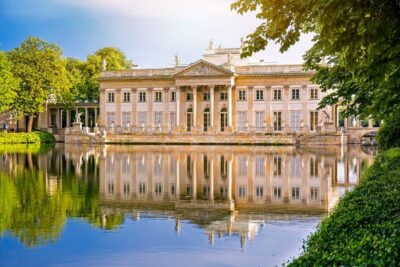
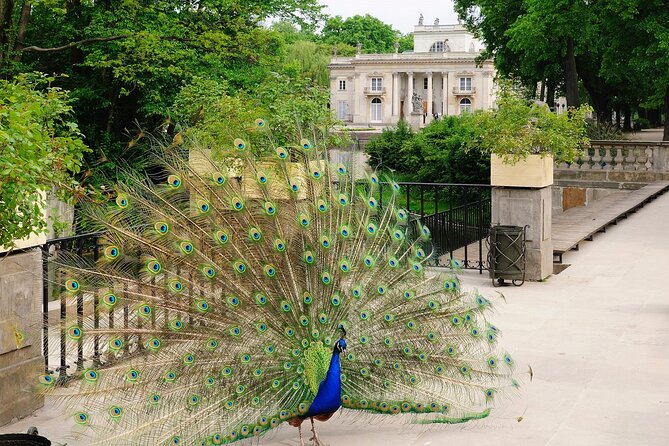
Now you get a slower, greener change of pace at Lazienki Krolewskie w Warszawie (Royal Łazienki Park). The tour’s highlight is time for the Rose Garden of Lazienki Park, which is a lovely contrast to stone-heavy central Warsaw.
Łazienki is described as one of Europe’s beautiful palace and garden complexes. It includes historical monuments and a park in a formerly wild forest, and it’s used for cultural and scientific events. It also offers a practical kind of travel benefit, space to breathe.
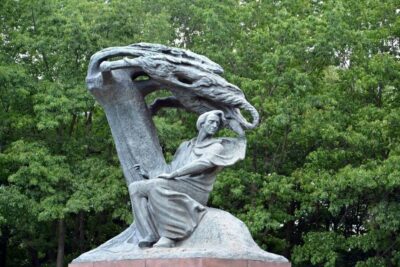
The tour notes that for 50 years, free piano concerts have been held on summer weekends next to the monument of F. Chopin. If you hit the right season, this area can feel like Warsaw’s living room for classical music lovers.
Palace of Culture and Science and the stadium site where crowds once gathered
Later in the day you’ll shift to the 20th century and beyond, starting with the tall Palace built between 1952 and 1955 as a gift from the Soviet people to Poland. The tour description gives a lot of concrete details: the building is 230.5 meters tall, with 42 floors, and includes a large observation deck on the 30th floor.
You’ll also learn that it contains about 3,000 rooms, including offices for institutions, plus facilities like a post office, cinema, swimming pool, museums, libraries, theatres, cafés, and clubs. That set of uses makes this building more than a monument. It’s a working part of the city.
Then comes the stadium built for the European Football Championship in 2012, on the site of the historic Tenth Anniversary Stadium. The tour points out that the older stadium hosted major sporting events and events like the Peace Race, plus large propaganda rallies after the mid-fifties. After 1989, it says a gigantic Jarmark Europa market operated around the top and surrounding land.
This is an important lesson in Warsaw: the city repurposes big spaces, and the meaning changes as politics and culture change.
Copernicus Science Centre: modern curiosity, quick rooftop views
The final major stop in the tour package is the Copernicus Science Centre area. It opened in November 2010 and the tour frames it as one of the most modern science attractions of its kind in Europe, with hundreds of interactive experiences. The description names attractions like an earthquake simulator and a magic carpet, plus a rooftop garden that offers observation decks with panoramas.
Admission is not included, and the stop time is listed as short. So treat this as a chance to see the place and decide if you want to go in on your own time. Even outside, the architecture and the overall vibe are very different from the Old Town stones, which is exactly what this tour is trying to achieve.
What makes this tour feel worth it, when it goes right
The strongest feedback pattern is simple: guides can make this tour feel smooth, informative, and tailored. Some guides have been praised for friendliness and for recommending a great lunch spot. Others have been credited with customizing the schedule, like Anya doing exactly that when people had specific interests. And Margarita has been praised for complete, entertaining explanations, with a comfortable vehicle and accessibility.
When the guide is organized and communication is strong, the pace feels efficient rather than rushed. You also avoid a common Warsaw mistake, wandering without the context that explains why each rebuilding choice happened.
The one drawback to take seriously
The biggest issue to watch is communication and transport expectations. One group flagged a mismatch between what was promised and what happened on the day, specifically around the availability of an air-conditioned vehicle outside the Old Town.
You can protect yourself with one simple move: at pickup, ask your guide to confirm how the car will be used for the non-Old Town parts, and how much walking you should expect. If the day is hot or if someone in your group has mobility limits, this question can prevent frustration.
Also note that one review highlighted an English-language concern, so if language clarity matters a lot to you, consider booking with a firm expectation of English support and be ready with a few key questions.
Who should book this private Warsaw City Tour
This tour is a great match if you:
- Want a guided orientation to Warsaw in about 4 hours
- Prefer seeing major landmarks with context, not just reading plaques
- Like the mix of Old Town, memorials, parks, and modern architecture
- Appreciate hotel pickup, since it saves time and stress
It’s less ideal if you:
- Hate walking and want a mostly drive-and-stop day
- Want lots of inside time for museums and churches, because several stops are short
- Are purely cost-driven and prefer DIY routing
Should you book Warsaw City Tour – PRIVATE (4h)?
I’d book it if your goal is to get your bearings fast and understand Warsaw’s layers, from Old Town rebuilding to modern landmarks. The structure hits the right themes in a tight time window, and the private guide format helps you move efficiently.
I’d think twice if air-conditioning and low-walking are deal-breakers for you, or if you know you need a very specific pace. In that case, ask your guide right away how the day will handle car access and walking in central areas.
If you go in with practical expectations and good shoes, this is the kind of half-day that makes the rest of your Warsaw trip easier to enjoy.
FAQ
How long is the Warsaw City Tour – PRIVATE?
It runs for about 4 hours.
Is this tour private?
Yes. It is a private tour for your group only.
What language is the tour offered in?
The tour is offered in English.
Does the tour include hotel pickup and drop-off?
Yes. The guide waits at your hotel lobby with your name, and the tour includes pickup and drop-off.
Are admission tickets included?
Entry or admission fees are not included. The tour lists admission tickets as free for several stops, but Copernicus Science Centre is listed as not included.
Is there air-conditioned transportation?
Private transportation is included, and the offer lists an air-conditioned vehicle.
Recently added in Warsaw
- Warsaw: Wolf’s Lair & Swieta Lipka Small-Group Tour + Lunch★ 5.0 · 3 reviews
- World War II Warsaw Old Town, Military Cemetery Walking Tour★ 4.7 · 3 reviews
- Warsaw Wolf’s Lair with St. Lipka and Mamerki Private Guided★ 4.2 · 3 reviews
- Warsaw Zoo Skip-the-Line Entry Ticket with Private Transport★ 4.8 · 3 reviews
- Warsaw: Vodka Tour★ 4.4 · 18 reviews
- Wilanów Palace: 2-Hour Guided Tour with Entrance Tickets★ 4.8 · 8 reviews
- Warsaw Uprising and WWII Old Town Walking Tour with Museum★ 4.7 · 15 reviews
- Warsaw: Private Vodka Tasting Night with Snacks and Pickup★ 5.0 · 7 reviews
City Tours, compared.
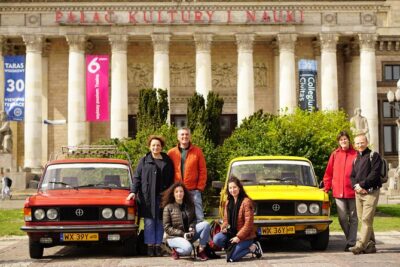
Private Tour: Warsaw City Sightseeing by Retro Fiat
Read our review →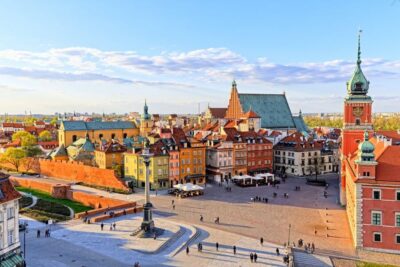
Afternoon Public City Tour with Pickup and Drop-off
Read our review →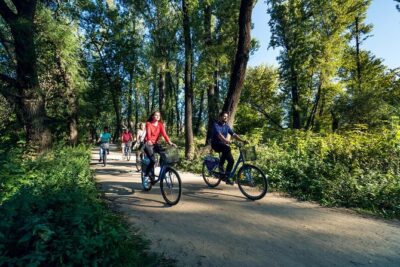
Half-Day Warsaw City Sightseeing Bike Tour for Small Group
Read our review →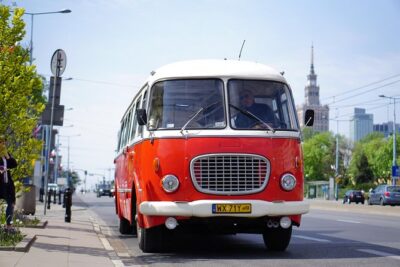
Warsaw Morning, Guided, Panoramic View, public city tour with hotel pick up
Read our review →