Reviewed · 3-HOUR EXPERIENCES
Private Tour: Warsaw best of 3-Hour Sightseeing Tour
This is one of the smarter ways to get your bearings in Warsaw, fast. You ride in a Mercedes with a guide steering the route, so you can focus on the views and the stories instead of maps and traffic. It also packs big, memorable sights into a short window, including the Lazienki Park area.
What I like most is the mix of postcard Warsaw and the darker WWII chapters, all explained in plain language. The second thing I love is the guide energy. In the feedback I saw, Artur Warsaw Guide (and sometimes other named English-speaking guides, like Radek) brought real enthusiasm, and it made the drive feel like a conversation, not a lecture.
One possible drawback: the schedule is time-tight. You get enough to understand each place, but you will not linger for long, so plan on quick walks and photo stops.
Key things to know before you go
- Mercedes transport with a guided route, so you do not burn time figuring out logistics
- Lazienki Park includes iconic park-palace sights, plus peacocks and squirrels
- The tour includes major WWII signposts in and around the Jewish Ghetto Warsaw story, including Umschlagplatz and Mila 18
- Old Town highlights are focused on Rynek Starego Miasta and St. John’s Archcathedral area
- You get a first look at the Palace of Culture and Science (PKiN), including its Stalin-era origins
- A riverside break at the Vistula Boulevards and a stop at PGE National Stadium
A Mercedes-driven highlights loop that actually saves your time
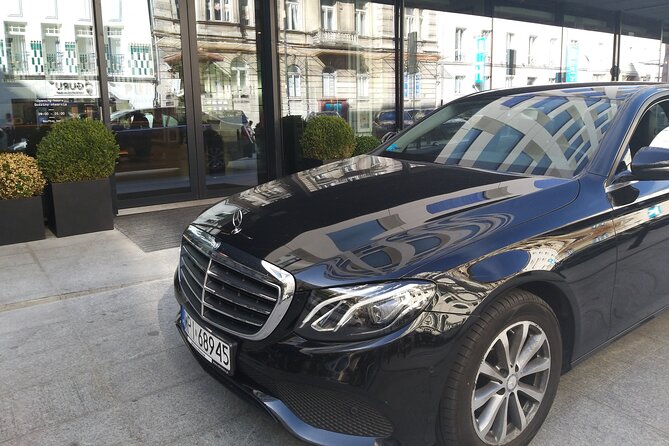
Warsaw is spread out enough that, without a plan, your day can turn into bus rides and last-minute sprinting. This private format solves that. Pickup and drop-off are offered anywhere in Warsaw, and the guide keeps things moving across the city in a Mercedes.
The group size is up to 3, which matters. It feels personal, and your guide can pace the stops to what you care about. If you want the overview with context, this works especially well.
Other Warsaw tours to compare
- 3-Hour Guided Cycling Tour of Warsaw
★ 4.9 · 624 reviews - Warsaw Old Town 1.5-Hour or Full 3-Hour Segway Tour
★ 4.9 · 209 reviews - Warsaw: 3-Hour Panoramic City Bus Tour with Pickup
★ 4.5 · 169 reviews
Lazienki Krolewskie w Warszawie, aka Royal Baths Park with peacocks
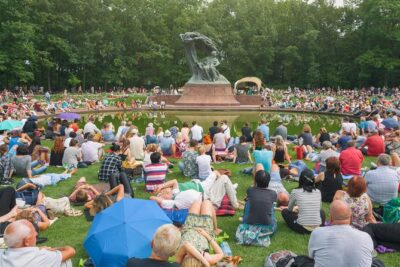
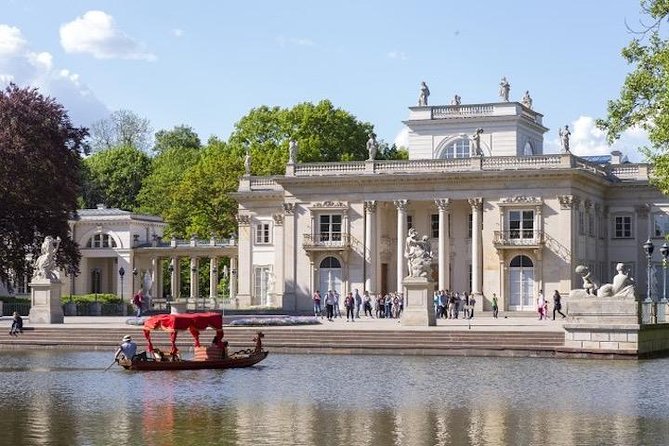
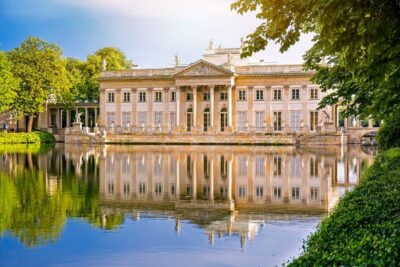
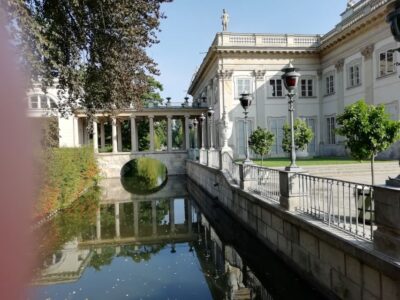
Your first stop is Łazienki Park, sometimes called the Royal Baths Park. This is the largest park in Warsaw’s central area, covering 76 hectares, and it is part of the Royal Route that links the Royal Castle with Wilanów Palace.
What I find smart here is the way the park reflects layers of Warsaw’s story. It started in the 17th century as a baths park for nobleman Stanisław Herakliusz Lubomirski. In the 18th century, Poland’s last monarch, Stanisław II Augustus, transformed it into a setting with palaces, villas, classicist follies, and monuments. In 1918, it became an official public park.
You will walk around the complex with time for the mood of the place. Also, yes, it is famous for peacocks and you will likely see squirrels wandering nearby. That makes it less like a checklist stop and more like a reset for your brain before the heavier sites later.
Practical note: the guided time here is enough for highlights, but not for a deep, slow picnic-style day. Wear comfortable shoes and plan on a quick wander.
POLIN Museum area and the ghetto signposts: Umschlagplatz and Mila 18
After the green break, the tour moves into Warsaw’s WWII history with a focus on the Jewish Ghetto Warsaw area. The goal is to give you a coherent “where things happened” map without needing to research in advance.
You will sightsee the ghetto territory outdoors, including the area around POLIN Museum and key commemorations and sculptures. Named highlights include the Natan Rapaport monument and sculptures tied to Jan Karski and Leon Suzin.
The tour then directs you to Umschlagplatz, which was the holding area next to rail stations in occupied Poland where Jews from the Warsaw Ghetto were assembled for deportation to Nazi death camps. The largest collection point was in Warsaw, right next to the ghetto.
Next is Memorial at Mila 18. Mila 18 was described as the Jewish Combat Organization headquarters bunker, part of Jewish resistance during the war.
This section can hit hard. Still, I like how the route is structured: you are not just hearing a general tragedy, you are learning the geography of it. That is one of the reasons a guided tour here can feel more respectful than trying to piece the story together on your own.
A consideration: this is heavy content. If you prefer a lighter day, you might want to balance this with more time in parks and viewpoints either before or after.
Old Town, Rynek Starego Miasta, and St. John’s Archcathedral
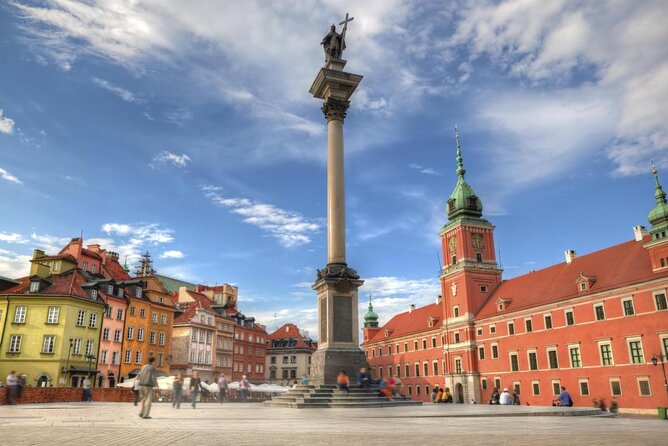
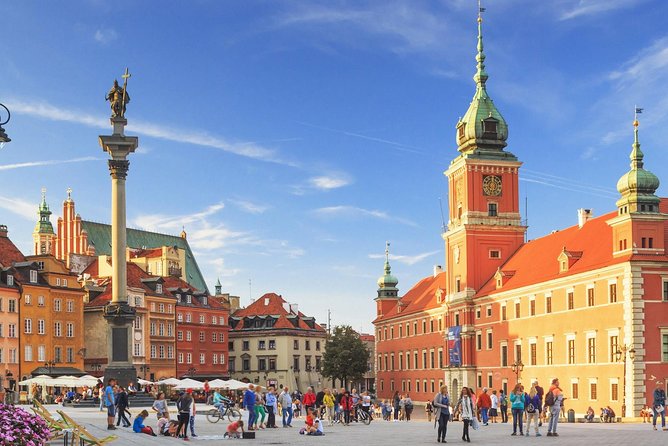
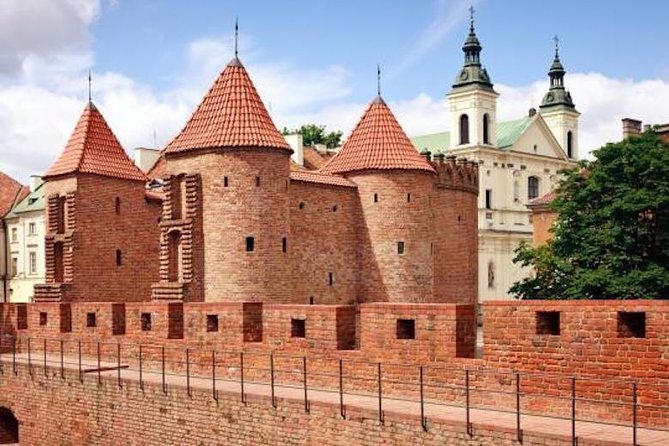
Now you shift into classic Warsaw. The Old Town area is a major walking zone with reconstructed medieval buildings and cobblestone lanes, rebuilt after WWII.
At the center is Rynek Starego Miasta, the busy square lined with burgher houses and Polish eateries. Even if you are not shopping, it is a strong place to feel the city’s rhythm. The square also helps you orient for the rest of the neighborhood because it is such a clear focal point.
You also get time near St. John’s Archcathedral, dating back to the 14th century and known for summer concerts. The tour also ties in the Royal Castle area through nearby sights, including restored apartments and manicured gardens.
This stop is valuable because it shows you Warsaw after rebuilding. You can look at the architecture and understand it as a conscious effort, not just something that happened long ago.
Timing here is short, so treat it like an introduction. If you fall in love with the lanes, you can always return later for longer wandering.
Elsewhere in Warsaw:
- Warsaw: Chopin Concert in the Old Town
★ 4.8 · 2,287 reviews - Warsaw: Traditional Galar Cruise on The Vistula River
★ 4.6 · 1,640 reviews - Warsaw: Old Town Highlights Walking Tour in English
★ 4.7 · 1,516 reviews - Warsaw Concert: Chopin – Painted by Candlelights with Wine
★ 4.8 · 1,442 reviews
The Palace of Culture and Science, PKiN, and why its story is complicated
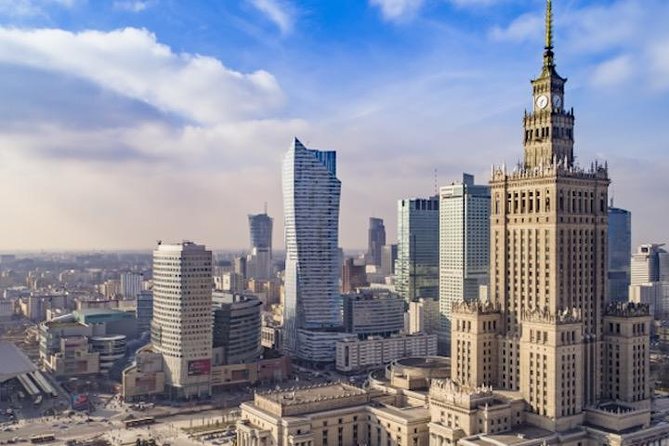
One of Warsaw’s most recognizable silhouettes is the Palace of Culture and Science, commonly called PKiN. The tour frames it well, because this building is not just about height. It is about ideology, politics, and how a country rebrands what it inherits.
It was originally known as Joseph Stalin’s Palace of Culture and Science. After destalinization, Stalin’s name was removed from major parts of the building, including the colonnade, interior lobby, and one of the sculptures. You still see the Soviet-era signature in the structure.
Construction started in 1952 and lasted until 1955. The tour notes that it was a gift from the Soviet Union, designed using Soviet plans by architect Lev Rudnev, and built with thousands of Soviet and Polish workers.
Today, it remains a landmark: 237 meters tall, the tallest building in Poland. It is also referred to as the Eighth Sister, inspired by the Seven Sisters style, and it was the tallest clock tower in the world until Tokyo’s NTT Docomo Yoyogi Building got its clock mechanism.
If you like buildings with a political backstory, you will enjoy this stop. If you just want a pretty view, you might wish you had more time nearby, but the context makes the brief look worth it.
Vistula Boulevards: the river promenade and the Mermaid photo moment
With the city’s major monuments handled, the tour heads to the Vistula Boulevards, a riverside promenade that stretches about 5 kilometers. This is a perfect change of pace.
You get a chance for a short walk along the promenade, and the description here is practical: it is good for a bike ride, and in season you can find seasonal clubs. There are gazebos with sun loungers, stone benches, and seating made from tree branches. The tour also mentions lookout points and a mini beach feel with wicker baskets.
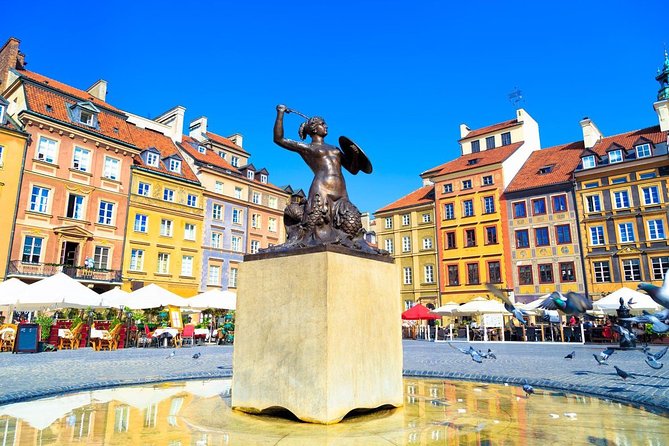
And yes, you will stop for the symbol of Warsaw and the river, the Mermaid monument. It is a quick stop, but it gives you a satisfying photo moment that is very different from the ghetto memorials and architecture.
This is also where I like that the pacing shifts. You are not just learning or staring at stones. You are stretching your legs and getting a little air.
PGE National Stadium: Euro 2012 legacy in a modern shell
Next is PGE National Stadium (official name since 2015). The stadium has a retractable roof and is mainly for football matches, including being home to the Poland national football team.
The tour includes the key facts: seating capacity around 58,580, construction starting in 2008 and finishing in November 2011. It sits on the site of the former 10th-Anniversary Stadium in the Praga Południe district, fairly close to the city center.
A detail I appreciate is the roof design. The description compares the retractable PVC roof unfolding system to a cable-supported approach used in Frankfurt. Even if you do not go inside, standing outside with this context makes it easier to visualize the engineering.
There is also mention of its role in UEFA Euro 2012, hosting the opening match, multiple group matches, a quarterfinal, and a semifinal.
This is a “see it from outside, move on” stop. Still, for sports fans, it gives quick relevance and context without dragging your day.
Warsaw Uprising Museum and monuments: people, artifacts, and memory
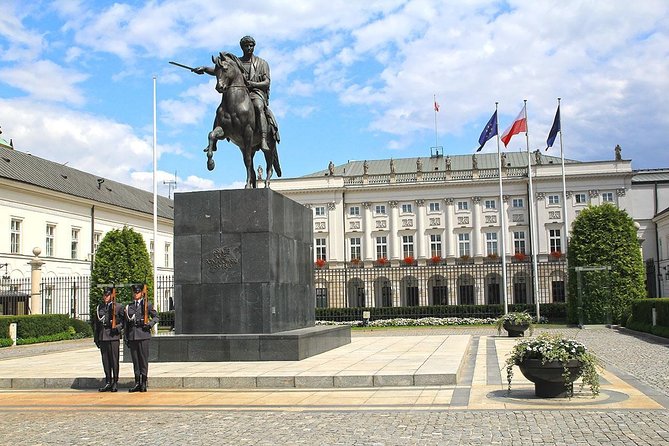
The tour then steps into one of Warsaw’s most important 20th-century stories: the Warsaw Uprising of 1944. This part includes time at the Warsaw Uprising Museum and also several monuments connected to the uprising.
The museum, established in 1983 and opened on July 31, 2004, is dedicated to the uprising. The tour highlights what the museum actually does: it supports research into uprising history and the history and possessions of the Polish Underground State.
It also collects artifacts, ranging from weapons used by insurgents to love letters, so you get both the fight and the human texture. The goal is also to record memories of living participants and build an archive of historical information.
Then the route continues with a look at monuments. The tour mentions that monuments to the Warsaw Uprising first appeared in the 1970s, before that Warsaw had mostly monuments to Red Army soldiers and the Polish National Army, and it notes that the role of the Polish National Army was later “exaggerated and overrated” in earlier presentations.
It also includes important political context: until 1989, no mention of the uprising was allowed. That helps you understand why memorials and public memory are not neutral in this city.
If you come to Warsaw interested in WWII history, this is one of the most meaningful portions. It gives you a framework, not just a stop photo.
Maria Sklodowska-Curie stop: a quick tribute in a tight loop
After the uprising area, you get a short look at Monument to Maria Sklodowska-Curie. The tour says you will take a closer look at her birthplace and museum focus, and it notes she was the first female noble prize winner.
This is brief by design. It is the kind of stop that gives the city a human, non-military angle, which I appreciate because the day already covers intense history.
If you want more science-focused time, you can always plan a separate stop on another day. Here, it functions like a palate cleanser.
How the tour’s pacing works with so many stops
On paper, the route includes many named places, and the full set takes about 3 hours. In practice, that means you will be moving between neighborhoods and doing short guided walks rather than long museum sessions.
That can be a benefit. You get the “fast map” of Warsaw, including both famous civic landmarks and WWII sites that many visitors only understand after they learn the locations.
It is also why this format can feel so efficient. You might have a day where you do not want to commit to a full-day tour, but you still want depth. This one leans into depth, just in a concentrated way.
The guide is a big part of making that pacing work. In the feedback tied to this experience, the guide approach is described as clear and easy to understand, with the right amount of background information during the drives. That is what stops the day from feeling like rushed sightseeing with no meaning.
Price, value, and who this private tour suits best
The price is $336.44 per group, for up to 3 people. On a per-person basis, it can be more than a big group bus tour, but it is also for a private Mercedes experience with pickup and drop-off anywhere in Warsaw.
Here is the value logic I’d use if I were booking:
- If you are two or three people, the per-person cost drops and you get a more flexible schedule.
- If you want WWII context plus architecture plus city highlights in one go, you are paying for someone else to handle the route and interpretation.
- If you are short on time, you are buying efficiency. You are not wasting half your day figuring out where to start.
Who it suits well:
- First-time visitors who want both classic Warsaw and the city’s harder history
- Small groups who prefer private pacing over a larger crowd
- People who like their sightseeing guided, with narration that makes the stops click
Who might want a different format:
- If you hate emotional or WWII-heavy content, this may feel intense in a short window
- If you need lots of museum time, you may want separate tickets and longer stops on your own
Should you book this Warsaw private highlights tour?
I’d book it if you want a fast, guided sweep of Warsaw with major landmarks and clear WWII context, without the stress of planning. The private Mercedes transport and pickup anywhere make it easy, especially if you do not know the city yet.
I would hesitate if you want a slow, relaxed day with long stays in each place. This tour is about getting your bearings and understanding the storyline, not about leisurely wandering for hours.
If your goal is to arrive, get oriented, and leave with a stronger grasp of Warsaw beyond the photos, this one is a solid choice. Just go in ready for history, and you will come out understanding the city better.
FAQ
How long is the Private Tour: Warsaw best of 3-Hour Sightseeing Tour?
It runs about 3 hours.
How much does the tour cost, and how many people are included?
The price is $336.44 per group, up to 3 people.
Does the tour include pickup and drop-off?
Yes. Pickup and drop-off are offered anywhere in Warsaw.
What language is the tour offered in?
It is offered in English.
Is this a private tour or a group tour?
This is a private tour. Only your group participates.
Is a mobile ticket provided?
Yes, mobile tickets are included.
Are entrance tickets included for the stops?
The stops listed in the itinerary show admission ticket free.
Are service animals allowed?
Yes, service animals are allowed.
What is the cancellation policy?
You can cancel for a full refund if you cancel at least 24 hours in advance of the experience start time.
Recently added in Warsaw
- Warsaw: Wolf’s Lair & Swieta Lipka Small-Group Tour + Lunch★ 5.0 · 3 reviews
- World War II Warsaw Old Town, Military Cemetery Walking Tour★ 4.7 · 3 reviews
- Warsaw Zoo Skip-the-Line Entry Ticket with Private Transport★ 4.8 · 3 reviews
- Warsaw Wolf’s Lair with St. Lipka and Mamerki Private Guided★ 4.2 · 3 reviews
- Warsaw: Vodka Tour★ 4.4 · 18 reviews
- Wilanów Palace: 2-Hour Guided Tour with Entrance Tickets★ 4.8 · 8 reviews
- Warsaw Uprising and WWII Old Town Walking Tour with Museum★ 4.7 · 15 reviews
- Warsaw: Private Vodka Tasting Night with Snacks and Pickup★ 5.0 · 7 reviews
3-Hour Experiences, compared.
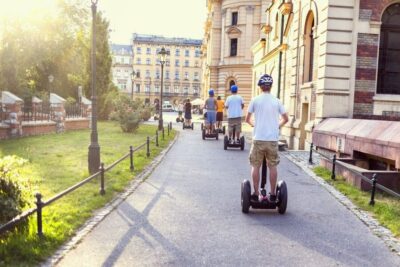
Warsaw Old Town 1.5-Hour or Full 3-Hour Segway Tour
Read our review →
Private 3-Hour Sightseeing Tour by Car with Pickup
Read our review →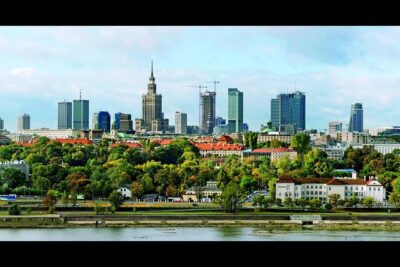
Faces of Warsaw’s 3-hour orientation city tour with hotel pick-up
Read our review →